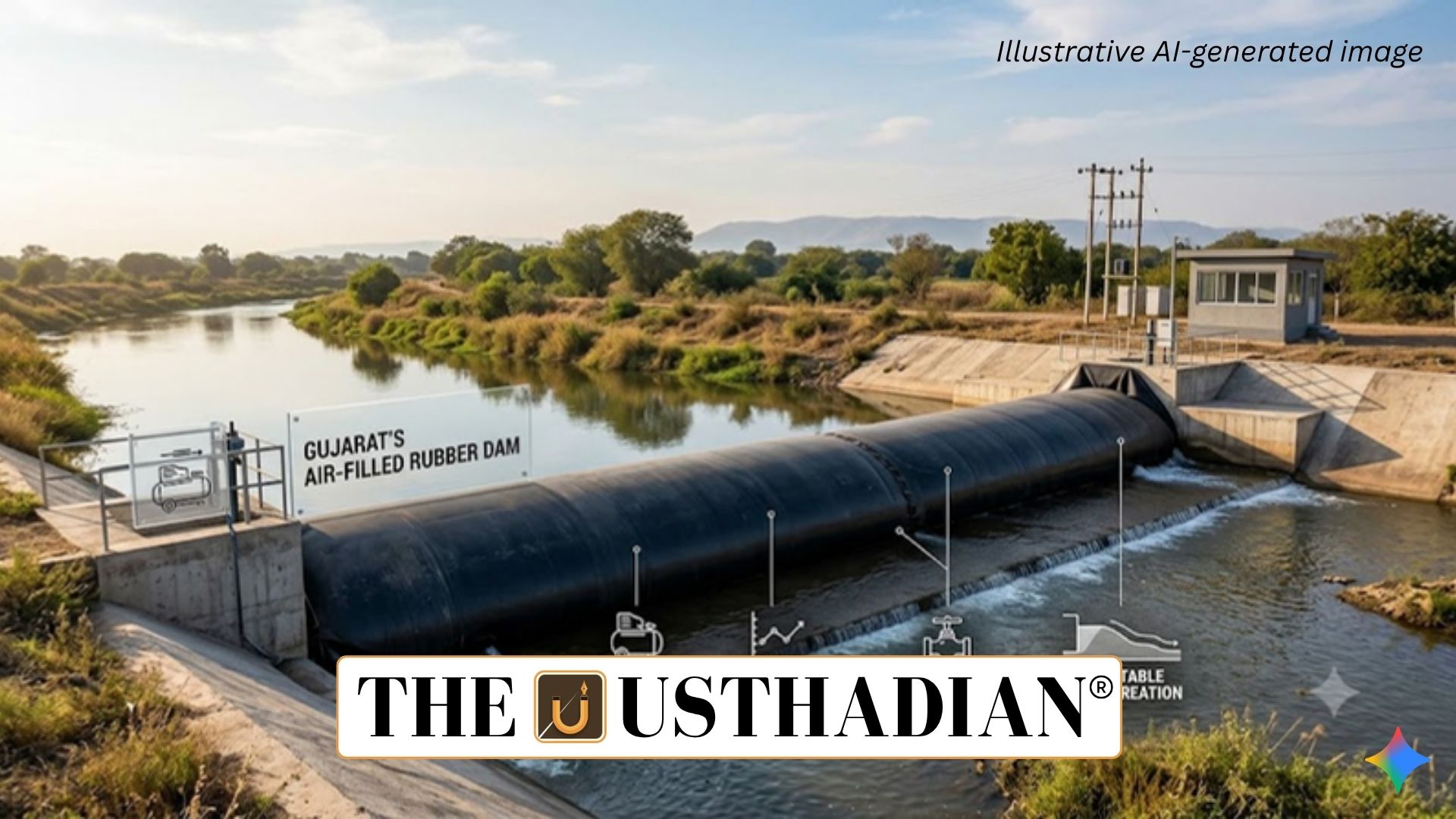
Gujarat Adopts Innovative Rubber Dam Technology
Gujarat Introduces Air-Filled Rubber Dams for Smart Water Management: Gujarat has begun constructing its first air-filled rubber dams using advanced South Korean technology, marking a significant step in modern water resource management. The two projects are being developed on the Heran River in Chhota Udepur district and the Ambika River in Tapi district.
These smart dams are designed to improve irrigation, increase groundwater recharge, enhance water storage, and reduce flood risks through automated operation. The initiative reflects Gujarat’s focus on sustainable and technology-driven water infrastructure.
Static GK fact: Gujarat’s capital is Gandhinagar, while Ahmedabad is its largest city. The Narmada River is one of the state’s most important water resources.
What Are Air-Filled Rubber Dams?
An air-filled rubber dam is a flexible hydraulic structure made from high-strength reinforced rubber and installed across rivers or canals. Unlike conventional concrete dams, it can be inflated with air to store water and deflated during floods to allow excess water to pass safely.
This flexibility improves water regulation while reducing construction time, maintenance costs, and environmental impact compared to traditional permanent dams.
Major Rubber Dam Projects in Gujarat
The first project is the Rajvasana Rubber Dam on the Heran River in Chhota Udepur district. Built at an estimated cost of ₹82.97 crore, the project was around 75% complete as of July 2026 and is expected to be commissioned by September 2027. Once operational, it will provide irrigation to over 3,420 hectares of agricultural land.
The second project is the Pathakwadi Rubber Dam on the Ambika River in Tapi district. The project costs ₹79.13 crore and was nearly 90% complete. It is expected to provide assured irrigation to around 650 hectares of paddy-growing land.
Together, both projects involve an investment of more than ₹162 crore, benefiting farmers and improving water availability in the region.
Advanced Technology and Automation
The dams use specially engineered rubber bladders imported from South Korea, a global leader in industrial rubber technology. These bladders are 18–32 mm thick, can withstand temperatures up to 50°C, and have an estimated service life of about 30 years.
Both projects are equipped with the SCADA (Supervisory Control and Data Acquisition) system. This automated monitoring technology continuously tracks river conditions and controls the inflation and deflation of the rubber bladders, ensuring efficient water management and timely flood response.
Static GK Tip: SCADA systems are widely used in sectors such as power generation, water supply, oil and gas, manufacturing, and transportation for real-time monitoring and remote control of infrastructure.
Benefits of Air-Filled Rubber Dams
These modern dams offer multiple advantages over conventional structures. They improve irrigation coverage, enhance groundwater recharge, conserve water during dry seasons, and reduce flood damage by releasing excess water automatically.
The flexible design also requires lower maintenance, supports environmental sustainability, and enables efficient river management without creating large permanent barriers.
Significance for Water Resource Management
The adoption of air-filled rubber dam technology demonstrates Gujarat’s commitment to modernizing water infrastructure through innovative engineering solutions. By combining advanced materials with automation, the projects are expected to improve agricultural productivity, strengthen climate resilience, and promote sustainable water conservation.
Static Usthadian Current Affairs Table
Gujarat Introduces Air-Filled Rubber Dams for Smart Water Management:
| Fact | Detail |
| Initiative | Gujarat’s first air-filled rubber dam projects |
| Technology Source | South Korea |
| Rivers | Heran River and Ambika River |
| Districts | Chhota Udepur and Tapi |
| Total Project Cost | More than ₹162 crore |
| Rajvasana Dam Cost | ₹82.97 crore |
| Pathakwadi Dam Cost | ₹79.13 crore |
| Irrigation Coverage | Over 4,070 hectares |
| Automation System | SCADA (Supervisory Control and Data Acquisition) |
| Rubber Bladder Life | Approximately 30 years |