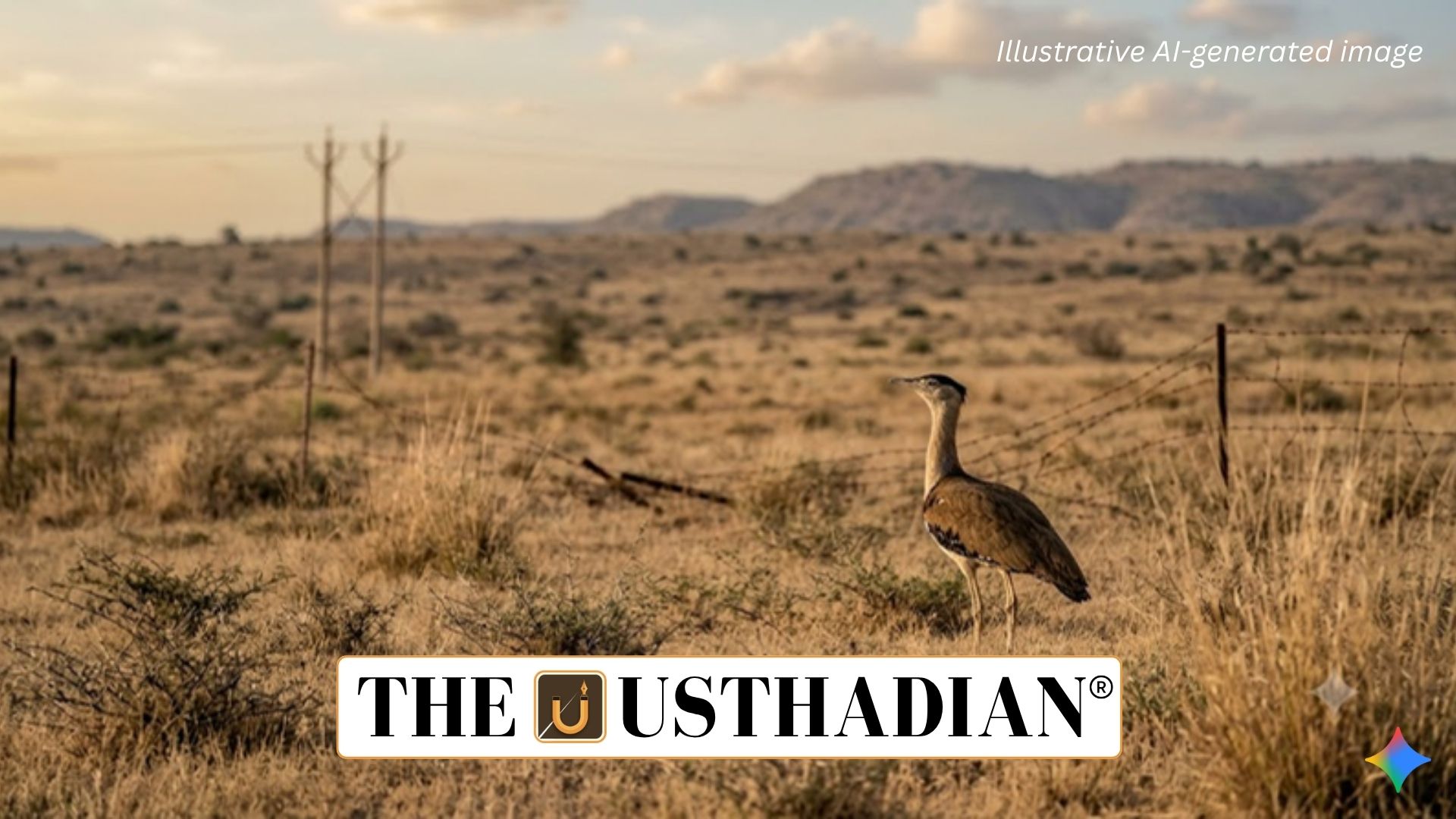
First Release of Captive-Bred Bustards
Great Indian Bustard Recovery Faces Major Habitat Challenges: India achieved a significant conservation milestone on 4 October 2026, when two captive-bred male Great Indian Bustards (GIBs) were released into the wild at Desert National Park near Jaisalmer, Rajasthan. The initiative is part of Project GIB, involving the Union government, the Wildlife Institute of India (WII) and the governments of Rajasthan and Gujarat.
The release represents an important step towards rebuilding the wild population. However, experts emphasise that successful recovery requires long-term habitat protection and the removal of threats to the birds’ survival.
Great Indian Bustard and Its Ecological Importance
The Great Indian Bustard is a large, ground-dwelling bird adapted to dry grasslands, open plains and desert landscapes. Historically, it occurred across 11 Indian states, ranging from Haryana to Tamil Nadu and Rajasthan to Odisha.
Its population has declined sharply because of hunting, egg poaching, habitat conversion and collisions with overhead power lines. Its body structure and limited ability to detect wires in its flight path make such collisions particularly dangerous.
Static GK fact: The Great Indian Bustard is scientifically known as Ardeotis nigriceps. It is classified as Critically Endangered on the IUCN Red List.
Severe Decline in Population
The population was estimated at around 1,260–1,400 birds in the early 1970s, but the supplied report places the current population at approximately 150. Rajasthan supports the largest remaining concentration, estimated at around 130 birds, with smaller numbers reported in Gujarat, Maharashtra, Karnataka, Telangana and Andhra Pradesh.
The species faces a high risk of local extinction outside its principal stronghold. Protecting suitable grassland habitats is therefore essential for establishing additional viable populations.
Project GIB and Conservation Breeding
A long-term conservation programme for the Great Indian Bustard and lesser florican began in 2012–13, with conservation-breeding efforts expanded from 2014. Since 2019, eggs collected from wild GIB populations have been artificially incubated and the chicks hand-reared at centres in Sam and Ramdevra, Rajasthan.
According to the supplied report, captive-bred birds have produced 98 birds so far. Two have been released, while 11 have been identified for future releases; the remaining birds continue to support the breeding programme.
Static GK Tip: Ex-situ conservation protects species outside their natural habitats, such as through captive breeding. In-situ conservation protects species within their natural ecosystems.
Rewilding and Post-Release Monitoring
Rewilding involves helping captive-bred animals adapt to life in natural habitats. Facilities at Ramdevra and within Desert National Park support gradual adaptation before release.
The programme uses younger birds to reduce human imprinting and equips released individuals with transmitters. These devices provide location and movement information several times daily, allowing conservation teams to monitor their adaptation and survival.
Grassland Protection and Legal Safeguards
Grasslands are frequently treated as wastelands, increasing their vulnerability to agriculture, infrastructure and mining. Afforestation projects that transform open grasslands into tree-covered areas can also damage habitats required by grassland-dependent species.
Following Supreme Court proceedings on GIB protection, priority areas covering 14,013 sq km in Rajasthan and 740 sq km in Gujarat were identified. The supplied report also notes an order for 80 km of power lines in Rajasthan to be undergrounded during 2027–28, alongside the development of powerline corridors.
Persistent Threats to Recovery
Powerline collisions remain a major concern, while limestone mining threatens the open terrain surrounding critical habitats. Expanding conservation beyond Rajasthan will require habitat restoration and protection in other states before additional releases can succeed.
The release of captive-bred birds is an important beginning, but lasting recovery depends on safer power infrastructure, effective control of habitat destruction and sustained protection of natural grasslands.
Static Usthadian Current Affairs Table
Great Indian Bustard Recovery Faces Major Habitat Challenges:
| Fact | Detail |
| Common name | Great Indian Bustard |
| Scientific name | Ardeotis nigriceps |
| IUCN status | Critically Endangered |
| Release date | 4 October 2026 |
| Release location | Desert National Park, Rajasthan |
| Main programme | Project GIB |
| Key institution | Wildlife Institute of India |
| Reported captive-bred population | 98 birds |
| Priority area in Rajasthan | 14,013 sq km |
| Priority area in Gujarat | 740 sq km |
| Powerline undergrounding target | 80 km in Rajasthan |
| Proposed completion period | 2027–28 |