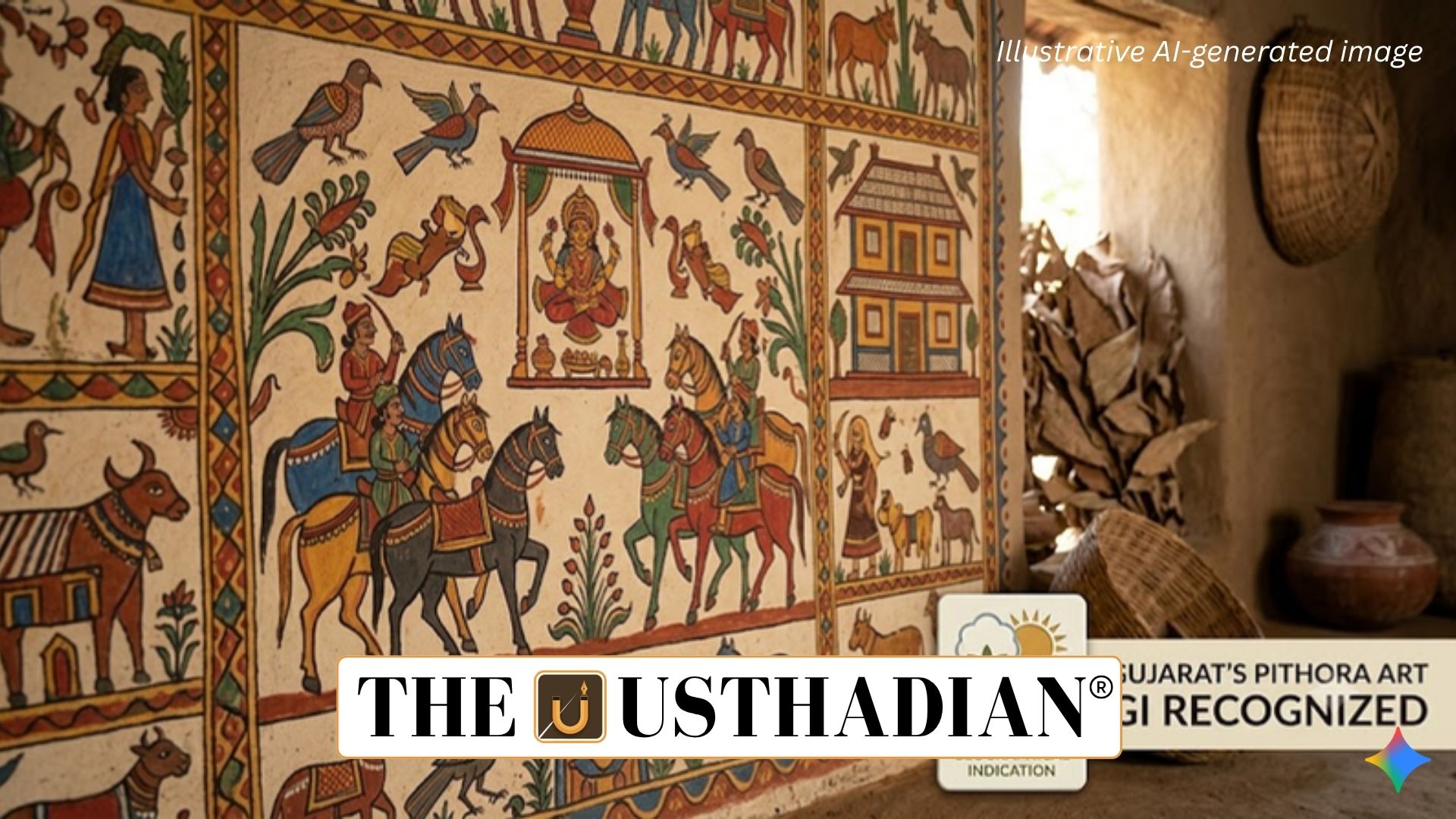
Gujarat’s Tribal Heritage Receives GI Protection
GI Recognition Strengthens Gujarat’s Pithora Tribal Art: Pithora Painting, the traditional ritual wall art of Gujarat, has been awarded the Geographical Indication (GI) Tag, marking a significant milestone in preserving India’s tribal cultural heritage. The recognition protects the authenticity of this indigenous art form while creating new economic opportunities for the artisan communities that have safeguarded it for centuries.
The GI tag will help prevent imitation of genuine Pithora paintings, strengthen their market identity, and promote sustainable livelihoods for tribal artisans.
Static GK fact: Geographical Indications (GI) in India are governed by the Geographical Indications of Goods (Registration and Protection) Act, 1999, and are registered through the GI Registry in Chennai.
Ancient Ritual Art of the Rathwa Tribe
Pithora Painting is a sacred ritual painting traditionally practiced by the Rathwa, Bhilala, and Nayak tribes of Gujarat and neighbouring regions. Unlike decorative artwork, these paintings are created as part of religious ceremonies to honour Baba Pithora, the tribal deity believed to bless families with prosperity, peace, and good fortune.
The paintings are usually made on the interior walls of houses using vibrant natural colours and feature symbolic depictions of horses, tribal deities, the Sun, the Moon, birds, animals, trees, agricultural activities, and scenes from everyday tribal life.
Static GK Tip: The Rathwa tribe is predominantly concentrated in Chhota Udepur district of Gujarat, which is regarded as the cultural centre of Pithora painting.
Importance of the GI Tag
The GI Tag provides legal protection to authentic Pithora paintings by linking the artwork to its geographical origin and traditional production methods. It prevents misuse of the name by unauthorized producers and preserves the originality of this unique tribal art.
The recognition also improves consumer confidence and enhances the branding of authentic tribal handicrafts in domestic and international markets.
Economic Benefits for Tribal Artisans
The GI recognition is expected to significantly improve the livelihoods of tribal artisans. Authentic GI-certified paintings are likely to command higher prices due to their verified origin and cultural value.
The recognition will also increase access to national handicraft exhibitions, international trade fairs, export markets, government-supported artisan programmes, and e-commerce platforms. These opportunities will reduce dependence on intermediaries and enable artisans to receive fair remuneration for their traditional skills.
Preserving India’s Intangible Cultural Heritage
The GI tag contributes to preserving India’s rich tribal traditions by encouraging younger generations to continue practicing this ancient art form. As Pithora painting is closely linked with tribal customs, rituals, and oral traditions, its preservation ensures that valuable indigenous knowledge is passed on to future generations.
The recognition also supports cultural tourism and promotes wider appreciation of India’s diverse tribal heritage.
Static GK fact: A Geographical Indication (GI) identifies products whose quality, reputation, or characteristics are essentially linked to a particular geographical region. India currently has hundreds of registered GI products, including handicrafts, textiles, agricultural products, and food items.
Significance for Competitive Exams
The GI recognition of Gujarat’s Pithora Painting highlights India’s commitment to protecting indigenous art forms, promoting tribal welfare, and preserving intangible cultural heritage. It also strengthens rural livelihoods by encouraging authentic handicraft production and expanding market opportunities for traditional artisans.
Static Usthadian Current Affairs Table
GI Recognition Strengthens Gujarat’s Pithora Tribal Art:
| Fact | Detail |
| Art Form | Pithora Painting |
| State | Gujarat |
| GI Recognition | Geographical Indication (GI) Tag |
| Main Tribal Community | Rathwa Tribe |
| Other Practising Tribes | Bhilala and Nayak |
| Worship Associated | Baba Pithora |
| Nature of Art | Traditional ritual wall painting |
| GI Law | Geographical Indications of Goods (Registration and Protection) Act, 1999 |
| GI Registry | Chennai |
| Major Benefit | Protection of authenticity and improved livelihood opportunities for tribal artisans |