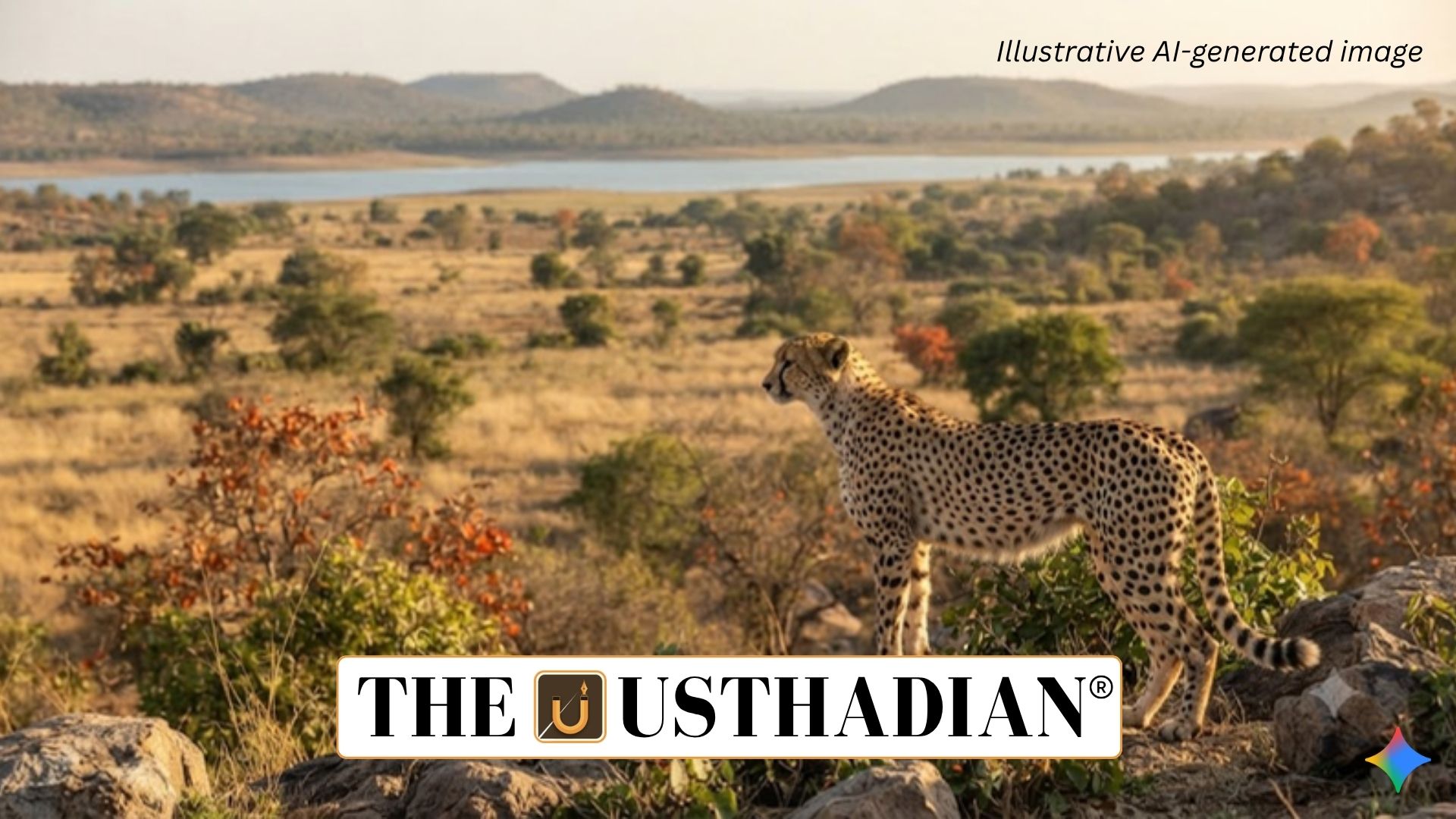
Gandhi Sagar Gets Another Cheetah
Gandhi Sagar Emerges as India’s Second Cheetah Habitat: Under Project Cheetah, Madhya Pradesh has taken another step towards creating multiple habitats for the species. A three-year-old female cheetah, CCB-2, brought from Botswana, was released into Gandhi Sagar Wildlife Sanctuary after being relocated from Kuno National Park.
The move is aimed at developing Gandhi Sagar as a viable second home for cheetahs in Madhya Pradesh and reducing dependence on a single habitat. It also strengthens the programme’s broader objective of establishing sustainable and interconnected cheetah populations.
The relocation comes soon after KGP12, an India-born female cheetah, gave birth to four cubs at Kuno. Since KGP12 was born in India to a cheetah brought from South Africa, the cubs represent the second generation of cheetahs born on Indian soil.
Static GK fact: The cheetah is the world’s fastest land animal and is scientifically known as Acinonyx jubatus.
Project Cheetah in India
Efforts to restore the cheetah population in India gained momentum after discussions initiated in 2009 by the Wildlife Trust of India. The Action Plan for Reintroduction of Cheetah in India proposed bringing around 50 cheetahs from African countries over five years.
Kuno National Park (KNP) in Madhya Pradesh was identified as the most suitable site among several surveyed locations because of its habitat conditions and prey availability. Kuno was assessed to have the potential to support about 21 cheetahs and is notable for the complete relocation of villages from within the park.
Other sites identified for consideration include Nauradehi Wildlife Sanctuary and Gandhi Sagar Wildlife Sanctuary in Madhya Pradesh, along with the Shahgarh bulge and Mukundara Tiger Reserve in Rajasthan.
India’s cheetah reintroduction programme officially began in September 2022, when African cheetahs were brought back after the species had become extinct in India.
Static GK Tip: The cheetah became extinct in India in 1952. The Asiatic cheetah survives in the wild mainly in Iran, while the African cheetah occurs across parts of Africa.
Why Gandhi Sagar Matters
Gandhi Sagar Wildlife Sanctuary, notified in 1974, covers about 368.62 sq km across Mandsaur and Neemuch districts of western Madhya Pradesh, close to the Rajasthan border.
The Chambal River divides the sanctuary into two nearly equal sections, while the Gandhi Sagar Dam is located within the sanctuary. Its landscape includes open savanna grasslands, dry deciduous vegetation and shrubs, while riverine valleys support comparatively greener vegetation.
Gandhi Sagar became India’s second cheetah habitat after Kuno when two male cheetahs, Pawak and Prabhas, were relocated there in April 2025. With the arrival of CCB-2, the sanctuary now has four cheetahs—two males and two females.
Significance of the Second Habitat
Maintaining cheetahs at multiple locations provides greater geographical diversification. Concentrating the entire population at one site could increase vulnerability to disease, ecological disturbances and other unforeseen risks.
The presence of both male and female cheetahs at Gandhi Sagar also improves the possibility of establishing a breeding population. At the landscape level, the strategy supports Project Cheetah’s objective of creating several suitable habitats rather than relying entirely on Kuno.
Cheetah conservation can also contribute to the protection of grassland ecosystems and prey species, helping maintain wider biodiversity.
Way Forward
The long-term success of Project Cheetah will depend on scientific habitat management and continuous monitoring. Key priorities include maintaining adequate prey populations, tracking animal health and reproduction, preserving genetic diversity and developing landscape connectivity.
Community participation will also remain important for reducing human–wildlife conflict. Before further population expansion, the carrying capacity of each habitat must be scientifically assessed.
The development of Gandhi Sagar as a second cheetah habitat therefore represents a shift from simply reintroducing individual animals towards building a self-sustaining and geographically distributed population.
Static Usthadian Current Affairs Table
Gandhi Sagar Emerges as India’s Second Cheetah Habitat:
| Fact | Detail |
| Project Cheetah | India’s programme for reintroducing cheetahs into suitable habitats |
| Programme began | September 2022 |
| CCB-2 | Three-year-old female cheetah brought from Botswana |
| Gandhi Sagar | India’s second cheetah habitat after Kuno |
| Sanctuary area | 368.62 sq km |
| Location | Mandsaur and Neemuch, Madhya Pradesh |
| Sanctuary notified | 1974 |
| Major river | Chambal River |
| First cheetahs at Gandhi Sagar | Pawak and Prabhas, relocated in April 2025 |
| Current Gandhi Sagar population | Four cheetahs—two males and two females |
| Kuno National Park | Principal cheetah habitat in India |
| Cheetah scientific name | Acinonyx jubatus |
| Cheetah extinct in India | 1952 |