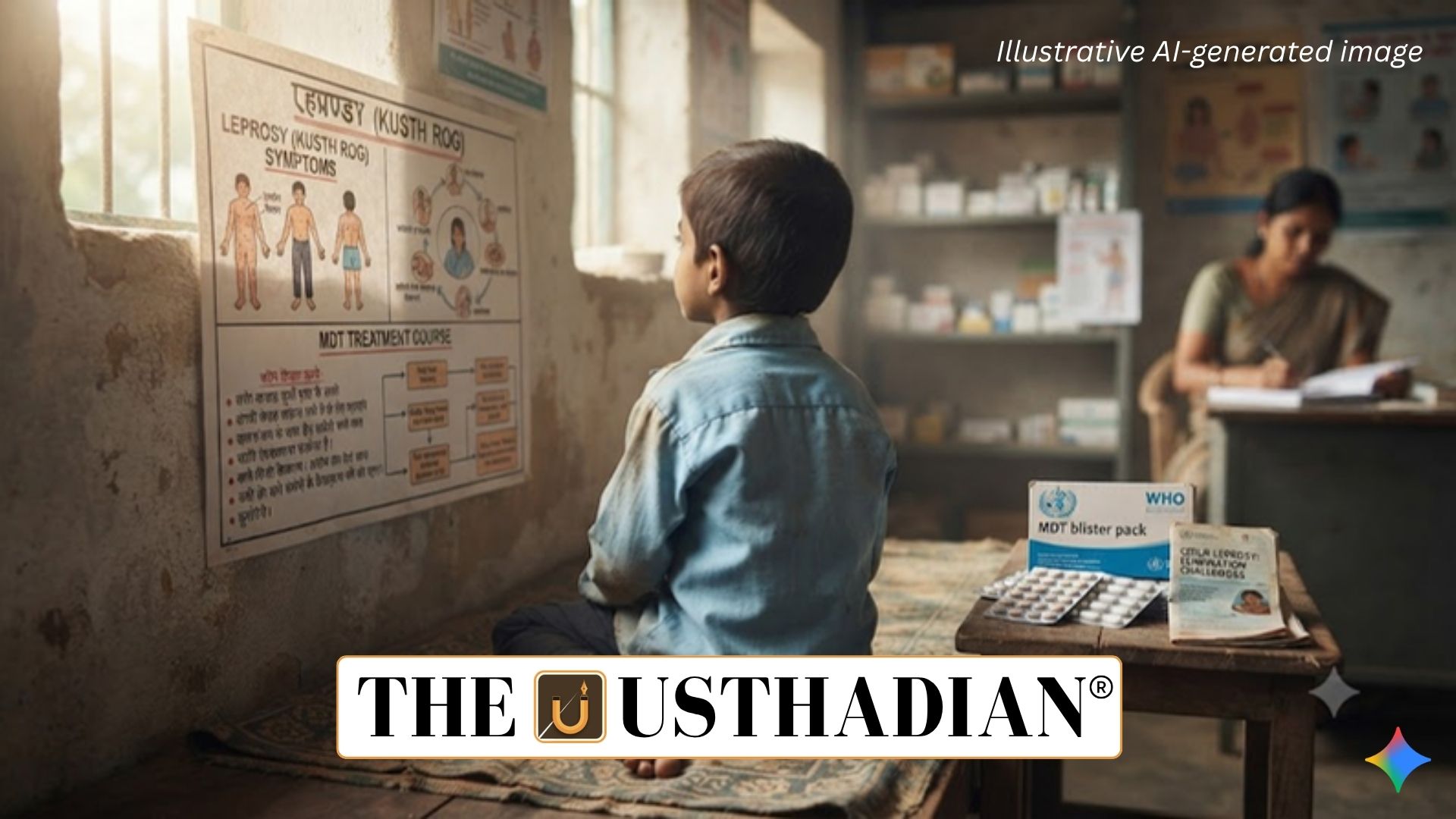
Child Cases Raise Concern
Child Leprosy Challenges India’s 2027 Elimination Target: India continues to face challenges in controlling leprosy among children as the country approaches the 2027 target under the National Strategic Plan for Leprosy 2023–27.
During 2025–26, India detected 3,832 new leprosy cases among children, including 37 children with Grade-2 Disability (G2D) at the time of diagnosis. The child caseload was 91.6% higher than the NLEP target of 2,000 cases for the year.
The figures indicate that transmission is continuing in some communities and that some cases are not being identified at an early stage.
Understanding the 2027 Framework
The National Leprosy Eradication Programme (NLEP) aims to interrupt transmission at the district level by 2027. Under the programme framework, a district is considered to have interrupted transmission when it records zero new indigenous child cases for five consecutive years.
The programme also seeks zero disability among newly detected child cases and a national G2D rate of less than one case per million population. For 2026–27, the roadmap had projected around 1,000 child cases and a G2D rate of 0.5 per million.
Static GK fact: NLEP is India’s national programme for controlling and eliminating leprosy and operates under the National Health Mission framework.
Why Child Cases Are Important
Children below 15 years are an important epidemiological indicator because a new childhood case can suggest recent transmission within the community.
G2D provides another critical signal. It generally indicates that the disease has progressed sufficiently before diagnosis to produce visible disability, pointing towards delayed detection.
When both indicators occur together, they highlight two programme challenges — ongoing transmission and gaps in early diagnosis.
India’s National Burden
India recorded 91,783 new leprosy cases in 2025–26, with a prevalence rate of 0.56 per 10,000 population. Among newly detected patients, 1,945 had G2D, accounting for 2.12% of new cases.
The national G2D rate stood at 1.34 per million, remaining above the NLEP objective of less than one per million.
According to the latest WHO global update cited in the data, India recorded the highest number of new cases globally in 2025, followed by Brazil with 22,901 and Indonesia with 16,292. Together, these three countries accounted for 78.3% of global new cases.
High Burden States
Leprosy remains concentrated in several districts with prevalence above one case per 10,000 population. Chhattisgarh has 23 such districts, followed by Jharkhand with 21, Maharashtra and Odisha with 18 each, and Madhya Pradesh with 10.
These areas receive intensified surveillance and case-detection efforts, particularly where geographical or social barriers make healthcare access difficult.
Strengthening Detection
NLEP uses active case detection, household contact surveys and focused campaigns in high-burden areas. Special strategies are also adopted for hard-to-reach populations.
Stigma and discrimination remain important barriers because affected individuals may delay seeking medical attention, increasing the possibility of late diagnosis.
Static GK Tip: Leprosy, or Hansen’s disease, is mainly caused by Mycobacterium leprae. It primarily affects the skin and peripheral nerves and is curable through multidrug therapy (MDT).
The 2027 Challenge
The continued appearance of childhood cases, including children diagnosed with G2D, shows why early detection and interruption of transmission remain central to India’s elimination strategy.
The performance of high-burden districts, improved household surveillance and reduction of stigma will be crucial as India moves towards the 2027 elimination objective.
Static Usthadian Current Affairs Table
Child Leprosy Challenges India’s 2027 Elimination Target:
| Fact | Detail |
| Programme | National Leprosy Eradication Programme |
| Strategic Plan | National Strategic Plan for Leprosy 2023–27 |
| Child cases in 2025–26 | 3,832 |
| Child G2D cases | 37 |
| Total new cases | 91,783 |
| National G2D rate | 1.34 per million |
| NLEP G2D target | Less than 1 per million |
| Major high-burden state | Chhattisgarh |
| Causative organism | Mycobacterium leprae |
| Treatment | Multidrug therapy |