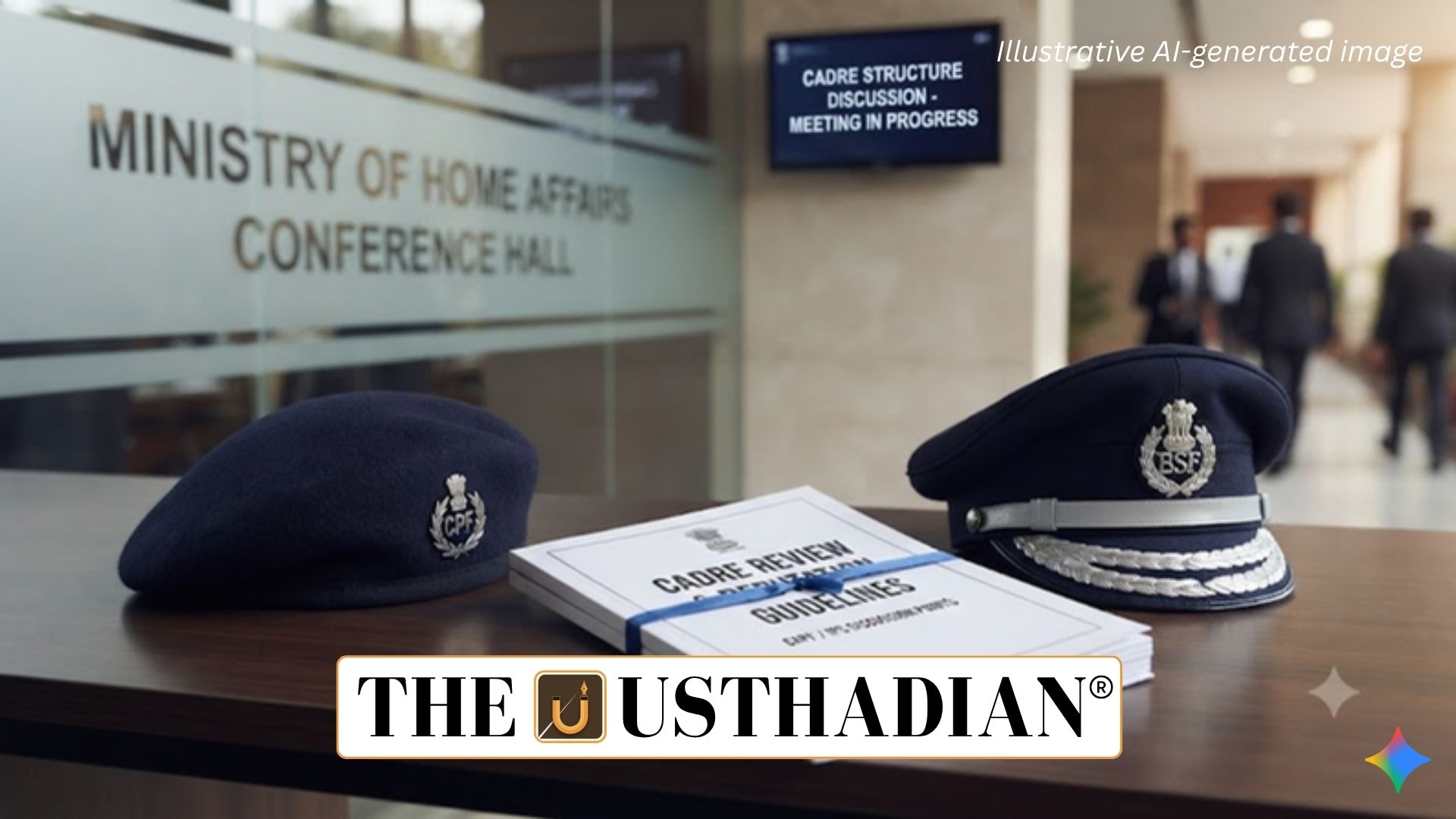
The Core Dispute
CAPF Cadre Progression and the IPS Deputation Dispute: A recent controversy before the Supreme Court has brought renewed attention to the long-standing dispute over senior command positions in India’s Central Armed Police Forces (CAPFs).
The issue centres on whether senior posts should primarily be occupied by officers who build their careers within the CAPFs or continue to be filled substantially through IPS deputation.
The five forces involved are the CRPF, BSF, CISF, ITBP and SSB. Their Group A executive officers are generally recruited as Assistant Commandants and can progress through the command structure.
Career Progression and Stagnation
CAPF cadre officers have argued that deputation at senior levels reduces promotional opportunities for officers serving within the forces. As the number of posts narrows at higher ranks, deputation can create a structural bottleneck.
The issue is closely linked to Non-Functional Financial Upgradation (NFFU), which provides financial progression when regular promotion is delayed because of limited vacancies.
Static GK fact: OGAS means Organised Group A Service. It provides a structured framework for career progression and financial benefits for eligible Group A officers.
OGAS and the Supreme Court
The Delhi High Court ruled in favour of CAPF officers in 2015, and the Supreme Court upheld the decision in 2019. The Union government subsequently granted OGAS status and NFFU benefits to Group A executive cadre officers.
However, CAPF officers have argued that financial upgradation alone does not completely remove promotional stagnation because service progression can remain linked to substantive promotion and recruitment rules.
The 2025 Supreme Court Directions
In its May 23, 2025 judgment, the Supreme Court directed broader cadre reforms for CAPFs. It held that their OGAS status should extend beyond merely providing NFFU benefits.
The Court directed cadre review, examination of service and recruitment rules, consideration of cadre officers’ concerns and progressive reduction of deputation posts up to the DIG and IG levels within two years.
The Centre’s review petition was subsequently dismissed in October 2025.
Why IPS Deputation Continues
The government has argued that CAPFs have specialised operational and national-security responsibilities and therefore cannot be treated identically to civilian Group A services.
The Ministry of Home Affairs has also highlighted the role of IPS officers in maintaining an institutional connection between Central and State police establishments, particularly when CAPFs operate alongside state police forces.
The Supreme Court did not completely eliminate IPS deputation but sought to balance operational requirements with career progression within the CAPFs.
The 2026 CAPF Act
The government later introduced the Central Armed Police Forces (General Administration) Bill in March 2026, which subsequently became law.
The legislation establishes an umbrella framework for Group A officers of the five CAPFs and empowers the Centre to regulate recruitment, promotion, deputation and service conditions.
The Act retains significant deputation provisions: 50% of IG posts, at least 67% of Additional DG posts, and all Special DG and DG posts are to be filled through deputation.
Constitutional Questions
The controversy now involves two connected issues. The first concerns contempt proceedings over alleged non-compliance with the 2025 Supreme Court judgment.
The second concerns the constitutional validity of the 2026 CAPF Act, particularly provisions dealing with deputation and the effect of statutory rules in relation to earlier judicial orders.
Static GK Tip: The dispute highlights the constitutional principle of separation of powers, under which legislative, executive and judicial institutions perform distinct constitutional functions while remaining subject to judicial review.
The Institutional Significance
The CAPF debate extends beyond promotions and service conditions. It involves cadre management, administrative efficiency, Centre-State coordination, judicial review and the relationship between legislation and judicial directions.
The outcome will have implications for how senior command structures are organised and how career progression is balanced against the operational requirements of India’s central security forces.
Static Usthadian Current Affairs Table
CAPF Cadre Progression and the IPS Deputation Dispute:
| Fact | Detail |
| CAPFs involved | CRPF, BSF, CISF, ITBP and SSB |
| Supreme Court judgment | May 23, 2025 |
| Key career issue | CAPF cadre stagnation |
| OGAS | Organised Group A Service |
| NFFU | Non-Functional Financial Upgradation |
| IG deputation | 50% |
| Additional DG deputation | At least 67% |
| Special DG/DG | All posts through deputation |
| New legislation | CAPF (General Administration) Act, 2026 |
| Major constitutional issues | Judicial review, separation of powers and legislative competence |