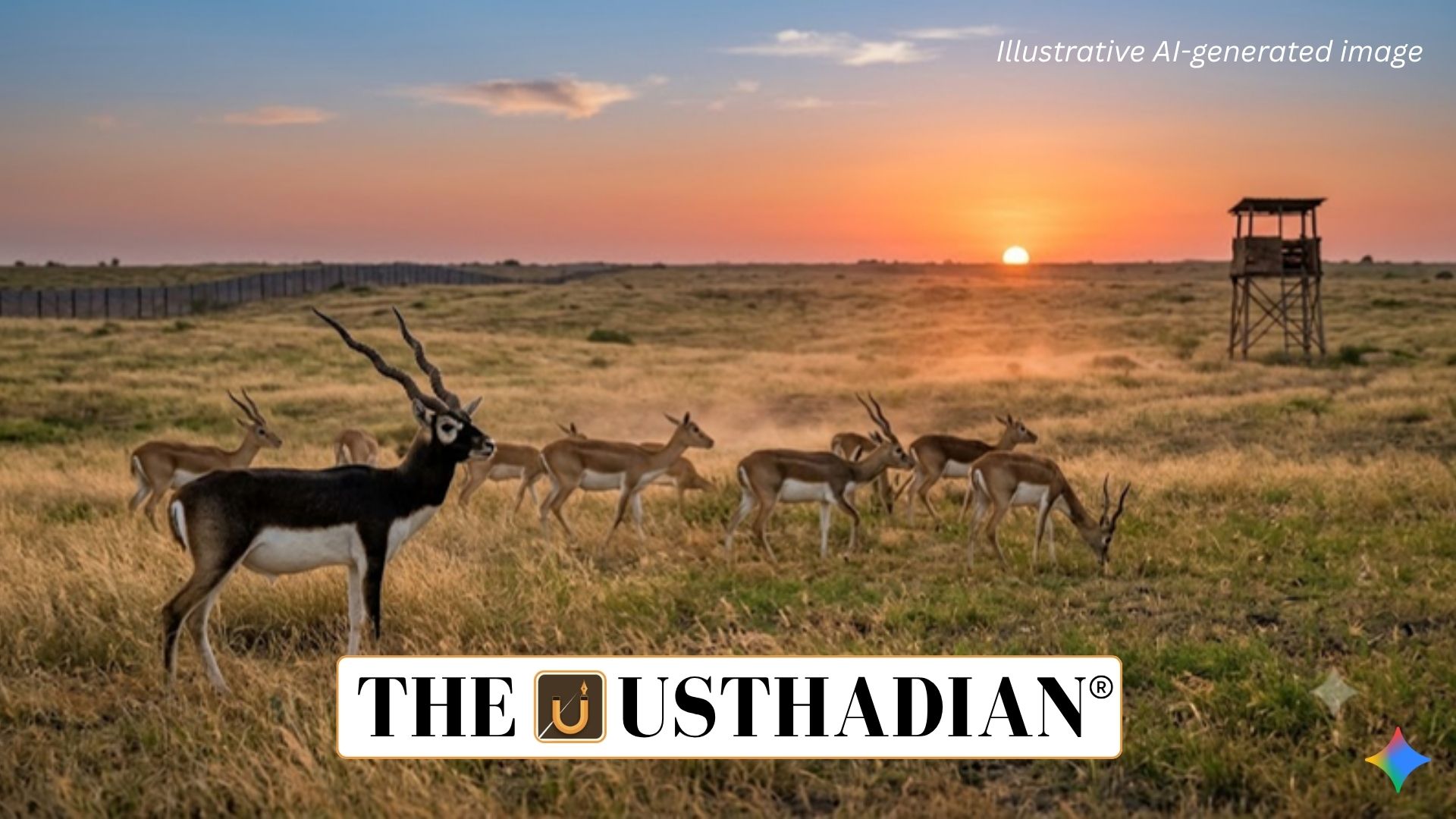
Blackbucks Return to Banni
Blackbuck Reintroduction Strengthens Banni Grassland Conservation: The Gujarat Forest Department, in collaboration with Vantara, released 20 blackbucks into the Banni Grasslands of Kutch on 15 August 2026. The release was organised on the occasion of India’s 80th Independence Day as part of an ecological restoration initiative.
The relocated group consisted of 5 males and 15 females. The animals were moved from Vantara in Jamnagar after obtaining the required approvals from the Chief Wildlife Warden of Gujarat and the Central Zoo Authority.
Aim of the Reintroduction
The primary objective is to strengthen the population of a native herbivore and restore ecological interactions within the Banni grassland ecosystem. Blackbucks can contribute to the functioning of the grassland food chain through their role as grazing herbivores.
The initiative also reflects a broader approach to conservation that focuses not only on protecting individual species but also on restoring the ecological relationships between vegetation, herbivores and predators.
Static GK fact: The blackbuck (Antilope cervicapra) is a native Indian antelope known for the distinctive spiral horns of males and contrasting black-and-white coloration.
Details of the Relocation
A total of 20 blackbucks were released, with females forming the larger share of the relocated population. The animals were transferred from Vantara, Jamnagar, with technical support from the Greens Zoological Rescue and Rehabilitation Centre (GZRRC).
The selection and relocation of animals require consideration of factors such as population composition, habitat suitability and long-term survival prospects.
Importance of Banni Grasslands
The Banni Grasslands, located in the Kutch region of Gujarat, represent an important grassland ecosystem with distinctive vegetation and wildlife. Such ecosystems support diverse species and provide ecological services beyond their value as wildlife habitats.
The blackbuck reintroduction therefore highlights the importance of conserving grasslands as ecosystems in their own right, rather than viewing wildlife conservation only through the protection of forests.
Static GK Tip: Banni is located in the Kutch district of Gujarat and is widely recognised as one of India’s notable grassland landscapes.
Science and Community Participation
Successful species restoration requires considerably more than simply releasing animals into a habitat. Long-term conservation depends upon scientific monitoring, habitat management, population planning and community participation.
Understanding the ecology of the species and the characteristics of the release site is essential for ensuring that relocated animals adapt successfully. Continuous monitoring can also help assess population growth, habitat use and interactions with other species.
Ecological Significance
The presence of blackbucks can strengthen the native herbivore component of Banni’s ecosystem. Over time, a stable population may contribute to the restoration of ecological relationships involving herbivores, predators and grassland vegetation.
The initiative demonstrates the growing emphasis on ecosystem-based wildlife restoration, where species recovery is linked with habitat protection and long-term ecological management.
Static Usthadian Current Affairs Table
Blackbuck Reintroduction Strengthens Banni Grassland Conservation:
| Fact | Detail |
| Species released | Blackbuck |
| Number released | 20 |
| Male blackbucks | 5 |
| Female blackbucks | 15 |
| Release date | 15 August 2026 |
| Location | Banni Grasslands, Kutch, Gujarat |
| Source location | Vantara, Jamnagar |
| Key objective | Native wildlife and grassland ecosystem restoration |
| Technical support | Greens Zoological Rescue and Rehabilitation Centre |
| Regulatory approvals | Chief Wildlife Warden, Gujarat and Central Zoo Authority |
| Scientific name | Antilope cervicapra |
| Ecological role | Native herbivore |