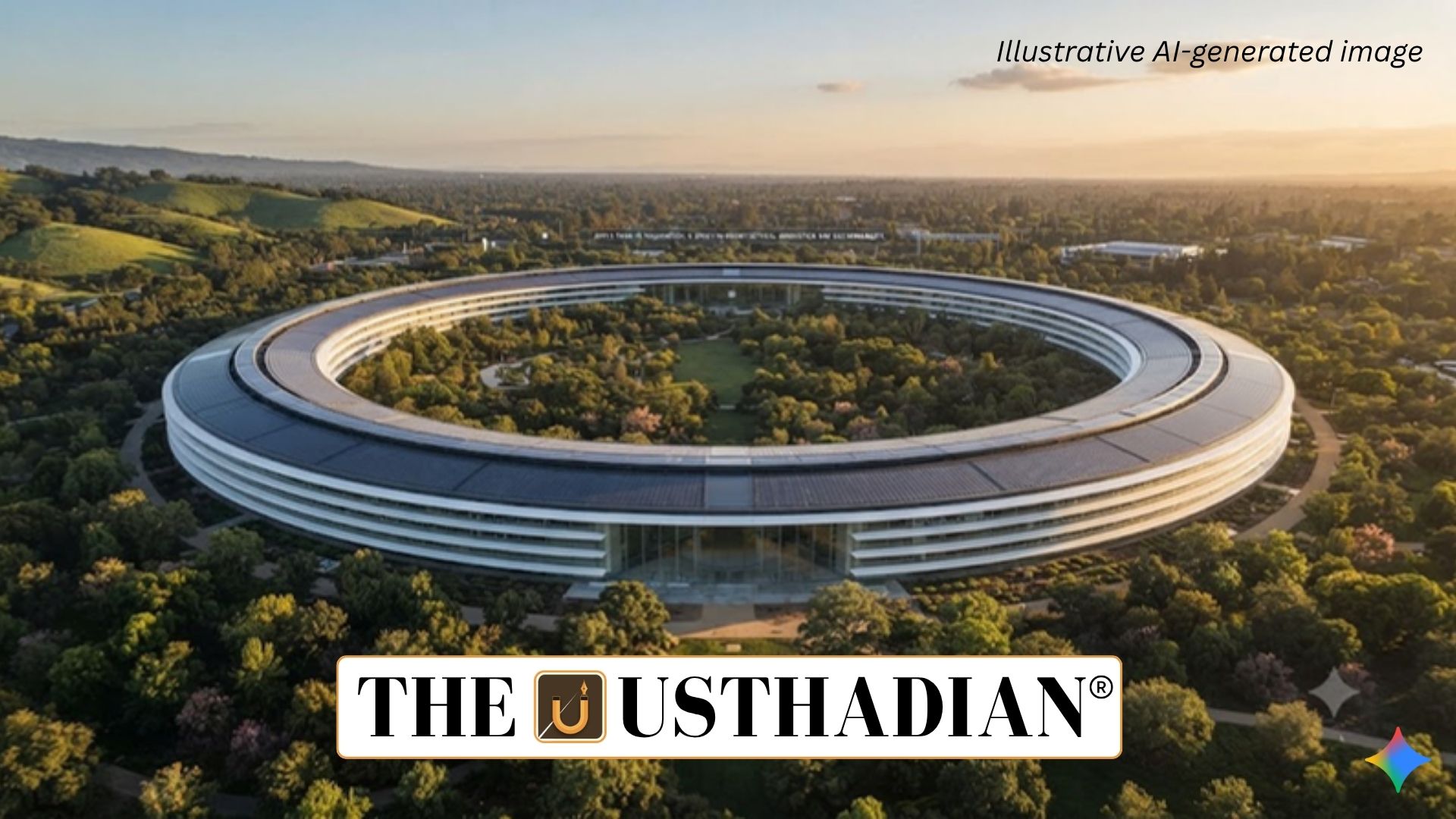
Apple Park Serves as Apple’s Global Headquarters
Apple Park Headquarters and Its Architectural Significance: Apple Park is the global headquarters of Apple Inc., situated in Cupertino, California, United States. Its distinctive circular structure, often compared to a spacecraft, has become one of the world’s most recognisable corporate campuses.
The campus occupies approximately 175 acres in Santa Clara County and was developed to accommodate Apple’s expanding workforce and research activities. Employees began moving from the company’s former headquarters at 1 Infinite Loop to Apple Park in 2017.
Static GK fact: Cupertino is located in California’s Santa Clara County, within the broader Silicon Valley technology hub.
From 1 Infinite Loop to Apple Park
Before Apple Park, 1 Infinite Loop served as Apple’s principal workplace from 1993 to 2017. As Apple’s workforce and business operations expanded, the existing campus became inadequate for the company’s growing space requirements.
The new campus was therefore conceived as a much larger and integrated workplace combining offices, research facilities, visitor areas and extensive green spaces. Apple continues to own and use the former campus for offices and laboratories.
Steve Jobs’ Vision for the Campus
The idea for the new headquarters was strongly associated with Steve Jobs, Apple’s former CEO. In June 2011, Jobs presented the proposed campus concept to the Cupertino City Council, describing the circular building as resembling a spaceship that had landed on Earth.
Although Jobs died in 2011, before the campus was completed, Apple Park became an important part of his architectural and corporate legacy.
Static GK Tip: Steve Jobs co-founded Apple with Steve Wozniak and Ronald Wayne in 1976.
Major Features of Apple Park
Apple Park combines workplaces, research facilities, recreational infrastructure and landscaped areas within a single large campus.
Important features include:
- 175-acre overall campus
- Approximately 2.8 million square feet of office and research-and-development space
- Steve Jobs Theater, a 1,000-seat auditorium
- Around 100,000 square feet of fitness facilities
- A Visitors Center containing an Apple Store and café
- Approximately four miles of jogging trails
- Extensive landscaping featuring drought-resistant plants
The campus was designed with a strong emphasis on green space and environmental considerations.
Who Designed Apple Park?
The architectural design of Apple Park was developed by Foster + Partners, the international architecture and design firm founded by British architect Norman Foster.
The firm became involved with the project in 2009. Demolition of the existing Hewlett-Packard complex began in late 2013, followed by major construction activity from 2014 to 2017.
One notable aspect of the project was the significant expansion of landscaped areas. Reports have highlighted an increase in green space from roughly 20% at the previous facility to around 80% at Apple Park.
Static GK fact: Norman Foster is a prominent British architect associated with high-tech architecture and major international building projects.
Construction Cost of Apple Park
Apple Park is estimated to have cost approximately US$5 billion, placing it among the most expensive corporate headquarters projects ever developed.
Apple reportedly spent around US$300 million acquiring a 98-acre parcel used for the main development. The company had also acquired an additional 50-acre parcel adjacent to the site.
The enormous investment reflects Apple’s focus on creating a highly integrated workplace combining architecture, technology, research and environmental design.
Why Apple Park Is Famous
Apple Park is significant not merely because it houses Apple’s headquarters but also because of its unusual architectural concept. The enormous ring-shaped structure, extensive glass surfaces and large landscaped surroundings distinguish it from conventional corporate campuses.
Its development also represents the transition from 1 Infinite Loop to a purpose-built campus designed for Apple’s much larger workforce and expanding research and development needs.
Conclusion
Apple Park represents the combination of technology, architecture and corporate design associated with Apple. Located in Cupertino, California, the campus replaced 1 Infinite Loop as the company’s principal headquarters and reflects Steve Jobs’ vision of creating an innovative and integrated workplace.
Its 175-acre campus, circular architecture, extensive green spaces and estimated US$5 billion construction cost make Apple Park an important example of modern corporate architecture.
Static Usthadian Current Affairs Table
Apple Park Headquarters and Its Architectural Significance:
| Fact | Detail |
| Apple Park | Global headquarters of Apple Inc. |
| Location | Cupertino, California, USA |
| County | Santa Clara County |
| Campus size | Approximately 175 acres |
| Alternative name | Apple Campus 2 / “The Spaceship” |
| Former headquarters | 1 Infinite Loop |
| 1 Infinite Loop period | 1993–2017 |
| Employee relocation | Began in 2017 |
| Steve Jobs’ proposal | Presented to Cupertino City Council in June 2011 |
| Architect | Foster + Partners |
| Founder of Foster + Partners | Norman Foster |
| Demolition | Hewlett-Packard complex, late 2013 |
| Construction | 2014–2017 |
| Office and R&D space | Approximately 2.8 million sq ft |
| Main auditorium | Steve Jobs Theater |
| Theater capacity | 1,000 seats |
| Fitness centre | About 100,000 sq ft |
| Estimated construction cost | About US$5 billion |
| Reported land acquisition cost | About US$300 million for 98 acres |
| Major design feature | Circular, spacecraft-like structure |
| Environmental feature | Extensive green areas and drought-resistant plants |