Breakthrough Genetic Discovery
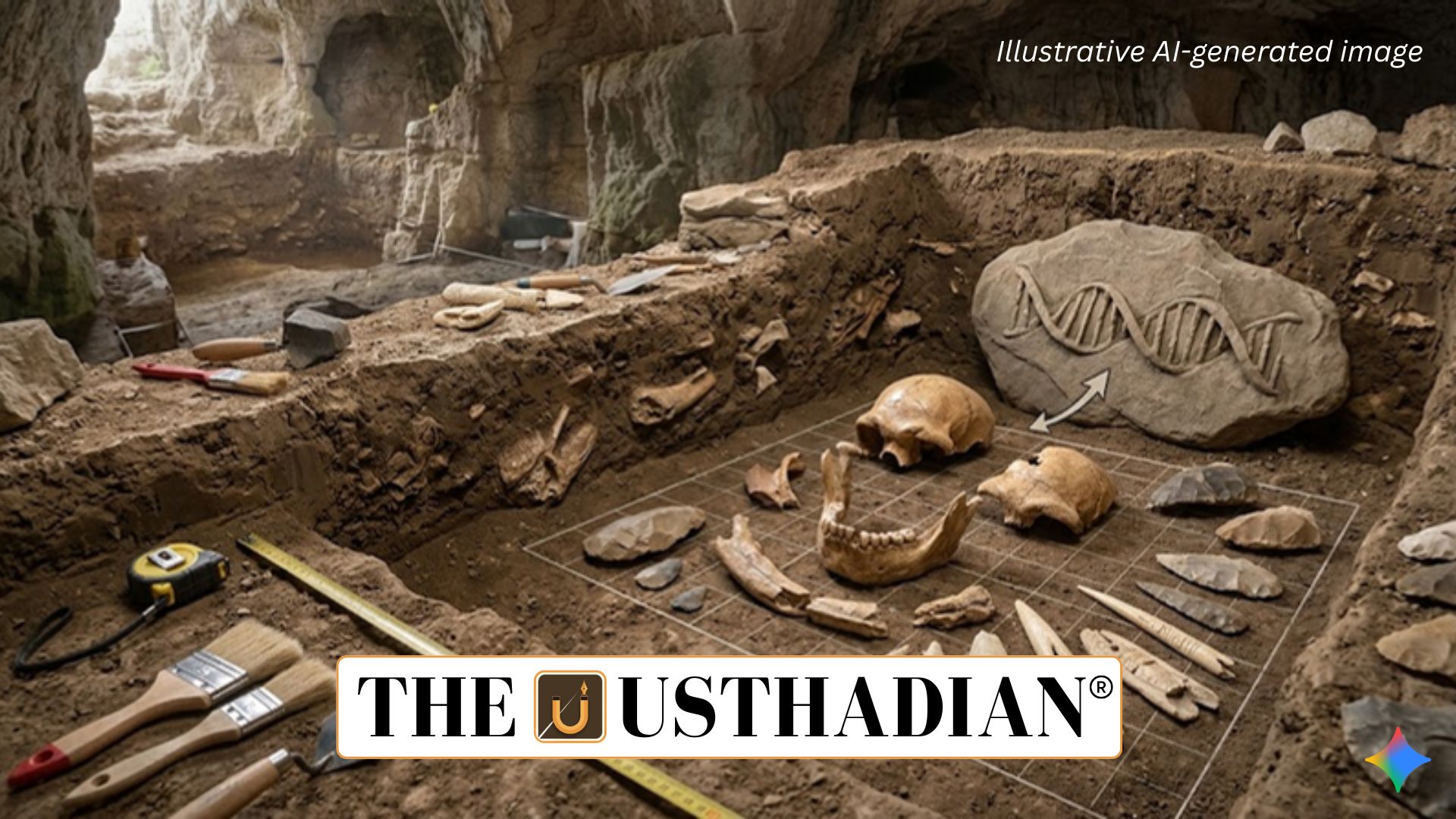
Ancient DNA Sheds Light on Neanderthal Community: A recent study published in Current Biology has revealed a rare genetic snapshot of a Neanderthal group from nearly 100,000 years ago. Scientists analysed ancient DNA extracted from fossil remains found in Stajnia Cave in present-day Poland.
This discovery provides one of the clearest insights into how small Neanderthal communities lived together. It also improves understanding of their migration patterns and population structure across Europe.
Static GK fact: Neanderthals are an extinct human species that lived across Europe and western Asia until around 40,000 years ago.
Rare Evidence from Stajnia Cave
Researchers extracted mitochondrial DNA from eight Neanderthal teeth discovered in the cave. This allowed reconstruction of genetic profiles of at least seven individuals living during the same time period.
This is the first instance where multiple individuals from a single site in Central-Eastern Europe have been genetically studied together. It offers a clearer picture of group living patterns among Neanderthals.
Static GK Tip: The Carpathian Mountains are a major mountain range stretching across Central and Eastern Europe.
Clues About Family Structure
The study identified that two juveniles and one adult shared identical mitochondrial DNA, indicating close maternal relationships. Since this DNA is inherited only from the mother, it helps trace family connections.
Such findings are rare because most Neanderthal remains are scattered across different locations and time periods. This makes the Stajnia Cave discovery particularly significant.
Connections Across Regions
The genetic data revealed that these Neanderthals belonged to a lineage found in regions like the Iberian Peninsula, France, and the Caucasus. This suggests that a widespread maternal genetic group once existed across western Eurasia.
Over time, this lineage disappeared and was replaced by newer Neanderthal populations. This indicates dynamic population shifts and migrations in prehistoric times.
Static GK fact: The Middle Paleolithic period is associated with Neanderthal culture and tool-making technologies.
Importance of Central Eastern Europe
The findings highlight that Central-Eastern Europe was not isolated but served as a key corridor for movement and interaction. It played a major role in shaping Neanderthal population dynamics.
The study also shows the importance of combining archaeology, genetics, and dating techniques to understand early human history accurately.
Static Usthadian Current Affairs Table
Ancient DNA Sheds Light on Neanderthal Community:
| Topic | Detail |
| Discovery Location | Stajnia Cave, Poland |
| Time Period | Around 100,000 years ago |
| Key Finding | Genetic reconstruction of multiple Neanderthals |
| DNA Type | Mitochondrial DNA (maternal inheritance) |
| Family Evidence | Shared DNA among juveniles and adult |
| Related Regions | Iberian Peninsula, France, Caucasus |
| Historical Period | Middle Paleolithic |
| Significance | Insight into Neanderthal social structure and migration |