Personality in Recent News
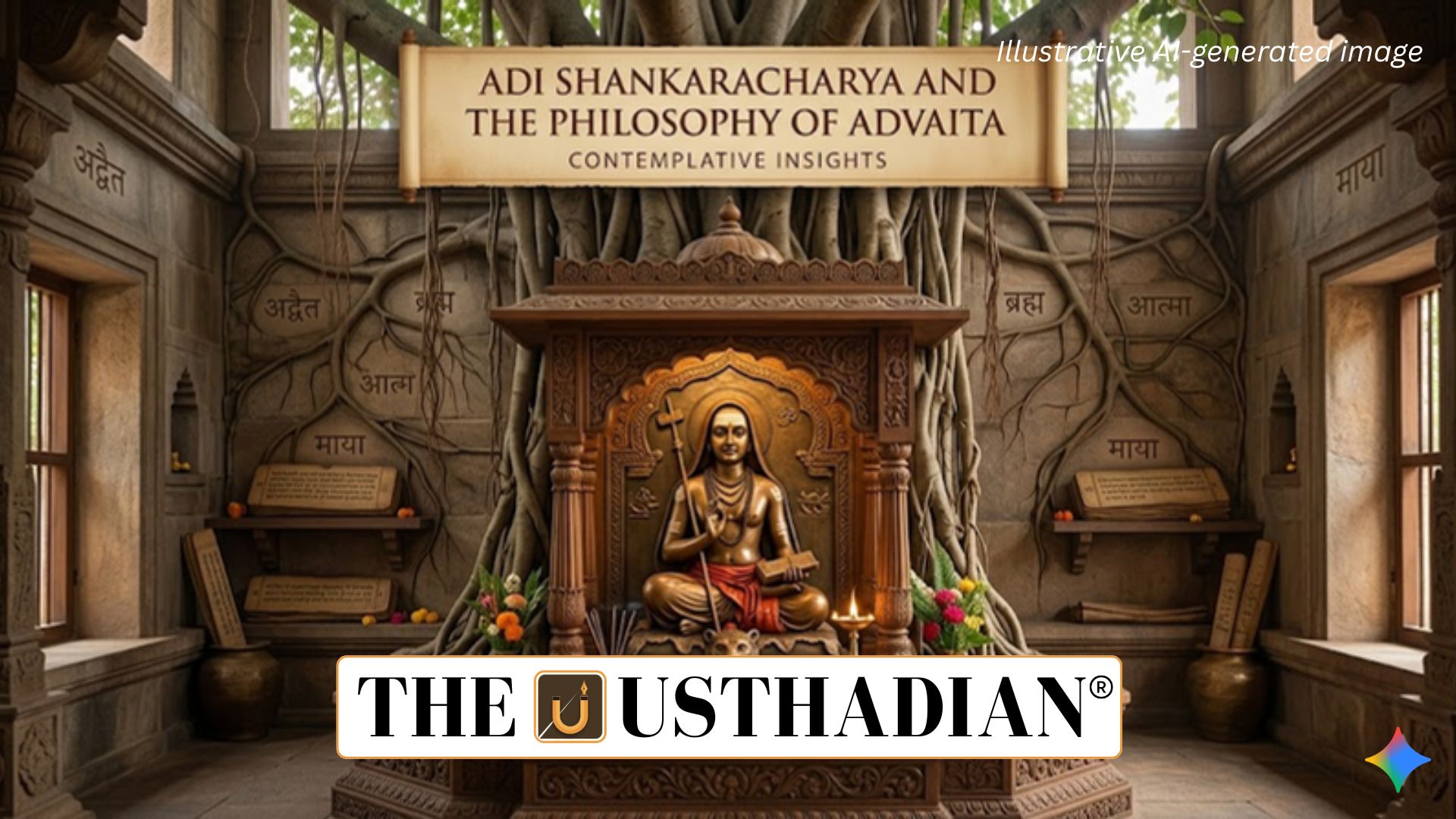
Adi Shankaracharya and the Philosophy of Advaita: The Prime Minister of India, Narendra Modi, paid tribute to Adi Shankaracharya on his Jayanti, highlighting his lasting influence on Indian spiritual thought. His teachings continue to shape philosophical discussions and religious practices across the country.
The remembrance reflects the continued relevance of Advaita Vedanta in modern India. His ideas emphasize unity and spiritual awareness beyond material differences.
Early Life and Background
Adi Shankaracharya was born in 788 A.D. in Kalady. He showed exceptional intellectual ability from a young age and became a renunciate (sannyasi) early in life.
He travelled extensively across the Indian subcontinent to spread his philosophical ideas. His journeys played a major role in reviving Hindu philosophical traditions during that period.
Static GK fact: Kalady in Kerala is today a major pilgrimage site associated with Adi Shankaracharya.
Core Philosophy of Advaita
The central idea of Advaita Vedanta is non-dualism, meaning reality is ultimately one. According to him, the individual soul (Atman) is identical to the universal consciousness (Brahman).
He argued that the world’s apparent diversity is due to Maya, or illusion. True knowledge removes this illusion and leads to Moksha, or liberation.
Static GK Tip: Advaita Vedanta is one of the six orthodox schools of Hindu philosophy.
Establishment of Four Mathas
To institutionalise his teachings, Adi Shankaracharya established four major mathas (monastic centres) in different directions of India.
These include Sringeri in the south, Dwarka in the west, Puri in the east, and Badrinath in the north. These institutions continue to preserve and propagate his teachings.
Static GK fact: The four mathas correspond to the four cardinal directions, symbolising spiritual unity across India.
Literary Contributions
Adi Shankaracharya authored several important philosophical and devotional works. His writings combine deep metaphysical insights with simple spiritual guidance.
Notable works include Bhaja Govindam, Atma Shatakam, and Saundarya Lahari. These texts remain widely studied and recited even today.
Lasting Legacy
The influence of Adi Shankaracharya extends beyond philosophy into culture, religion, and national identity. His efforts helped unify diverse traditions under a common spiritual framework.
His teachings continue to inspire scholars, spiritual leaders, and seekers across generations. The concept of unity in diversity remains central to his message.
Static Usthadian Current Affairs Table
Adi Shankaracharya and the Philosophy of Advaita:
| Topic | Detail |
| Personality in News | Adi Shankaracharya Jayanti tribute by Prime Minister |
| Birth | 788 A.D., Kalady, Kerala |
| Philosophy | Advaita Vedanta (Non-dualism) |
| Core Idea | Atman is identical to Brahman |
| Key Concept | Maya as illusion of duality |
| Institutions | Four mathas in four directions of India |
| Literary Works | Bhaja Govindam, Atma Shatakam, Saundarya Lahari |
| Goal | Moksha through realization of oneness |