Location and Geographic Setting
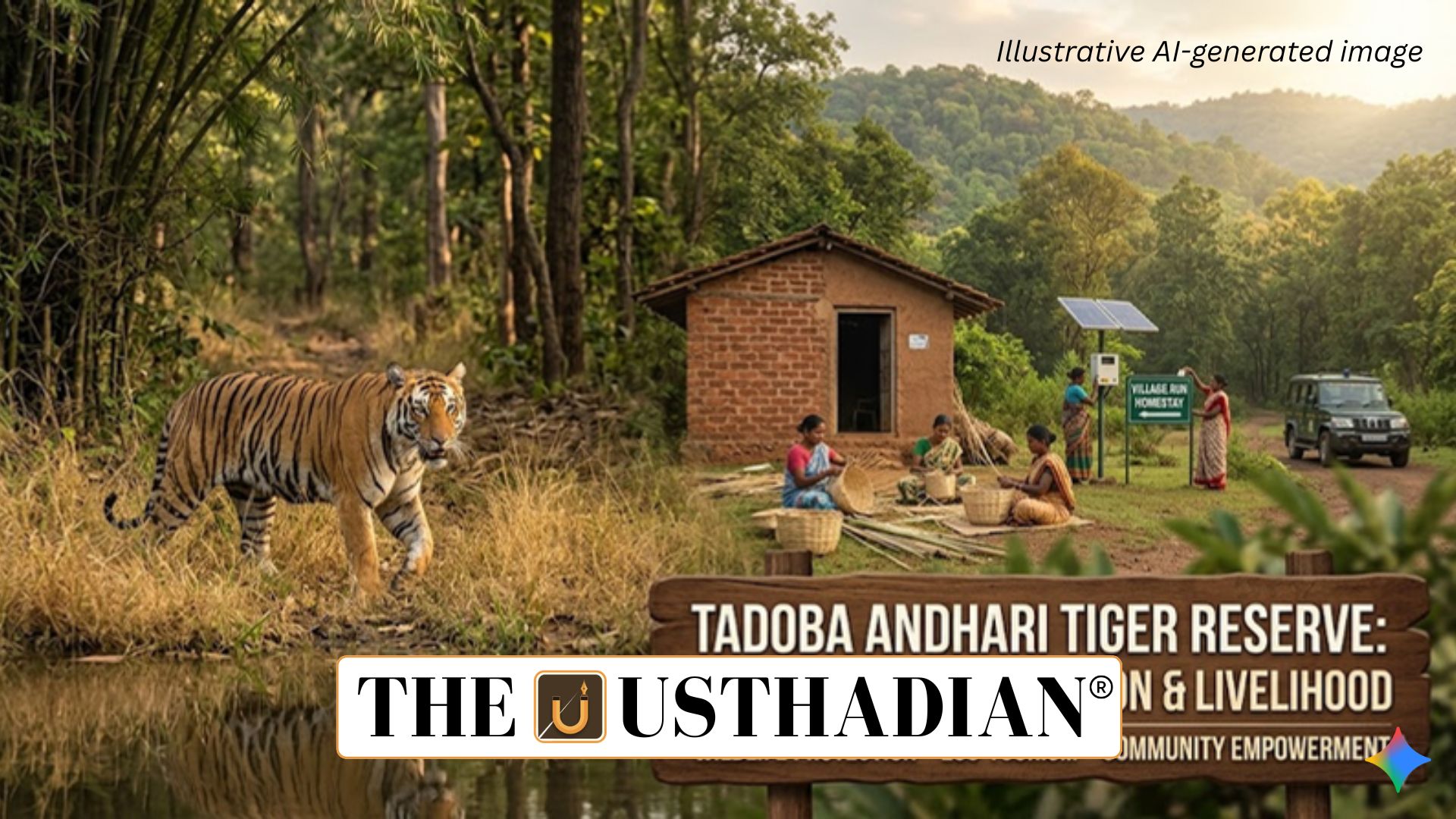
Tadoba Andhari Tiger Reserve Model of Conservation and Livelihood: Tadoba-Andhari Tiger Reserve (TATR) is located in the Chandrapur district of Maharashtra within the Deccan Plateau region. It forms part of the central Indian tiger landscape, which is crucial for wildlife corridors.
The reserve derives its name from Tadoba Lake and the Andhari River, which flows through the forest. This river plays a key role in sustaining the ecosystem.
Static GK fact: Maharashtra is India’s third-largest state by area and has multiple tiger reserves under Project Tiger (1973).
Rich Flora of the Reserve
The forest type is predominantly southern tropical dry deciduous forest, which supports diverse vegetation. Important tree species include teak, bija, dhauda, hald, salai, semal, and tendu.
These forests shed leaves seasonally, helping conserve water during dry periods. The presence of tendu leaves also supports local livelihoods through forest produce collection.
Static GK Tip: Dry deciduous forests are commonly found in regions receiving 70–100 cm of annual rainfall.
Diverse Wildlife Population
TATR is well known for its rich fauna, especially the Royal Bengal Tiger, which is the apex predator of the ecosystem. Other key species include leopard, sloth bear, wild dog (dhole), and gaur (Indian bison).
The reserve maintains ecological balance through predator-prey relationships. It is considered one of the best sites in India for tiger sightings, boosting tourism.
Static GK fact: The Royal Bengal Tiger is the national animal of India.
Model of Human Wildlife Coexistence
TATR stands out as a successful example of balancing conservation with local development. Authorities have promoted co-existence between villagers and wildlife instead of forced displacement.
Local communities are actively involved in conservation activities. This reduces conflict and builds a sense of ownership among residents.
The approach ensures that conservation efforts are sustainable and socially inclusive.
Eco Tourism and Economic Benefits
The reserve has developed a strong eco-tourism model, generating income for nearby villages. Local people are employed as guides, drivers, and hospitality staff.
Revenue-sharing mechanisms ensure that tourism benefits are distributed among communities. This creates an economic incentive to protect wildlife.
Additionally, value-added forest produce collection like tendu leaves contributes to income generation.
Sustainable Practices and Waste Management
TATR has implemented zero-waste management practices to maintain ecological balance. Efforts include minimizing plastic use and promoting eco-friendly tourism.
Such initiatives reduce environmental degradation and enhance the sustainability of tourism.
The reserve demonstrates how conservation areas can integrate environmental protection with economic growth.
Importance for Conservation Policy
The success of TATR offers a model for other protected areas in India. It highlights the importance of community participation, sustainable tourism, and ecological management.
This approach aligns with India’s broader goals of biodiversity conservation and sustainable development.
Static Usthadian Current Affairs Table
Tadoba Andhari Tiger Reserve Model of Conservation and Livelihood:
| Topic | Detail |
| Location | Chandrapur district, Maharashtra |
| Region | Deccan Plateau |
| Forest Type | Southern tropical dry deciduous |
| Major River | Andhari River |
| Key Species | Tiger, Leopard, Sloth Bear, Dhole, Gaur |
| Conservation Model | Community-based coexistence |
| Economic Feature | Eco-tourism and revenue sharing |
| Sustainability Practice | Zero-waste management |