Record Foodgrain Availability
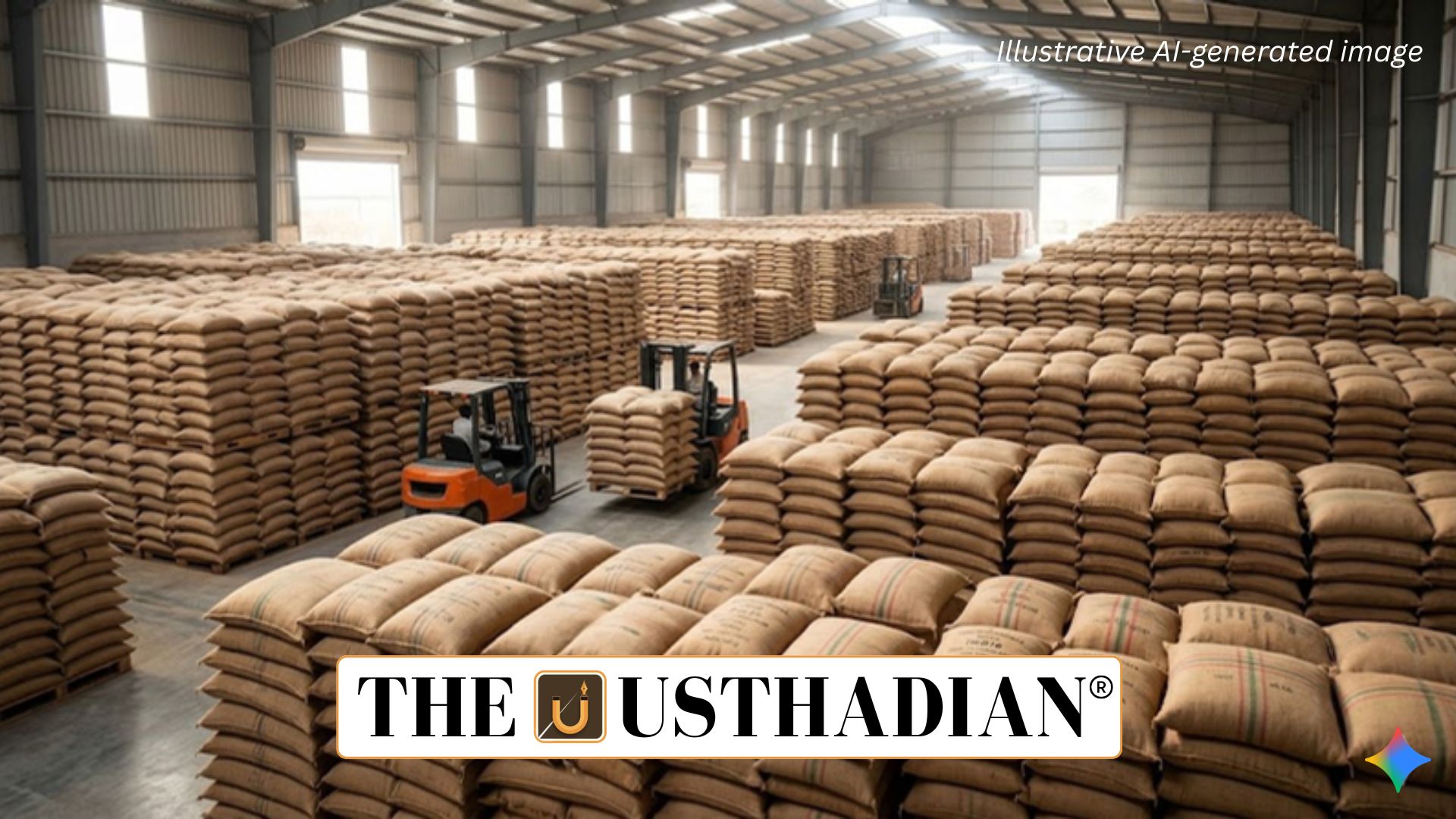
India Foodgrain Stock Surges Beyond Buffer Norms: India’s foodgrain stock has reached an unprecedented level, with about 602 Lakh Metric Tonnes (LMT) in reserve. This includes nearly 222 LMT of wheat and 380 LMT of rice, which is almost three times higher than the prescribed buffer norms.
Such a surplus reflects strong agricultural output and efficient procurement mechanisms. It also strengthens India’s capacity to manage food supply during crises.
Static GK fact: India follows the Minimum Support Price (MSP) system to procure crops like wheat and rice from farmers.
Understanding Buffer Stock
Buffer stock refers to the quantity of foodgrains maintained by the government to ensure food security and price stability. These stocks are procured and managed mainly by the Food Corporation of India (FCI).
The Cabinet Committee on Economic Affairs (CCEA) periodically fixes the minimum buffer norms on a quarterly basis. These norms guide how much stock must be maintained at different times of the year.
Static GK Tip: The Food Corporation of India (FCI) was established in 1965 to implement food policies.
Purpose of Maintaining Buffer Stocks
Buffer stocks play a crucial role in ensuring continuous food supply during emergencies such as droughts, floods, or crop failures. They act as a safeguard against sudden disruptions.
They also help in price stabilisation by preventing extreme fluctuations in market prices. Excess supply in the market can reduce prices, while controlled release helps maintain balance.
Additionally, these stocks support the Public Distribution System (PDS), through which subsidised foodgrains are provided to economically weaker sections.
Growth in Agricultural Production
India’s rising stock levels are backed by significant growth in agricultural production. The country is the largest producer of pulses and millets globally, while ranking second in rice, wheat, fruits, and vegetables.
Total horticulture production reached 362.08 million tonnes, surpassing foodgrain output. This indicates a shift towards high-value crops, improving farmers’ income potential.
Static GK fact: India is the largest producer of spices and coconut in the world.
Export Performance and Value Addition
Agricultural exports have increased from USD 34.5 billion in FY20 to USD 51.1 billion in FY25. This rise reflects India’s growing presence in global agricultural markets.
The share of processed food exports has reached 20.4%, highlighting a move towards value-added agricultural products rather than raw exports.
This transformation supports economic growth and enhances India’s competitiveness internationally.
Challenges and Way Forward
While surplus stock ensures food security, it also raises concerns regarding storage capacity and wastage. Maintaining large inventories involves high costs and logistical challenges.
The focus must shift towards improving storage infrastructure, promoting exports, and balancing procurement with demand.
Efficient management of foodgrain stocks will be essential for sustainable agricultural growth and long-term food security.
Static Usthadian Current Affairs Table
India Foodgrain Stock Surges Beyond Buffer Norms:
| Topic | Detail |
| Total Foodgrain Stock | 602 Lakh Metric Tonnes |
| Wheat Stock | 222 LMT |
| Rice Stock | 380 LMT |
| Buffer Norm Authority | Cabinet Committee on Economic Affairs |
| Key Agency | Food Corporation of India |
| Export Growth | USD 34.5 billion (FY20) to USD 51.1 billion (FY25) |
| Horticulture Output | 362.08 million tonnes |
| Global Rank | 1st in pulses and millets, 2nd in rice and wheat |