Rajasthan and Haryana Sign Landmark Water Agreement
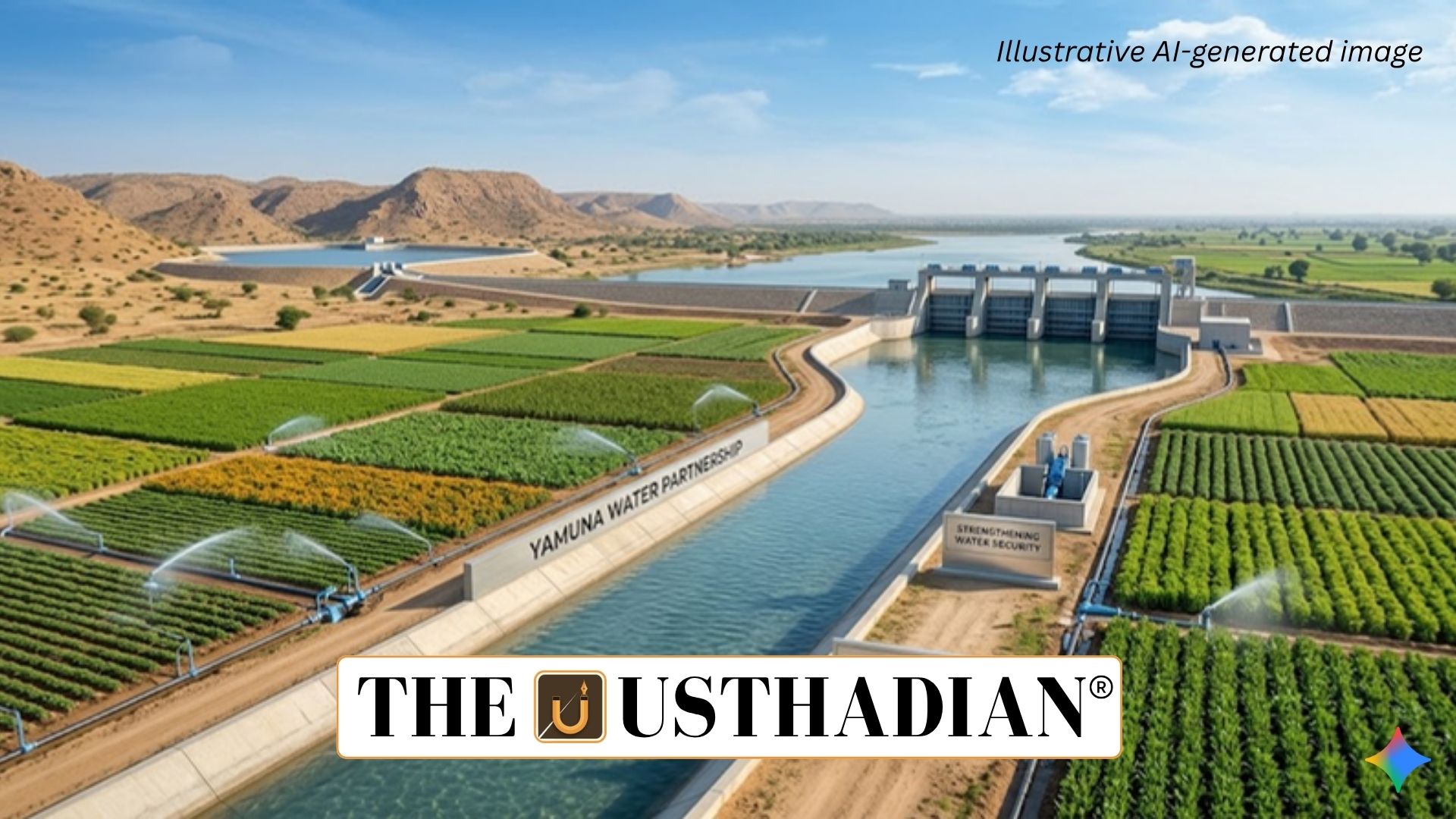
Rajasthan and Haryana Strengthen Water Security Through Yamuna Water Partnership: The Governments of Rajasthan and Haryana signed a historic agreement on 29 June 2026 for implementing the Yamuna Water Project in New Delhi. The agreement was signed in the presence of Union Home Minister Amit Shah and aims to resolve a nearly 30-year-old inter-state water issue.
The project will improve drinking water availability in water-scarce regions while strengthening cooperation between the two neighbouring states. It also reflects India’s commitment to cooperative federalism in resolving resource-sharing disputes.
Static GK fact: Cooperative federalism promotes collaboration between the Union and State Governments to achieve common developmental goals through consultation and coordination.
Understanding the Yamuna Water Project
The Yamuna Water Project is an inter-state water infrastructure initiative that will transport Rajasthan’s allocated share of Yamuna River water through an underground pipeline network. Water will be sourced from the Western Yamuna Canal and delivered to Rajasthan using modern engineering infrastructure.
The project enables Rajasthan to utilize its share of water allocated under the 1994 Memorandum of Understanding (MoU) on the sharing of the utilisable surface waters of the Upper Yamuna Basin.
Static GK Tip: The Yamuna River is the largest tributary of the Ganga. It originates from the Yamunotri Glacier in Uttarakhand and flows through Haryana, Delhi, and Uttar Pradesh before joining the Ganga at Prayagraj.
Why the Agreement Was Necessary
Although Rajasthan received a share of Yamuna waters under the 1994 Upper Yamuna Basin Agreement, the absence of proper infrastructure prevented effective utilization for nearly three decades.
The new agreement establishes a comprehensive framework covering water allocation, cost sharing, infrastructure development, operation and maintenance, monitoring systems, and dispute resolution. This framework is expected to ensure smooth implementation and long-term cooperation.
Major Features of the Project
The project will transport approximately 580 Million Cubic Metres (MCM) of Yamuna water from the Western Yamuna Canal to Rajasthan through three underground pipelines.
Each pipeline will have a diameter of more than 3.6 metres, enabling efficient movement of large volumes of water. Water will mainly be supplied during the July–October monsoon period, supported by transparent monitoring and scientific water management practices.
Benefits for Both States
The project will provide reliable drinking water to drought-prone districts of Rajasthan, including Sikar, Churu, and Jhunjhunu, which frequently face water shortages.
In Haryana, districts such as Bhiwani and Fatehabad will also benefit through improved regional water management. The project further supports groundwater recharge, reduces water wastage, and promotes sustainable water conservation by storing excess rainwater in large ponds.
Static GK fact: The Central Water Commission (CWC) functions under the Ministry of Jal Shakti and serves as India’s premier technical organization for water resources planning, development, and management.
Static Usthadian Current Affairs Table
Rajasthan and Haryana Strengthen Water Security Through Yamuna Water Partnership:
| Fact | Detail |
| Project | Yamuna Water Project |
| States Involved | Rajasthan and Haryana |
| Agreement Date | 29 June 2026 |
| Water Source | Western Yamuna Canal |
| Water Allocation | 580 Million Cubic Metres (MCM) |
| Pipeline Network | Three underground pipelines |
| Pipeline Diameter | More than 3.6 metres |
| Beneficiary Districts | Sikar, Churu, Jhunjhunu, Bhiwani, Fatehabad |
| Technical Agency | Central Water Commission (CWC) |
| Basis of Allocation | 1994 Upper Yamuna Basin MoU |