Cabinet Clears PM Surya Sarovar Yojana
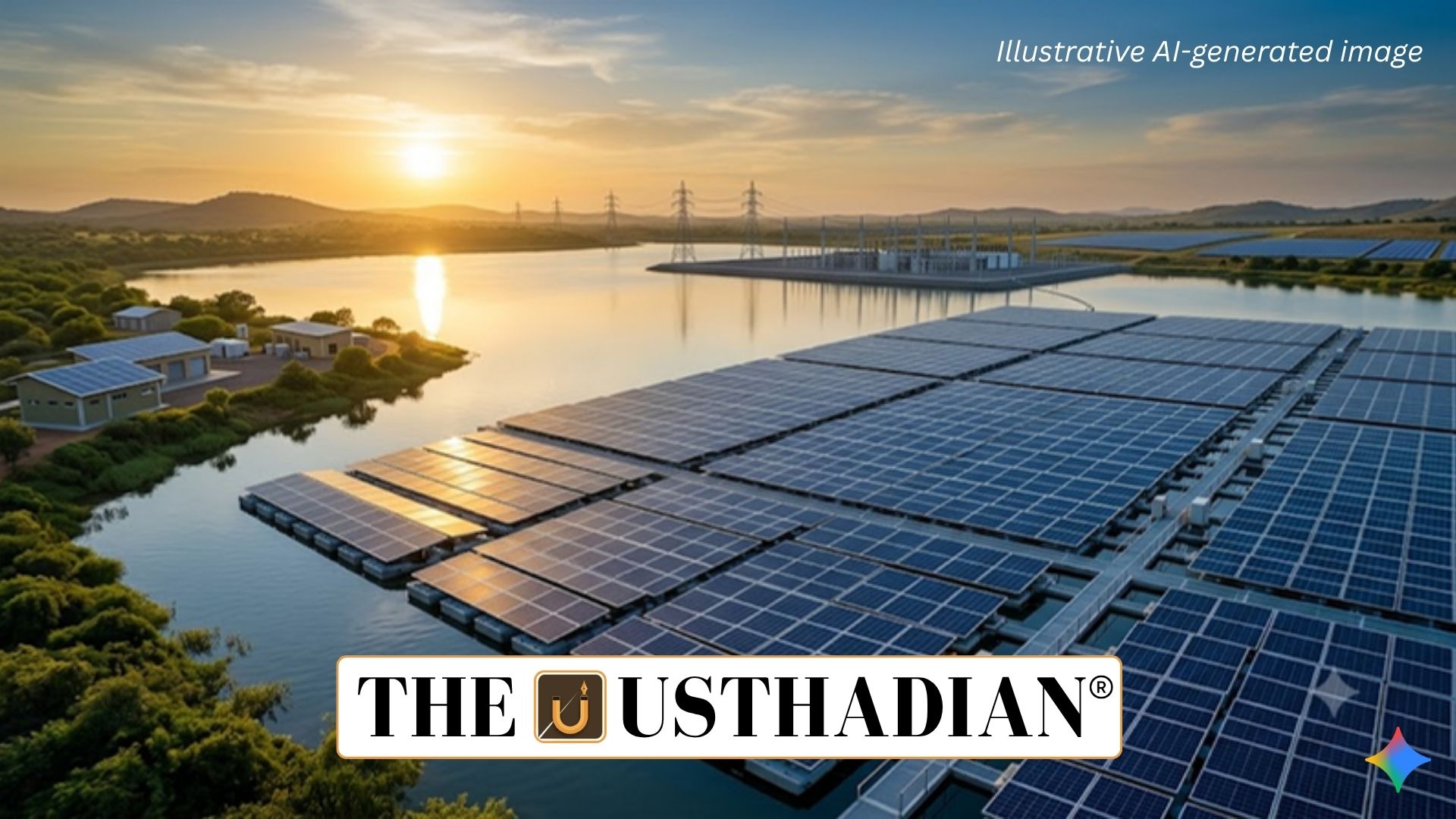
Pradhan Mantri Surya Sarovar Yojana Accelerates India’s Floating Solar Mission: The Union Cabinet, chaired by Prime Minister Narendra Modi, has approved the Pradhan Mantri Surya Sarovar Yojana (PM-SSY) with a total financial outlay of ₹5,070 crore. The scheme aims to establish 5,000 MW of Floating Solar Photovoltaic (FSPV) capacity integrated with Energy Storage Systems (ESS) across reservoirs and inland water bodies.
The programme will be implemented from FY 2026–27 to FY 2030–31, while financial assistance will continue until FY 2032–33. The initiative supports India’s renewable energy expansion, grid reliability, and long-term energy security.
Static GK fact: India is the world’s third-largest producer of renewable energy, with solar power playing a key role in achieving the country’s clean energy targets.
Objectives of the Scheme
PM-SSY seeks to utilize unused water surfaces for clean electricity generation while reducing pressure on land resources. Floating solar plants will be installed on reservoirs, lakes, dams, and other inland water bodies to maximize renewable energy generation.
The scheme also promotes Aatmanirbhar Bharat by strengthening domestic clean energy infrastructure and supporting India’s commitment towards sustainable development and lower carbon emissions.
Major Features of PM-SSY
The scheme targets the installation of 5,000 MW of floating solar capacity across the country. Every project must be integrated with an Energy Storage System (ESS) having a combined storage capacity of at least 10,000 MWh, equivalent to a minimum of two hours of storage.
Eligible developers will receive Central Financial Assistance (CFA) of ₹1 crore per MW after successful project commissioning. In addition, assistance of up to ₹50 lakh will be provided for feasibility studies, including bathymetric surveys, hydrographic studies, environmental assessments, and technical investigations.
Static GK Tip: Central Financial Assistance (CFA) is financial support provided by the Government of India to accelerate priority national schemes.
Importance of Floating Solar Technology
Floating Solar Photovoltaic systems are installed on floating structures over water bodies instead of land. This technology conserves valuable agricultural land while utilizing idle water surfaces for electricity generation.
Water beneath the solar panels naturally cools the modules, improving their efficiency. Floating solar installations also reduce water evaporation from reservoirs and contribute to better water resource management.
As India faces increasing land constraints for large-scale solar parks, floating solar offers an effective alternative for expanding renewable energy capacity.
Energy Storage Strengthens Grid Reliability
The mandatory Energy Storage System (ESS) is among the most significant features of PM-SSY. The storage system will store surplus electricity generated during peak sunshine hours and supply power when solar generation declines.
This integration improves grid stability, reduces fluctuations in electricity supply, and supports greater penetration of renewable energy into the national power network.
India’s Floating Solar Potential
The National Institute of Solar Energy (NISE) has estimated India’s floating solar potential at nearly 102.18 GWp across suitable reservoirs and inland water bodies. Presently, India’s installed floating solar capacity is around 700 MW.
The addition of 5,000 MW under PM-SSY represents a major step towards harnessing this untapped potential while supporting India’s long-term renewable energy roadmap.
Static GK fact: The Ministry of New and Renewable Energy (MNRE) is the nodal ministry responsible for promoting renewable energy programmes in India.
Static Usthadian Current Affairs Table
Pradhan Mantri Surya Sarovar Yojana Accelerates India’s Floating Solar Mission:
| Fact | Detail |
| Scheme | Pradhan Mantri Surya Sarovar Yojana (PM-SSY) |
| Approved by | Union Cabinet |
| Total Outlay | ₹5,070 crore |
| Floating Solar Target | 5,000 MW |
| Energy Storage Requirement | Minimum 10,000 MWh (2-hour storage) |
| Implementation Period | FY 2026–27 to FY 2030–31 |
| Financial Assistance | ₹1 crore per MW under CFA |
| Feasibility Study Support | Up to ₹50 lakh per project |
| Nodal Ministry | Ministry of New and Renewable Energy (MNRE) |
| Estimated Floating Solar Potential | 102.18 GWp (NISE) |