What Is JWALA-MK1
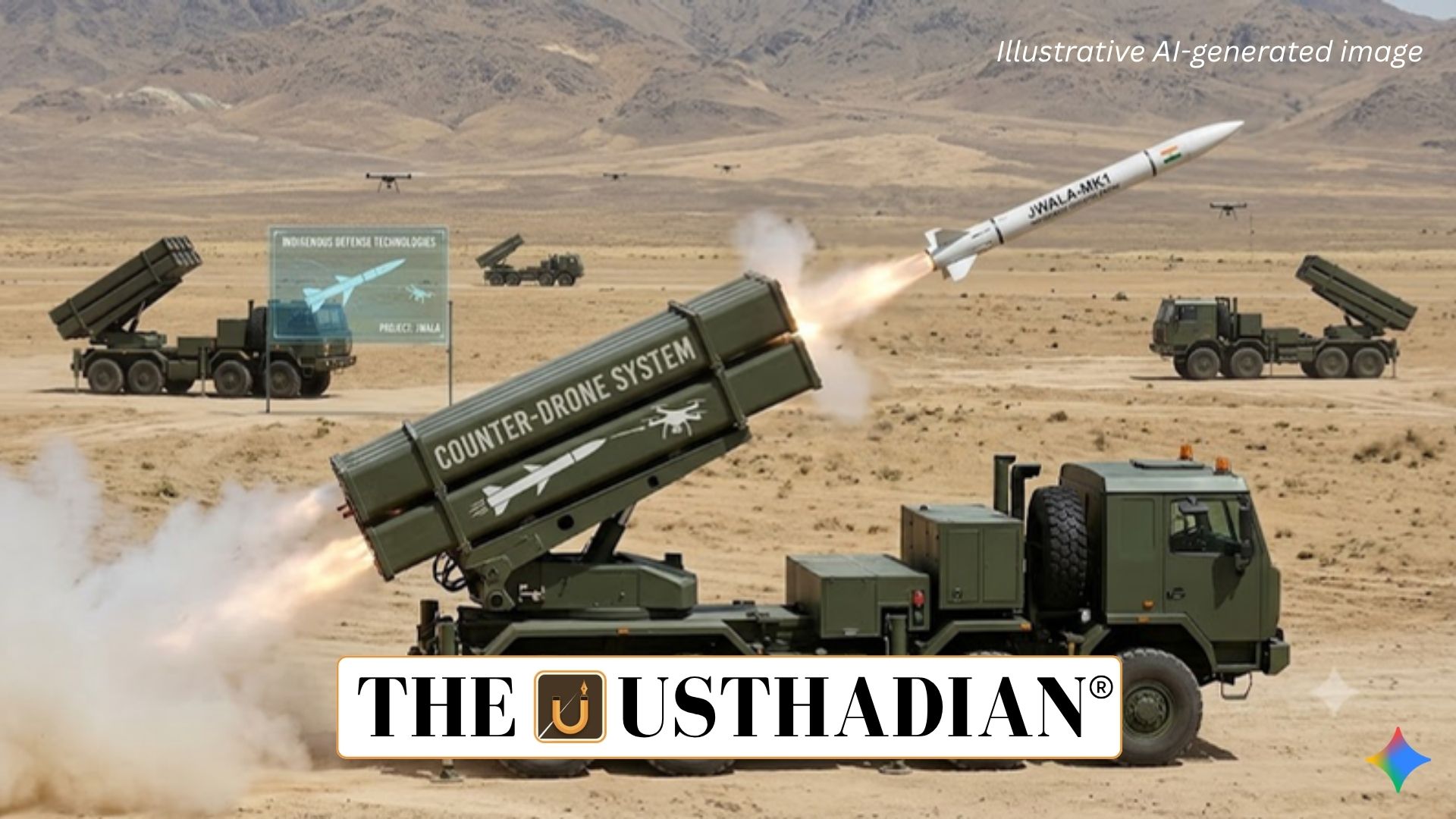
JWALA-MK1 Indigenous Counter-Drone Missile: JWALA-MK1 is an indigenous micro-missile under development by Indian defence technology company IG Defence to intercept hostile unmanned aerial vehicles (UAVs). It is designed as a short-range, surface-to-air interceptor that physically destroys threatening drones.
In October 2026, the company reportedly completed tests of two solid rocket motors for the programme. Experimental trials and subsystem integration were the next stages described in the supplied report. Therefore, JWALA-MK1 remains a developmental system rather than a fully operational missile.
Static GK fact: A surface-to-air missile (SAM) is designed to engage aerial targets from a ground-based launch platform.
Key Features and Reported Specifications
Defence media reports describe the proposed system as a compact interceptor intended for rapid response against hostile drones. The following specifications are reported or intended capabilities and should not be treated as independently verified operational performance.
- Developer: IG Defence
- Country of origin: India
- Type: Micro-missile for counter-drone operations
- Propulsion: Dual-pulse solid rocket motor
- Control: Fin-controlled
- Reported engagement range: 2–5 km
- Reported altitude range: 50 metres–5,000 metres
- Reported accuracy: Circular error probable (CEP) below 2 metres at maximum range
- Proposed warhead: Pre-fragmented high-explosive payload
- Proposed launcher: Truck-mounted, multi-canister system
- Development stage: Propulsion tests completed, with further trials planned according to the report
Static GK Tip: Circular error probable (CEP) is a statistical measure of a weapon’s accuracy, representing the radius within which 50% of impacts are expected to fall.
Importance of Counter-Drone Technology
The growing use of relatively inexpensive drones presents challenges for conventional air-defence systems. Using costly interceptors against low-cost UAVs can create an unfavourable cost imbalance, particularly during attacks involving multiple drones.
JWALA-MK1 aims to provide a dedicated kinetic interception option. A kinetic interceptor attempts to neutralise a target through physical engagement, unlike electronic warfare systems that may disrupt its communications or navigation.
Its actual cost-effectiveness will depend on production costs, reliability, detection capability and successful integration with surveillance and command systems.
Connection with GRID Defend
JWALA-MK1 is intended to operate as part of IG Defence’s broader GRID Defend system, described by the company as an artificial intelligence-powered battle-management network.
GRID Defend is designed to combine sensor information, support threat assessment and coordinate responses. JWALA-MK1 would serve as the proposed interception weapon within this wider arrangement.
The effectiveness of such an integrated system depends on reliable sensors, communication links, timely decision-making and coordination between detection and interception components.
Static GK fact: UAV stands for Unmanned Aerial Vehicle. UAVs are used for civilian purposes such as surveying and agriculture, as well as military surveillance and operations.
Significance for India
The programme reflects the role of private Indian defence companies in developing indigenous technologies for emerging security challenges. Domestic development could support defence manufacturing, technological innovation and reduced dependence on imported systems.
However, operational effectiveness can be assessed only after the necessary trials, validation and integration are completed. JWALA-MK1’s significance will ultimately depend on its demonstrated performance and suitability for India’s layered air-defence requirements.
Static Usthadian Current Affairs Table
JWALA-MK1 Indigenous Counter-Drone Missile:
| Fact | Detail |
| Missile | JWALA-MK1 |
| Developer | IG Defence |
| Country | India |
| Primary role | Counter-drone interception |
| Propulsion | Dual-pulse solid rocket motor, as reported |
| Defence method | Kinetic interception |
| Associated system | GRID Defend |
| GRID Defend role | AI-assisted battle management and threat coordination |
| Development status | Under development; further trials required |
| National significance | Indigenous defence technology and manufacturing |