Why in News
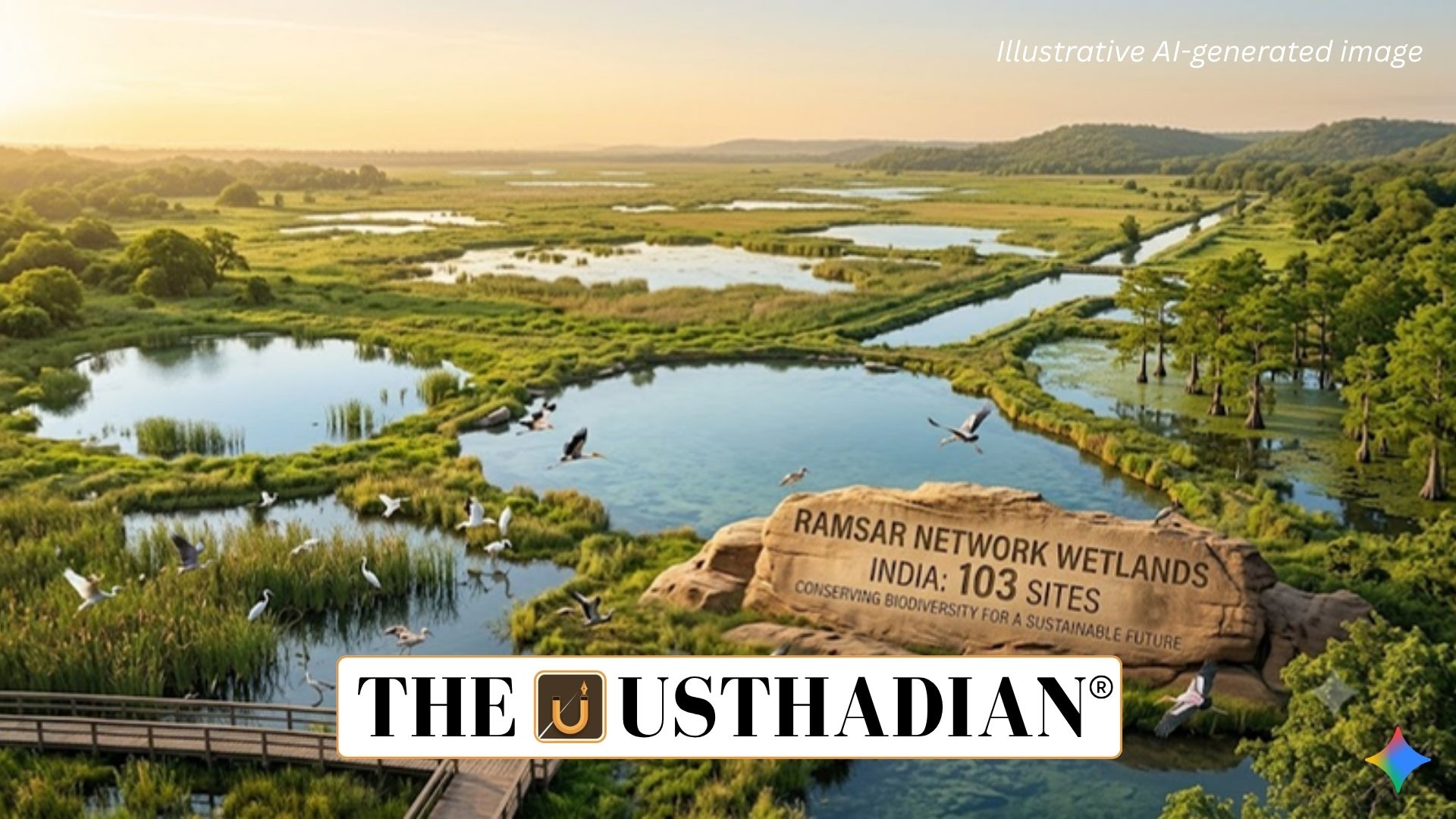
India’s Ramsar Network Expands to 103 Wetland Sites: According to the supplied report, India’s Ramsar network reached 103 sites following the addition of Sukhna Wetland in Chandigarh and Sauj Jheel in Uttar Pradesh, announced on 15 October 2026 by Union Environment Minister Bhupender Yadav.
Earlier, Glaw Lake in Arunachal Pradesh was announced as the state’s first Ramsar site on 3 August 2026. These designations highlight the ecological importance of wetlands and the need for their long-term protection.
Understanding the Ramsar Convention
The Ramsar Convention on Wetlands is an international treaty adopted in 1971 in Ramsar, Iran. It promotes the conservation and wise use of wetlands, particularly those of international importance.
Wetlands include lakes, marshes, swamps, mangroves and other ecosystems influenced by water. They provide habitats for wildlife, support local livelihoods and contribute to sustainable water management.
Static GK fact: The Ramsar Convention entered into force in 1975, and India became a contracting party in 1982.
Ecological Importance of Wetlands
Wetlands support migratory birds, fish, amphibians and numerous plant species. They help recharge groundwater, improve water quality and reduce flooding by storing excess water.
Wetland vegetation and soils can also store carbon, making these ecosystems relevant to climate-change mitigation. Fisheries, agriculture, tourism and other local economic activities depend on healthy wetlands.
Pollution, encroachment, invasive species and changes in water flow threaten their ecological balance. Ramsar recognition must therefore be supported by effective conservation plans and regular monitoring.
Important Ramsar Site Facts
According to the supplied list, India has 103 Ramsar sites across 28 states and Union territories. Tamil Nadu has the highest number in the provided state-wise figures, with 18 sites, followed by Uttar Pradesh with 15.
The supplied table identifies Sundarban Wetland in West Bengal as the largest Ramsar site, covering approximately 4,230 sq km. It lists Renuka Lake in Himachal Pradesh and Vembannur Wetland Complex in Tamil Nadu among the smallest, at approximately 0.2 sq km each.
Chilika Lake in Odisha and Keoladeo National Park in Rajasthan were among India’s earliest Ramsar designations, both listed in 1981.
Static GK Tip: Chilika Lake is a brackish-water lagoon, while Keoladeo National Park is renowned for its importance to birds.
Conservation and Sustainable Management
Ramsar designation gives wetlands international recognition, but it does not automatically eliminate threats. Authorities must control pollution, prevent illegal encroachment, restore degraded habitats and involve local communities in conservation.
Protecting wetlands supports biodiversity, water security, disaster-risk reduction and climate resilience. Effective management is essential to ensure that these ecosystems continue benefiting future generations.
Static Usthadian Current Affairs Table
India’s Ramsar Network Expands to 103 Wetland Sites:
| Fact | Detail |
| Ramsar sites in India | 103, according to the supplied report |
| Reported state/UT coverage | 28 |
| Latest reported additions | Sukhna Wetland and Sauj Jheel |
| Glaw Lake | First Ramsar site in Arunachal Pradesh, according to the report |
| Largest listed site | Sundarban Wetland, West Bengal |
| Smallest listed sites | Renuka Lake and Vembannur Wetland Complex |
| Earliest Indian designations listed | Chilika Lake and Keoladeo National Park, 1981 |
| Convention adopted | 1971, Ramsar, Iran |
| Convention entered into force | 1975 |
| India joined | 1982 |
| Main objective | Conservation and wise use of wetlands |