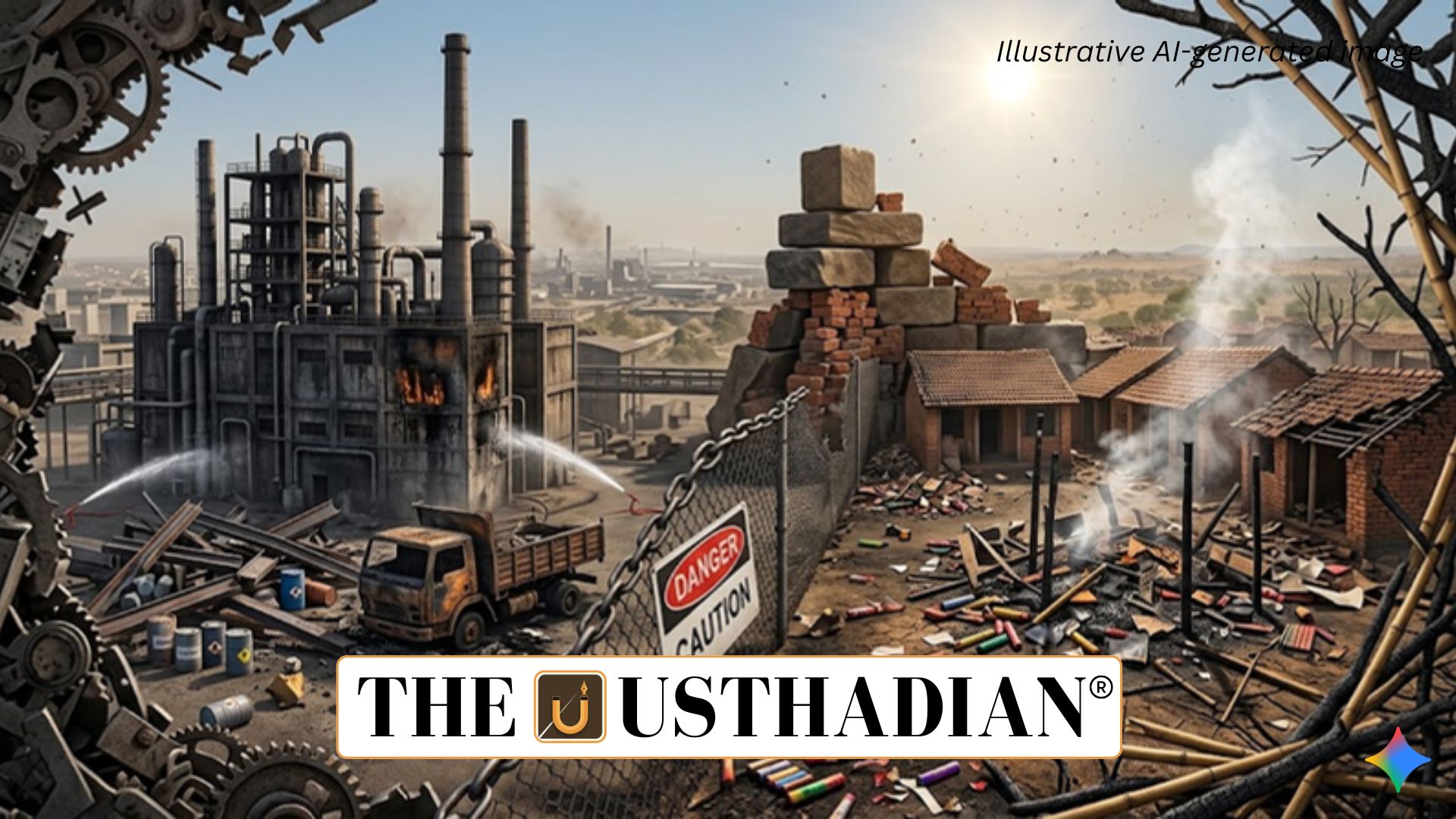
Recent Incident in Tamil Nadu
Industrial Accidents in India and the Tamil Nadu Fireworks Tragedy: A recent explosion at a fireworks unit in Tamil Nadu led to multiple casualties, highlighting serious lapses in industrial safety protocols. Such incidents are frequent in regions with firecracker manufacturing clusters like Sivakasi, known as India’s fireworks hub.
The accident underscores the vulnerability of workers engaged in hazardous industries, where even minor negligence can lead to large-scale human and economic losses.
Static GK fact: Sivakasi in Tamil Nadu produces around 80–90% of India’s fireworks, making it a highly risk-prone industrial zone.
Pattern of Industrial Accidents in India
India has witnessed several major industrial disasters over the decades. The 1984 Bhopal Gas Tragedy remains the deadliest, involving the leakage of methyl isocyanate gas. Other notable incidents include the 1985 Oleum gas leak in Delhi, 2017 NTPC Unchahar boiler explosion, and the 2020 Vizag gas leak.
These events reveal a recurring pattern of weak enforcement of safety standards and inadequate preparedness for emergencies.
Static GK Tip: The Bhopal Gas Tragedy is considered the world’s worst industrial disaster.
Causes Behind Industrial Accidents
Systemic and Regulatory Issues
India has a structured legal framework, but implementation gaps persist. Safety norms are sometimes relaxed to promote ease of doing business, weakening enforcement mechanisms.
Operational and Technical Failures
Many accidents occur due to human errors, poor maintenance, and engineering design flaws. Violations of standard operating procedures on factory floors further increase risks.
Hazardous Materials Handling
Industries dealing with toxic chemicals like chlorine and ammonia operate under tight safety margins. Any deviation can trigger catastrophic outcomes.
Environmental and External Factors
Natural events such as earthquakes can damage industrial infrastructure. For example, the 2001 Gujarat earthquake caused chemical leaks in storage units.
Economic and Managerial Factors
Companies often cut costs on safety infrastructure and fail to invest in modern technologies. This compromises worker safety and disaster resilience.
Measures for Prevention and Mitigation
Legislative Framework
India has enacted several laws such as the Environment Protection Act, 1986, Public Liability Insurance Act, 1991, and Disaster Management Act, 2005 to regulate industrial safety and environmental protection.
Static GK fact: The Environment Protection Act, 1986 was enacted after the Bhopal disaster to strengthen environmental governance.
Institutional Mechanisms
The National Disaster Management Authority (NDMA) and state-level bodies coordinate disaster preparedness and response strategies.
Emergency Response Systems
Specialized forces like the National Disaster Response Force (NDRF) are trained in handling CBRN emergencies. Dedicated HAZMAT units deal with chemical hazards effectively.
Technological Interventions
Adoption of Process Safety Management (PSM) systems helps industries monitor risks and prevent accidents through real-time safety audits.
Community Preparedness
Local communities play a crucial role in early warning and response. Awareness programs and local crisis groups enhance resilience during emergencies.
Conclusion
The Tamil Nadu fireworks explosion is a reminder of the urgent need for strict enforcement of safety norms in hazardous industries. Strengthening regulatory oversight, improving technology adoption, and ensuring worker training are essential to prevent such tragedies in the future.
Static Usthadian Current Affairs Table
Industrial Accidents in India and the Tamil Nadu Fireworks Tragedy:
| Topic | Detail |
| Recent Incident | Fireworks unit explosion in Tamil Nadu causing casualties |
| Major Past Disaster | Bhopal Gas Tragedy, 1984 |
| Key Law | Environment Protection Act, 1986 |
| Regulatory Body | National Disaster Management Authority |
| Emergency Force | National Disaster Response Force |
| Industrial Hub | Sivakasi for fireworks production |
| Major Causes | Human error, poor maintenance, weak regulation |
| Key Chemicals | Chlorine, ammonia, methyl isocyanate |
| Disaster Law | Disaster Management Act, 2005 |
| Safety Approach | Process Safety Management systems |