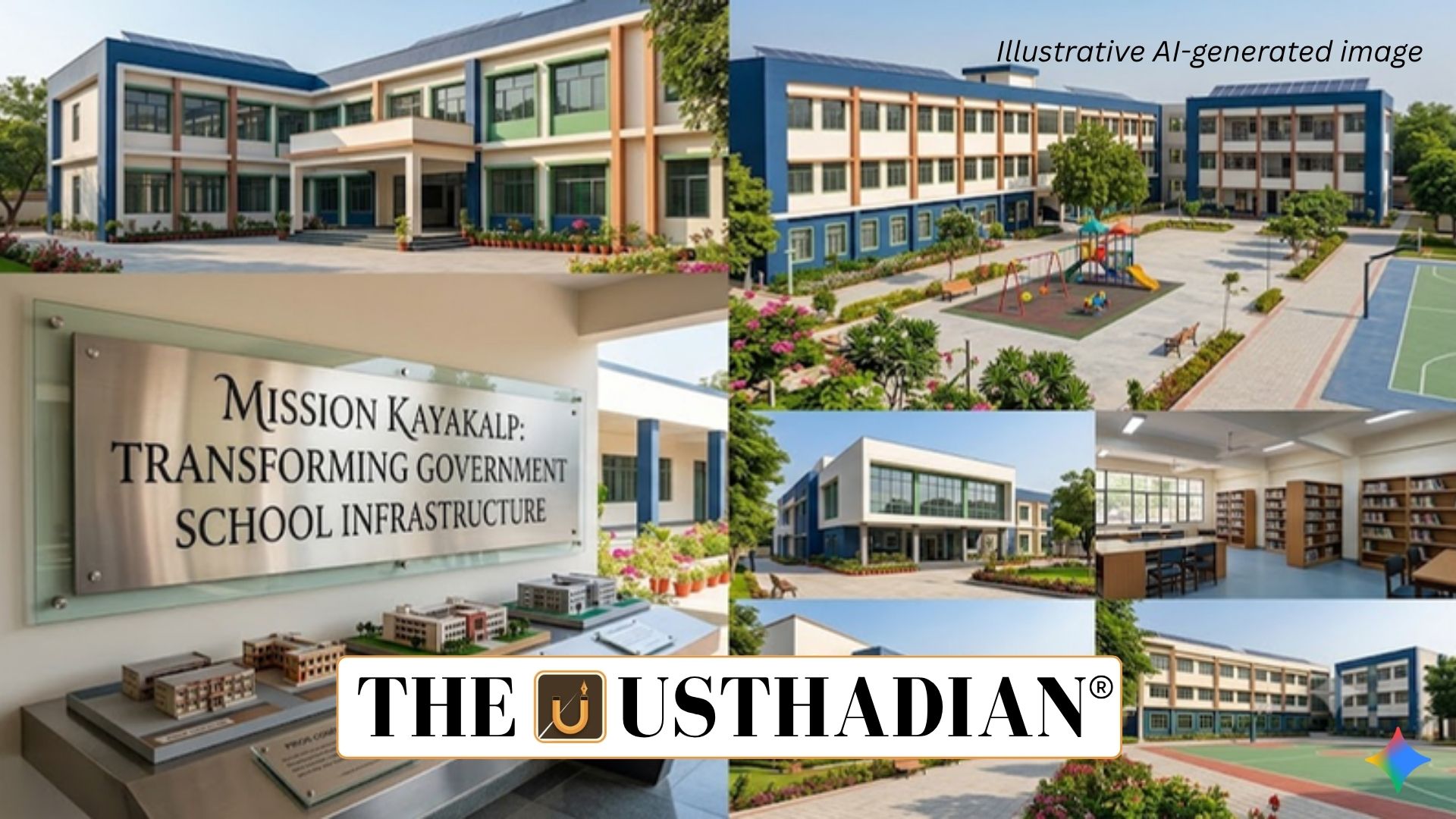
Major Push for Government School Transformation
Delhi Mission Kayakalp Gives New Momentum to Government School Infrastructure: The Delhi Government has launched Mission Kayakalp, a comprehensive initiative to modernise government school infrastructure across the National Capital Territory. The programme focuses on creating safe, clean, accessible, and technology-enabled learning spaces that improve the overall educational experience for students.
The initiative seeks to upgrade school facilities through repairs, better sanitation, improved drinking water, modern laboratories, and environmentally sustainable campuses. It also promotes community participation in strengthening public education.
Static GK fact: Delhi is a Union Territory with a Legislative Assembly, and New Delhi serves as the capital of India.
Objectives of Mission Kayakalp
Mission Kayakalp has been designed to improve the physical infrastructure of government schools while ensuring a better learning environment. The programme aims to enhance educational quality by addressing long-pending infrastructure gaps.
Its major objectives include improving school buildings, expanding access to safe drinking water, strengthening sanitation facilities, upgrading laboratories, promoting inclusive education, encouraging environmental sustainability, and increasing public participation in school development.
Static GK Tip: The Right to Education (RTE) Act, 2009 guarantees free and compulsory education for children aged 6–14 years in India.
Key Features of the Initiative
The programme includes extensive repairs and renovation of school buildings to ensure structural safety and durability. Modern science laboratories and other academic facilities will also be upgraded to improve practical learning.
Mission Kayakalp places strong emphasis on installing RO drinking water systems, improving toilets, maintaining hygiene, and ensuring schools remain clean and student-friendly. Special infrastructure such as ramps and accessible facilities will support children with disabilities.
The initiative also encourages the development of green campuses through tree plantation and environmentally responsible practices.
Community Participation and Institutional Support
A unique aspect of Mission Kayakalp is its collaborative implementation model. The Department of Education, district administrations, local communities, market associations, social organisations, and Corporate Social Responsibility (CSR) partners will work together to improve school infrastructure.
This partnership-based approach is expected to accelerate infrastructure development while creating greater public ownership of government schools.
Static GK fact: Corporate Social Responsibility (CSR) provisions in India are governed under the Companies Act, 2013, requiring eligible companies to spend a portion of their profits on social development activities.
Importance for Education Sector
Mission Kayakalp is expected to strengthen the quality of public education by providing students with modern learning facilities. Improved classrooms, sanitation, laboratories, and accessibility will contribute to better attendance, health, and academic outcomes.
The initiative also supports inclusive education by ensuring that children with disabilities have access to barrier-free infrastructure. Environment-friendly campuses further promote sustainable development and responsible citizenship among students.
By combining infrastructure development with community involvement, the programme aims to make government schools more attractive, efficient, and future-ready.
Static GK Tip: Education is placed in the Concurrent List of the Seventh Schedule of the Indian Constitution, allowing both the Union and State Governments to legislate on education-related matters.
Static Usthadian Current Affairs Table
Delhi Mission Kayakalp Gives New Momentum to Government School Infrastructure:
| Fact | Detail |
| Initiative | Mission Kayakalp |
| Launched By | Delhi Government |
| Purpose | Modernisation of government school infrastructure |
| Focus Areas | Buildings, sanitation, drinking water, laboratories, accessibility |
| Target Institutions | Government schools in Delhi |
| Key Stakeholders | Department of Education, district administration, CSR partners, local communities |
| Inclusive Feature | Barrier-free facilities for children with disabilities |
| Environmental Focus | Green campuses and sustainable infrastructure |
| Constitutional Provision | Education is in the Concurrent List |
| Related Law | Right to Education Act, 2009 |