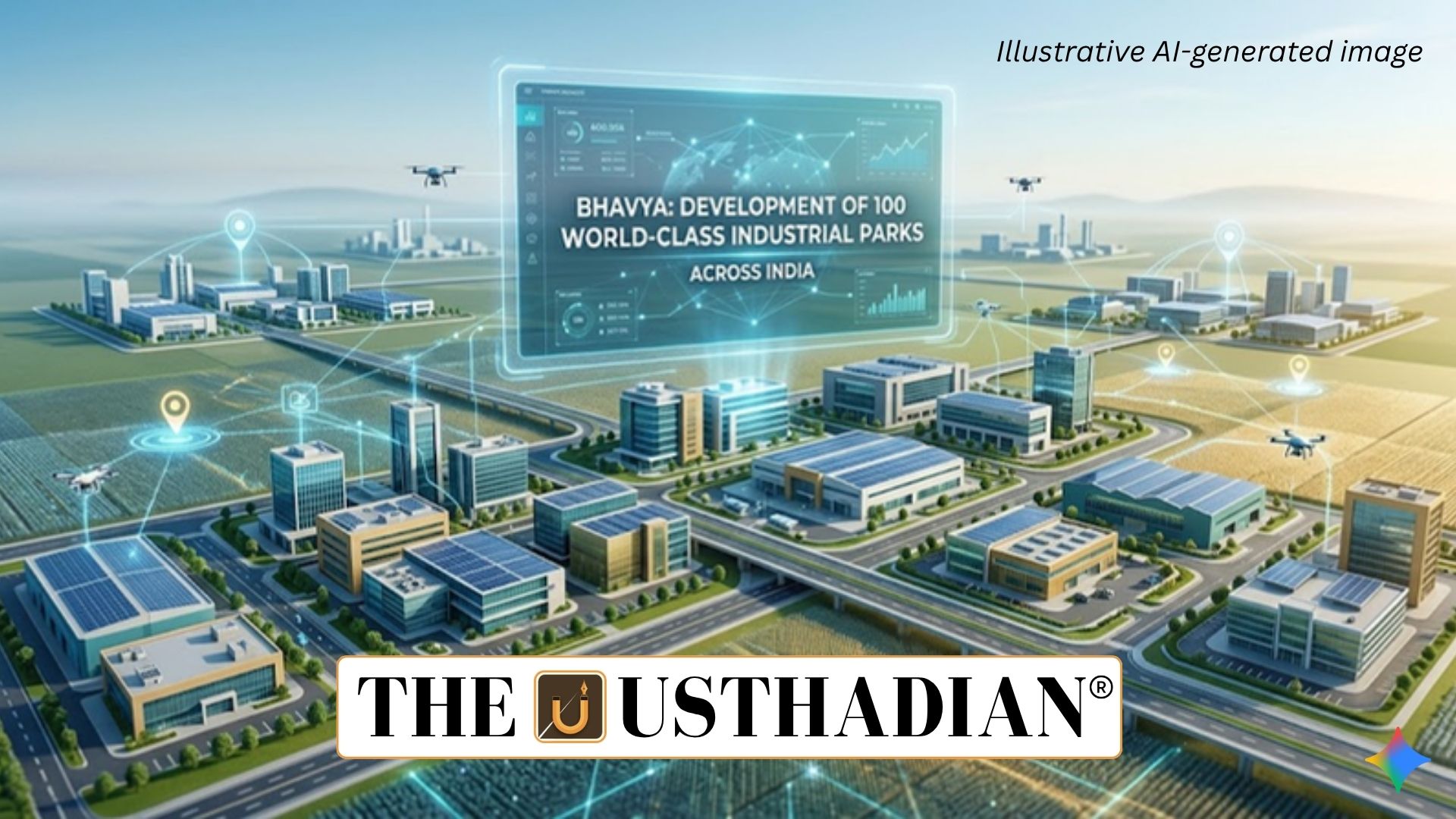
Government Releases BHAVYA Scheme Guidelines
BHAVYA Scheme to Develop 100 World-Class Industrial Parks Across India: The Government of India has released the operational guidelines for the BHAVYA Scheme, a Central Sector Scheme aimed at developing 100 world-class industrial parks across the country. The initiative, led by the Department for Promotion of Industry and Internal Trade (DPIIT), has a total financial outlay of ₹33,660 crore.
The scheme seeks to strengthen India’s manufacturing ecosystem, attract domestic and global investments, improve industrial infrastructure, generate employment, and enhance the country’s competitiveness as a global manufacturing destination.
Static GK fact: The Department for Promotion of Industry and Internal Trade (DPIIT) functions under the Ministry of Commerce and Industry and is responsible for promoting industrial development, investment, and ease of doing business in India.
Objectives of the BHAVYA Scheme
The BHAVYA Scheme aims to establish integrated industrial ecosystems equipped with world-class infrastructure. It aligns with flagship initiatives such as Make in India, PM Gati Shakti, and the government’s broader strategy of expanding manufacturing capacity.
The objective is to provide industries with ready-to-use infrastructure that enables faster project implementation, reduces logistics costs, and improves the ease of setting up manufacturing units.
Development of 100 Industrial Parks
Under the scheme, 100 industrial parks will be developed during the period 2026–27 to 2031–32. In the first phase, up to 50 industrial parks will be selected through a competitive challenge-based process involving States, Union Territories, and eligible implementing agencies.
The selection process will consider factors such as infrastructure readiness, multimodal connectivity, investment potential, and project quality, encouraging healthy competition among participating states.
Plug-and-Play Industrial Infrastructure
A major feature of the BHAVYA Scheme is its emphasis on plug-and-play infrastructure, enabling investors to commence operations without delays caused by the development of basic facilities.
The industrial parks will provide multimodal logistics connectivity, uninterrupted water and power supply, underground utility networks, renewable energy infrastructure, worker housing, skill development centres, waste management systems, and testing laboratories.
This integrated approach is expected to improve industrial productivity and attract both domestic and foreign manufacturers.
Static GK Tip: Plug-and-play industrial parks provide pre-developed infrastructure and common facilities, allowing industries to begin production quickly with minimal setup time.
Greenfield and Brownfield Development
The scheme supports both greenfield and eligible brownfield industrial park projects. The minimum land requirement has been fixed at 100 acres for non-hilly states and 25 acres for hilly states, northeastern states, Union Territories, and smaller states.
Larger industrial parks of up to 1,000 acres may also be considered, allowing flexibility based on regional development needs and investment opportunities.
Implementation Mechanism
Each industrial park will be developed through a Special Purpose Vehicle (SPV) incorporated under the Companies Act, 2013. The SPV will be responsible for planning, infrastructure development, investor facilitation, and long-term management of the industrial park.
The National Industrial Corridor Development Corporation (NICDC) will function as the Project Management Agency (PMA). Project monitoring will include GIS-based tracking, periodic audits, progress reporting, and oversight by a National Steering Committee, ensuring transparency and timely implementation.
Static GK fact: The National Industrial Corridor Development Corporation (NICDC) is the nodal agency responsible for planning and developing industrial corridors and integrated manufacturing townships across India.
Static Usthadian Current Affairs Table
BHAVYA Scheme to Develop 100 World-Class Industrial Parks Across India:
| Fact | Detail |
| Scheme | BHAVYA Scheme |
| Implementing department | Department for Promotion of Industry and Internal Trade (DPIIT) |
| Parent ministry | Ministry of Commerce and Industry |
| Total financial outlay | ₹33,660 crore |
| Total industrial parks planned | 100 |
| Implementation period | 2026–27 to 2031–32 |
| Development model | Special Purpose Vehicle (SPV) |
| Project Management Agency | National Industrial Corridor Development Corporation (NICDC) |
| Major infrastructure feature | Plug-and-play industrial ecosystem |
| Related initiatives | Make in India and PM Gati Shakti |