Background of the Decision
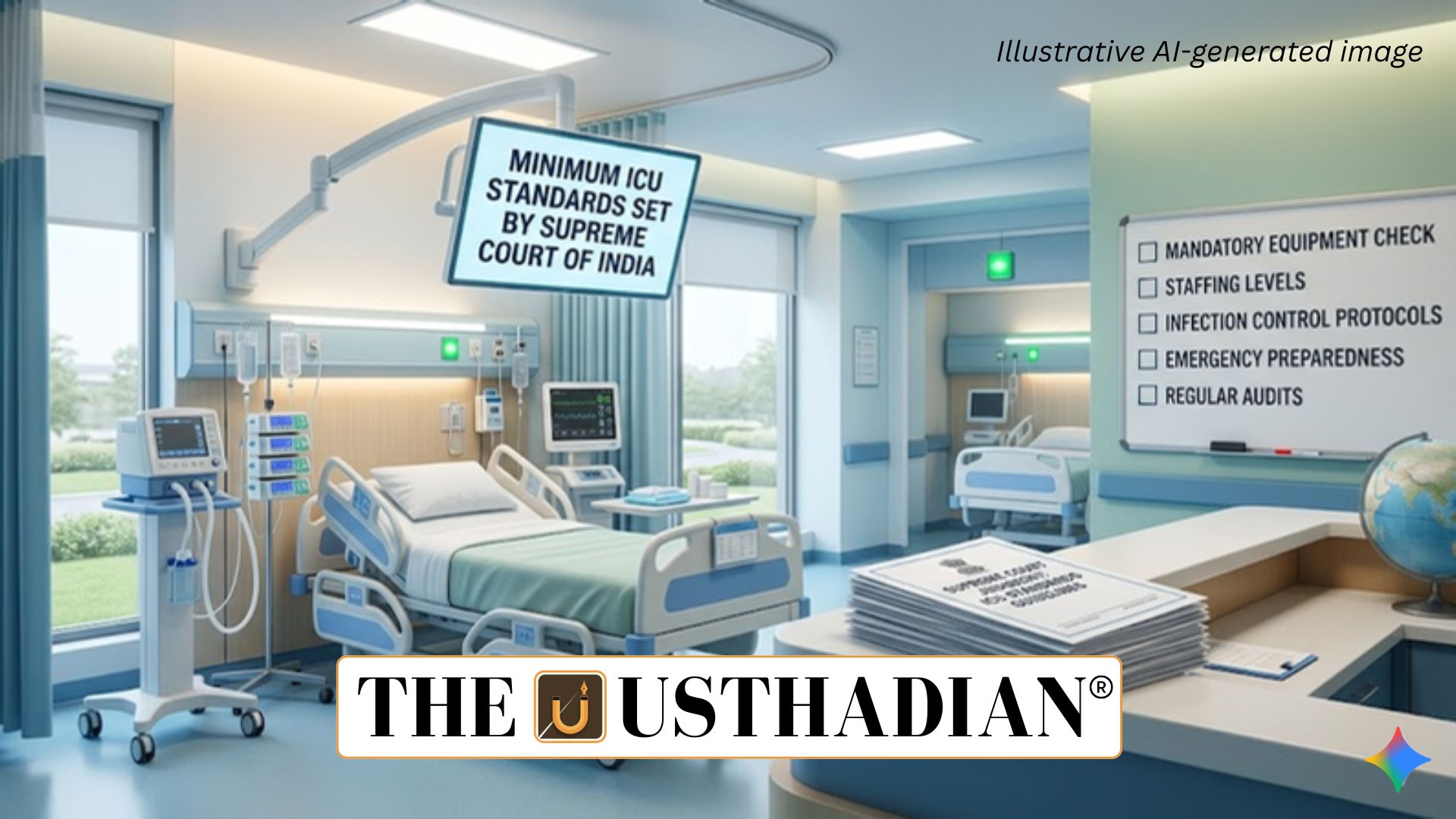
Supreme Court Sets Minimum ICU Standards in India: The Supreme Court has endorsed a framework establishing minimum standards for Intensive Care Units (ICUs) across hospitals in India. The guidelines were prepared by an expert committee to ensure uniformity in infrastructure, staffing, and patient care.
The court described the norms as practical and necessary, aiming to improve critical care services nationwide. This move addresses disparities between urban and rural healthcare systems.
Static GK fact: The Supreme Court of India was established in 1950 and is the highest judicial authority under Article 124 of the Constitution.
Mandatory ICU Infrastructure
The guidelines define a dedicated ICU space with access to emergency services, operation theatres, and laboratories. Hospitals must ensure continuous power supply, sanitation systems, and efficient internal layouts.
Each ICU bed must have oxygen supply, suction systems, and electrical outlets. Essential equipment includes ventilators, multiparameter monitors, defibrillators, infusion pumps, ECG machines, and crash carts.
These measures ensure a minimum functional standard across all hospitals offering ICU services.
Static GK Tip: A ventilator is a life-support machine that helps patients breathe when they cannot do so naturally.
Staffing Norms Strengthened
The framework places strong emphasis on round-the-clock staffing. Every ICU must be supervised by trained doctors and supported by skilled nursing staff at all times.
The nurse-to-patient ratio is fixed between 1:2 and 1:3, while critically ill or ventilated patients require a 1:1 ratio. This ensures close monitoring and timely intervention.
Allied healthcare professionals are also required to assist in ICU operations, along with strict adherence to infection control protocols.
Static GK fact: The World Health Organization recommends strong nurse staffing ratios to improve patient survival rates.
Classification of ICUs
The report titled “Guidelines for the Organisation and Delivery of Intensive Care Services” introduces classification of ICUs into different levels. This ensures even basic ICUs meet clearly defined standards.
The committee included experts such as Dr. Nitish Naik (AIIMS), Aishwarya Bhati, and Karan Bharioke. While standards are fixed, clinical judgment remains essential in determining patient care levels.
Static GK Tip: AIIMS is India’s premier medical institute established in 1956 in New Delhi.
Role of Technology in Critical Care
The guidelines promote the use of e-ICU and tele-ICU systems. These systems enable smaller hospitals to connect with advanced medical centres for expert guidance.
This is particularly useful in rural and remote areas where specialist doctors are limited. It helps bridge the gap in healthcare accessibility.
Directions to States
The Supreme Court has directed all States and Union Territories to submit action plans by May 18. These plans must identify gaps in infrastructure and outline implementation strategies.
The framework acknowledges practical challenges and allows interim solutions to ensure gradual compliance.
Impact on Healthcare System
The new ICU standards are expected to strengthen critical care infrastructure and ensure uniform quality across hospitals. It will enhance patient safety and improve outcomes for critically ill individuals.
By reducing disparities and ensuring accountability, the move marks a significant step in public health governance in India.
Static Usthadian Current Affairs Table
Supreme Court Sets Minimum ICU Standards in India:
| Topic | Detail |
| Guidelines Issued By | Supreme Court of India |
| Focus Area | ICU infrastructure, staffing, patient care |
| Key Institution | AIIMS |
| Nurse Patient Ratio | 1:2 to 1:3, up to 1:1 for critical cases |
| Technology Support | e-ICU and tele-ICU systems |
| Committee Members | Nitish Naik, Aishwarya Bhati, Karan Bharioke |
| Deadline for States | May 18 action plan submission |
| Objective | Standardise ICU care across India |