Study findings and global ranking
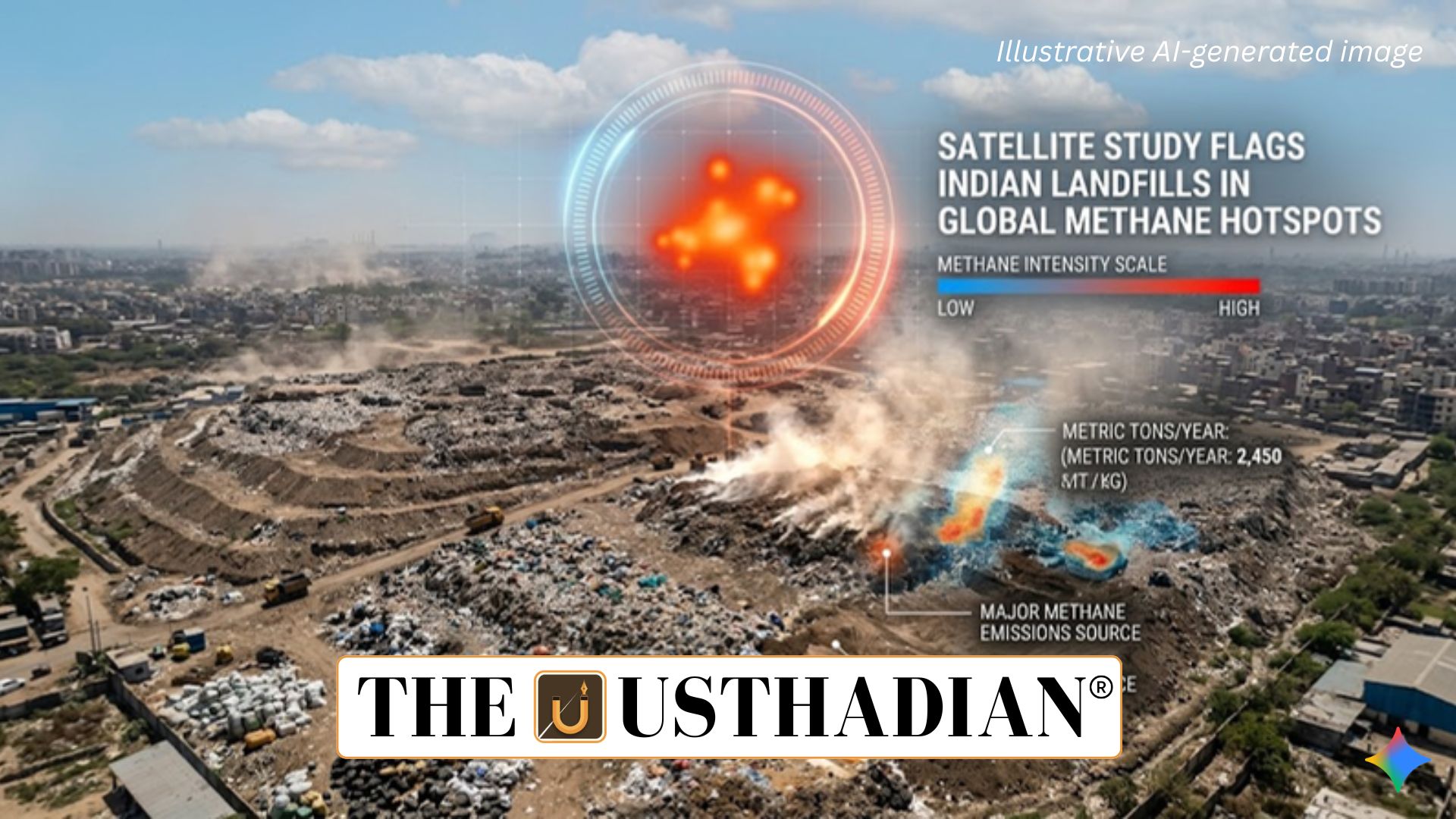
Satellite Study Flags Indian Landfills in Global Methane Hotspots: A recent satellite-based study has identified landfill sites in Mumbai and Secunderabad among the top 25 methane-emitting waste sites globally in 2025. The analysis examined 2,994 methane plumes across 707 landfill locations worldwide, revealing major pollution hotspots.
India’s presence in this list signals serious concerns in its urban waste management systems. Countries like Chile and Brazil reported the highest number of high-emission sites, while India stands alongside Saudi Arabia and Turkey in the ranking.
Static GK fact: Methane (CH₄) is the second most abundant greenhouse gas after carbon dioxide but has a much higher warming potential.
Role of satellite technology
The study used advanced satellite data from Carbon Mapper, analyzed under the Stop Methane Project led by the University of California, Los Angeles (UCLA). Scientists tracked methane plumes in real time and matched them with landfill locations.
This approach improves accuracy in identifying pollution sources and increases transparency in environmental accountability. It also enables governments to take targeted action.
Static GK Tip: Satellite remote sensing is widely used in climate monitoring, disaster management, and environmental assessment.
Why methane emissions are critical
Methane is a highly potent greenhouse gas, estimated to be 86 times more powerful than carbon dioxide over a 20-year period. Though it remains in the atmosphere for about 12 years, its short-term impact on global warming is severe.
Methane contributes to nearly 30% of global temperature rise since the Industrial Revolution. Current levels are about 2.5 times higher than pre-industrial concentrations, as per global estimates.
Landfills generate methane when organic waste decomposes without oxygen, making unmanaged dumps major emission sources.
Static GK fact: The Industrial Revolution began in the late 18th century and significantly increased greenhouse gas emissions.
Scale of emissions
The study found that top landfill sites emit between 3.6 to 7.5 tonnes of methane per hour. This level of emission is extremely high and comparable to major industrial sources.
For context, emitting 5 tonnes per hour is roughly equal to pollution from 1 million SUVs or a 500 MW coal power plant. Earlier, the Ghazipur landfill in Delhi was recorded as a “super-emitter,” releasing over 400 tonnes per hour in a single event in 2022.
Static GK Tip: A coal-based thermal power plant generates electricity by burning coal, contributing significantly to carbon emissions.
Responsible entities and accountability
The study has tentatively linked the landfill sites to operators such as Ramky Enviro Engineers (Secunderabad region) and Antony Waste Handling Cell Ltd (Mumbai). These links are based on publicly available records, and official confirmations are awaited.
This raises concerns about regulatory oversight and the need for stricter compliance mechanisms in waste management.
Need for urgent action
The findings highlight the urgent need for scientific landfill management, including waste segregation, methane capture, and recycling. Without intervention, such emissions will continue to worsen climate change.
India must strengthen its Solid Waste Management Rules and adopt sustainable practices to reduce environmental impact.
Static Usthadian Current Affairs Table
Satellite Study Flags Indian Landfills in Global Methane Hotspots:
| Topic | Detail |
| Study Focus | Methane emissions from global landfill sites |
| Key Indian Cities | Mumbai and Secunderabad |
| Global Ranking | Among top 25 methane emitters |
| Data Source | Carbon Mapper satellite observations |
| Research Body | UCLA Stop Methane Project |
| Methane Impact | 86 times more potent than CO2 (20 years) |
| Emission Range | 3.6 to 7.5 tonnes per hour |
| Major Concern | Poor landfill management |
| Past Example | Ghazipur landfill super-emitter (2022) |
| Solution | Improved waste management and methane capture |