Scientific Breakthrough
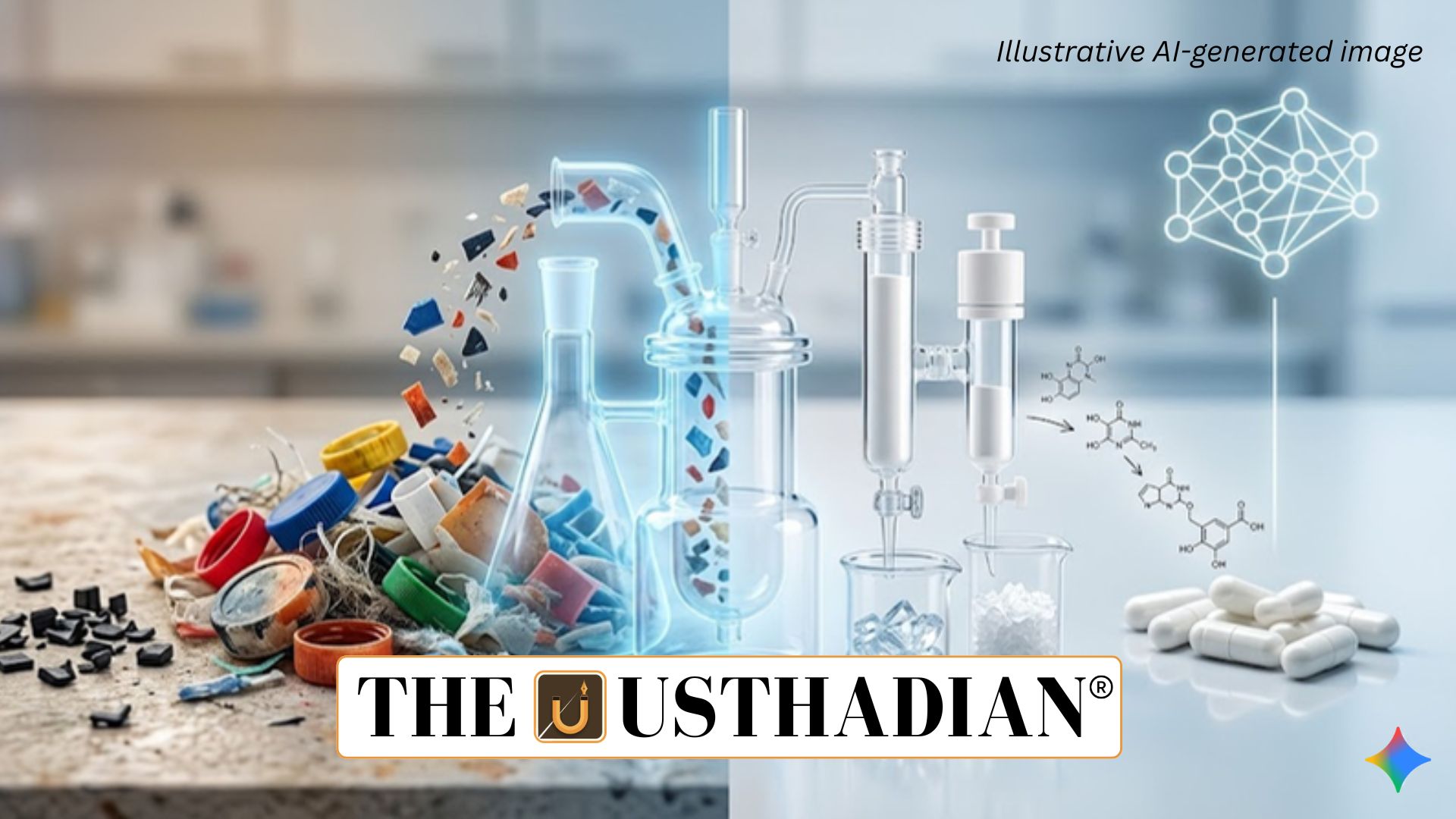
Plastic Waste to Parkinson Drug Breakthrough: Scientists have achieved a major innovation by converting plastic waste into levodopa, a key drug used to treat Parkinson’s disease. This research was carried out at the University of Edinburgh, where experts engineered bacteria to transform waste into medicine.
The study highlights how biotechnology can address both environmental pollution and healthcare challenges simultaneously. It represents a shift toward sustainable drug production.
Static GK fact: Parkinson’s disease is a neurodegenerative disorder first described by James Parkinson in 1817.
Process of Conversion
The researchers used genetically modified “E. coli” bacteria to break down polyethylene terephthalate (PET), a common plastic used in bottles. These bacteria utilize the carbon present in plastic to synthesize levodopa.
This method treats plastic not as waste but as a valuable chemical feedstock. It demonstrates how microbial engineering can transform non-biodegradable materials into useful compounds.
Static GK Tip: PET is widely used due to its strength, transparency, and recyclability in packaging industries.
Importance for Healthcare
Levodopa is the most effective drug for managing Parkinson’s symptoms such as tremors and stiffness. Globally, over 10 million people suffer from this condition, and the demand for treatment is increasing.
With ageing populations, the need for cost-effective and scalable drug production is becoming critical. This innovation could ensure a steady and sustainable supply of essential medicines.
Environmental Advantages
Traditional levodopa production relies on fossil fuel-based processes, which are energy-intensive and contribute to carbon emissions. In contrast, this new method promotes a circular economy by reusing plastic waste.
Earlier studies have also shown that PET plastic can be converted into paracetamol, indicating the broader potential of such technologies. This approach helps reduce plastic pollution while generating economic value.
Static GK fact: The concept of a circular economy focuses on reducing waste by reusing and recycling resources efficiently.
Challenges and Limitations
Despite its promise, the technology is still in an early stage. Scaling up production requires significant investment, advanced infrastructure, and regulatory approvals.
Efficient systems for plastic waste collection and segregation are also necessary for large-scale implementation. Additionally, ensuring consistency and purity in drug production remains a key challenge.
Way Forward
Collaboration between scientists, industries, and governments will be essential to bring this innovation to market. Policies supporting biotechnology research and waste management can accelerate adoption.
If successfully implemented, this technology could revolutionize both the pharmaceutical and environmental sectors. It represents a step toward sustainable healthcare and resource utilization.
Static Usthadian Current Affairs Table
Plastic Waste to Parkinson Drug Breakthrough:
| Topic | Detail |
| Breakthrough | Conversion of plastic waste into levodopa |
| Key Institution | University of Edinburgh |
| Technology Used | Genetically engineered E. coli bacteria |
| Plastic Type | Polyethylene terephthalate (PET) |
| Medical Use | Treatment of Parkinson’s disease |
| Global Patients | Over 10 million people affected |
| Environmental Benefit | Promotes circular economy and reduces plastic waste |
| Previous Research | PET converted into paracetamol |
| Key Challenge | Scaling up production and regulatory approval |
| Strategic Impact | Sustainable pharmaceutical manufacturing |