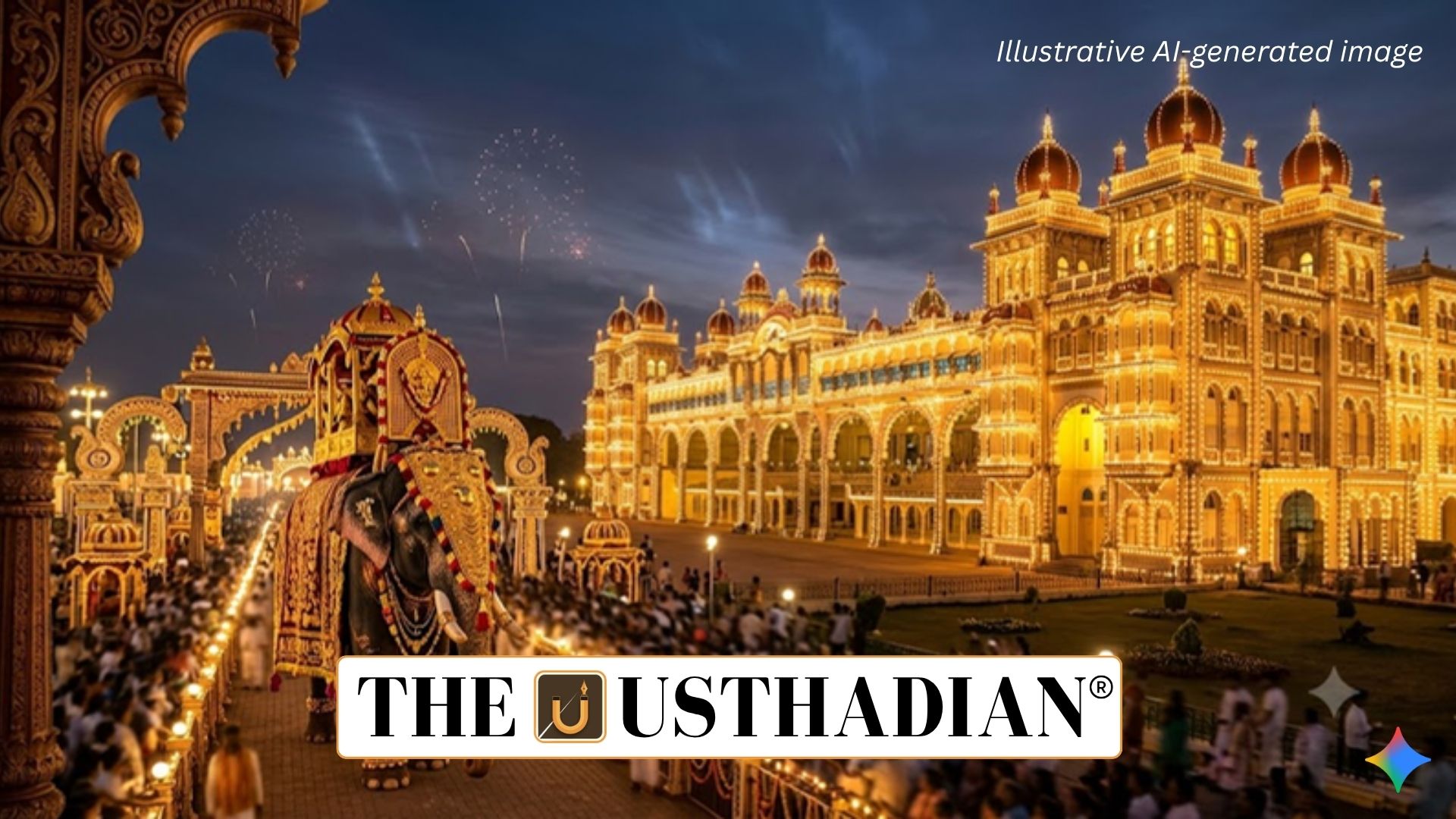
Mysuru Dasara 2026
Mysuru Dasara 2026 Celebrates Karnataka’s Royal and Cultural Heritage: Mysuru Dasara, popularly known as Nada Habba or Karnataka’s state festival, celebrates the victory of Goddess Chamundeshwari over the demon Mahishasura. It combines religious traditions, royal heritage, folk performances and public celebrations.
According to the supplied report, the 11-day festival runs from 11 October to 21 October 2026, with the grand Jamboo Savari procession scheduled for 21 October, the day of Vijayadashami.
Static GK fact: Mysuru is located in Karnataka, and the festival is closely associated with the city’s royal history and Chamundi Hills.
Historical Origins and the Wadiyar Dynasty
The traditions of Mysuru Dasara are linked to the royal celebrations of the Vijayanagara Empire, where Mahanavami festivities included processions, music, wrestling and other public performances.
Following the decline of the Vijayanagara Empire in 1565, regional rulers continued related traditions. Raja Wadiyar I celebrated Dasara at Srirangapatna in 1610, marking a major milestone in the history of Mysuru Dasara. Srirangapatna was then the Wadiyar capital.
Over time, the Wadiyar rulers developed the festival through royal durbars, ceremonial events and public cultural programmes. Today, the Government of Karnataka and local authorities organise the celebrations as a major state festival.
Static GK fact: The Wadiyars were the royal dynasty associated with the Kingdom of Mysore.
Religious Significance of Goddess Chamundeshwari
According to Hindu mythology, Goddess Chamundeshwari, a form of Goddess Durga, defeated Mahishasura, who is traditionally associated with buffalo imagery. The victory symbolises the triumph of good over evil.
The legend is connected to Chamundi Hills, overlooking Mysuru, where the Sri Chamundeshwari Temple is located. The goddess is revered as the presiding deity of the city.
Dasara is associated with Navratri and culminates in Vijayadashami, the tenth day marking the goddess’s victory in this tradition.
Static GK Tip: Remember the connection between Mysuru, Chamundi Hills, Goddess Chamundeshwari and the Mahishasura legend for culture-related examination questions.
Jamboo Savari and the Golden Howdah
The Jamboo Savari is the principal procession of Mysuru Dasara and takes place on Vijayadashami. The idol of Goddess Chamundeshwari is ceremonially carried in a golden howdah mounted on an elephant.
A howdah is a seat or platform placed on the back of an elephant. The procession begins at Mysuru Palace and proceeds towards Bannimantap, featuring decorated elephants, traditional musicians, folk artists and tableaux representing Karnataka’s cultural heritage and achievements.
The procession brings together religious devotion, royal customs and public participation.
Panjina Kavayathu and Other Celebrations
The Panjina Kavayathu, or torchlight parade, is held at Bannimantap and is a prominent part of the festival’s concluding celebrations. Its ceremonial performances reflect the historical connection between Mysuru’s royal traditions and military pageantry.
Other attractions include the illumination of Mysuru Palace, classical music and dance performances, folk programmes, the Aahara Mela, flower shows and the Dasara Exhibition. The supplied report also lists Kambala among the programme attractions for 2026.
These activities help promote tourism, local arts, food traditions and Karnataka’s cultural identity.
Static Usthadian Current Affairs Table
Mysuru Dasara 2026 Celebrates Karnataka’s Royal and Cultural Heritage:
| Fact | Detail |
| Festival name | Mysuru Dasara or Nada Habba |
| State | Karnataka |
| 2026 festival dates | 11–21 October, as reported |
| Key procession | Jamboo Savari |
| Vijayadashami | 21 October 2026, as reported |
| Historical milestone | Raja Wadiyar I’s celebration in 1610 |
| Religious significance | Victory of Chamundeshwari over Mahishasura |
| Important temple | Sri Chamundeshwari Temple, Chamundi Hills |
| Golden howdah | Ceremonial platform carrying the goddess’s idol |
| Torchlight parade | Panjina Kavayathu at Bannimantap |
| Historical connection | Mahanavami traditions of the Vijayanagara Empire |