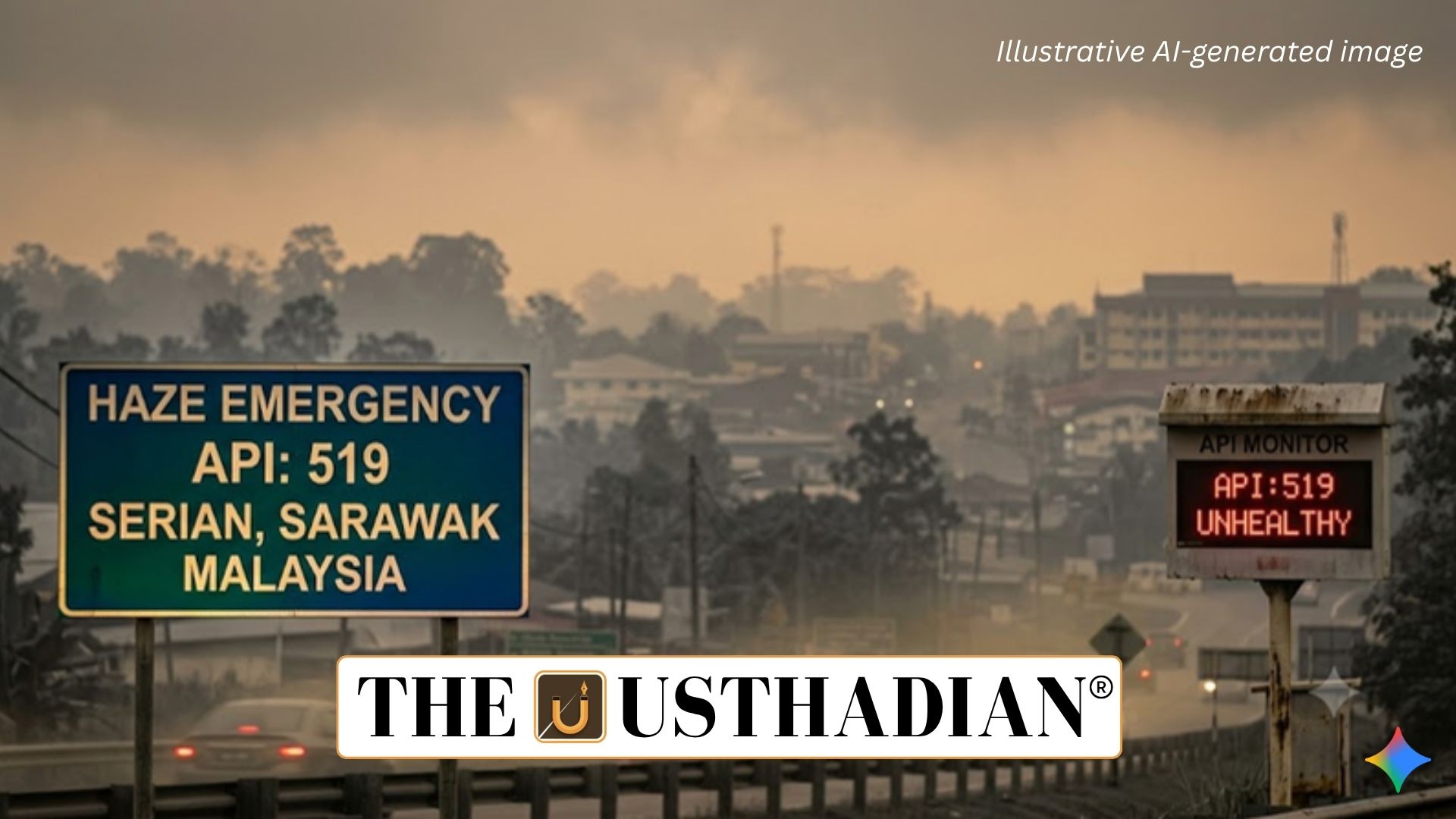
Serian Placed Under Emergency
Malaysia Declares Haze Emergency in Serian After API Reaches 519: Malaysia declared a haze emergency in Serian district of Sarawak on September 4, 2026, after the Air Pollution Index (API) reached 519. The reading was far above the hazardous level and triggered extraordinary public-health measures.
The emergency was consented to by Malaysia’s King, Sultan Ibrahim, following advice from the federal and Sarawak authorities. It was confined to an area of about 20 km around Serian rather than being imposed across the whole country.
API Reading Reached Dangerous Level
Malaysia’s API classifies readings above 300 as hazardous. Serian’s reading of 519 represented an extreme deterioration in air quality and posed serious risks to public health.
By the morning of September 5, the API had fallen to 376, but this was still within the hazardous category. Later in the day, the reading declined further into the very unhealthy range.
Indonesian Fires Trigger Cross-Border Haze
The haze affecting Sarawak has been linked mainly to forest and land fires in neighbouring Indonesia. Smoke from the Indonesian part of Borneo can cross international borders when wind and atmospheric conditions are favourable.
Such transboundary haze is a recurring environmental problem in Southeast Asia, particularly during dry periods when forest and peatland fires spread rapidly and rainfall remains limited.
Static GK fact: Borneo is the third-largest island in the world and is politically shared by Indonesia, Malaysia and Brunei.
Cloud Seeding Used to Reduce Pollution
Malaysian authorities initiated cloud-seeding operations in an effort to induce rainfall over affected areas. Rain can help remove suspended particulate matter from the atmosphere and temporarily reduce haze intensity.
Authorities also continued air-quality monitoring and public-health precautions while the emergency remained in force.
Essential Services Remained Open
The emergency did not amount to a complete shutdown of Serian. Supermarkets, petrol stations and banks were allowed to continue operating so that essential daily needs could be met.
However, hazardous haze had already disrupted normal activity and contributed to school closures in parts of Sarawak.
Why Southeast Asia Faces Repeated Haze
Forest fires, peatland burning and land-clearing activities can release enormous quantities of smoke. During prolonged dry weather, these pollutants may remain trapped in the atmosphere and travel across national borders.
This has made haze a major regional environmental issue involving Malaysia, Indonesia, Singapore and other parts of Southeast Asia.
Static GK Tip: ASEAN adopted the ASEAN Agreement on Transboundary Haze Pollution in 2002 to strengthen regional cooperation against cross-border haze.
Air Quality Improved After Emergency
By September 6, 2026, no Malaysian area remained in the hazardous API category, although several parts of Sarawak continued to record very unhealthy air quality.
The Serian episode highlights how forest fires can rapidly develop into a regional public-health and environmental emergency.
Static Usthadian Current Affairs Table
Malaysia Declares Haze Emergency in Serian After API Reaches 519:
| Fact | Detail |
| Country | Malaysia |
| Emergency Area | Serian, Sarawak |
| Emergency Date | September 4, 2026 |
| Peak API Reading | 519 |
| Hazardous API Level | Above 300 |
| Main Cause | Forest and land fires in Indonesia |
| Island Involved | Borneo |
| Emergency Radius | About 20 km |
| Major Response | Cloud seeding |
| Essential Services | Remained operational |
| Regional Issue | Transboundary haze |
| ASEAN Haze Agreement | 2002 |