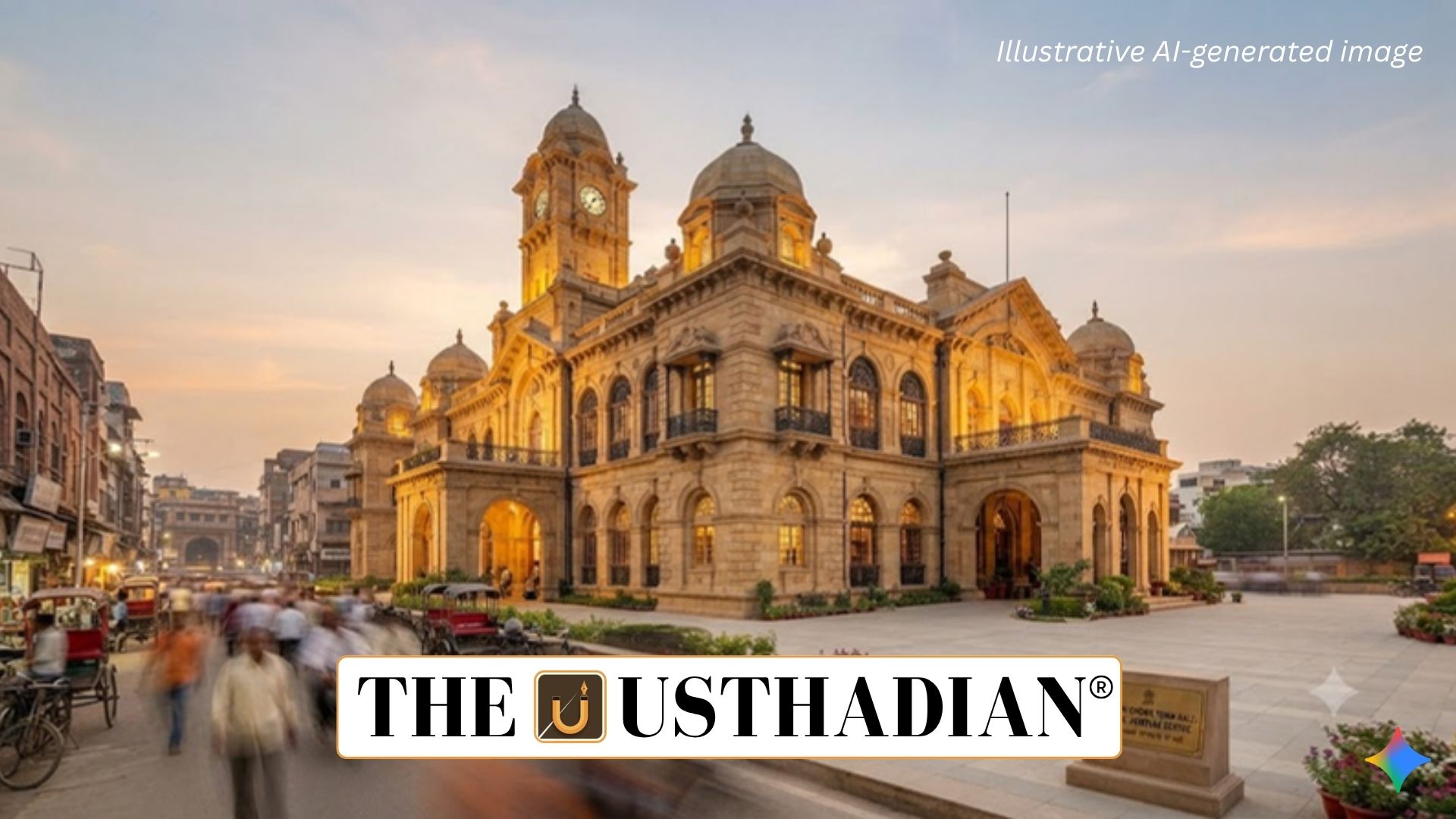
Town Hall to Get a New Heritage Role
Chandni Chowk Town Hall Set to Become Global Heritage Centre: The historic Town Hall complex at Chandni Chowk in Delhi is set to receive a new lease of life as a proposed Global Heritage Centre. The initiative seeks to combine conservation of the historic property with museums, cultural programmes and tourism-related facilities.
The Delhi Tourism and Transportation Development Corporation (DTTDC) and the Municipal Corporation of Delhi (MCD) signed a Memorandum of Understanding (MoU) on 20 September 2026 for the redevelopment project.
The proposed centre will cover the historic Town Hall, the Press Building and the adjoining park, together covering approximately 12,180 square metres. The property will continue to remain under the ownership of the MCD.
Static GK fact: Chandni Chowk is located in the historic walled city of Shahjahanabad, developed during the Mughal period under Emperor Shah Jahan.
Conservation and Contemporary Use
The project has been designed around two objectives—preserving the heritage character of the complex and giving the historic structure a meaningful public function.
Delhi Chief Minister Rekha Gupta highlighted the historical and architectural importance of the Town Hall and stressed that its original character would be preserved during redevelopment.
The proposed Global Heritage Centre is expected to strengthen Delhi’s heritage-tourism infrastructure by providing visitors with spaces dedicated to history, architecture and cultural activities.
History of the Town Hall
The Town Hall is situated in the Shahjahanabad-Chandni Chowk area and was constructed between 1860 and 1866 during the British period.
For more than five decades, the building served as the headquarters of the Municipal Corporation. The civic headquarters was subsequently shifted to the Dr S.P. Mukherjee Civic Centre in 2010.
Following the relocation, much of the historic structure remained underutilised. The proposed project seeks to address this through conservation combined with adaptive reuse.
Static GK Tip: Shahjahanabad was founded by Mughal Emperor Shah Jahan in the 17th century and became the seventh city of Delhi.
What Is Adaptive Reuse?
The redevelopment will follow the principle of adaptive reuse, under which an existing historic building is given a new functional purpose while retaining its architectural and heritage significance.
The Global Heritage Centre is expected to incorporate several public-oriented components, including:
- Museum facilities
- Cultural activities and programmes
- Tourism-related facilities
The location near Chandni Chowk and Old Delhi Railway Station can further support access for domestic and international heritage tourists.
Project Implementation Plan
Under the MoU, DTTDC will undertake a detailed survey and structural assessment of the complex before preparing the Detailed Project Report (DPR).
The Delhi government will subsequently examine the appropriate financing and implementation model. Options include government funding or a Public-Private Partnership (PPP) arrangement.
A Joint Working Group comprising representatives of DTTDC and MCD will also be established to coordinate the development process.
Significance for Delhi’s Heritage
The proposed conversion of the Town Hall into a Global Heritage Centre reflects the broader approach of combining heritage conservation with public use.
Instead of treating a historic structure only as a preserved monument, adaptive reuse can provide it with a continuing social and cultural function. For Chandni Chowk, the project could complement the area’s existing historic markets, monuments and cultural landscape while creating an additional destination for heritage tourism.
Static Usthadian Current Affairs Table
Chandni Chowk Town Hall Set to Become Global Heritage Centre:
| Fact | Detail |
| Project | Global Heritage Centre |
| Location | Chandni Chowk, Delhi |
| Historic complex | Town Hall, Press Building and adjacent park |
| Area | Approximately 12,180 sq m |
| MoU signed between | DTTDC and MCD |
| MoU date | 20 September 2026 |
| Heritage status | Grade-I heritage property |
| Town Hall construction | 1860–1866 |
| Earlier function | Municipal Corporation headquarters |
| New MCD headquarters | Dr S.P. Mukherjee Civic Centre |
| Headquarters shifted | 2010 |
| Proposed facilities | Museum, cultural activities and tourism facilities |
| Conservation approach | Adaptive reuse |
| Project report | Detailed Project Report (DPR) |
| Possible implementation models | Government funding or PPP |
| Project coordination | Joint Working Group of DTTDC and MCD |
| Historic city | Shahjahanabad |