Conservation Initiative
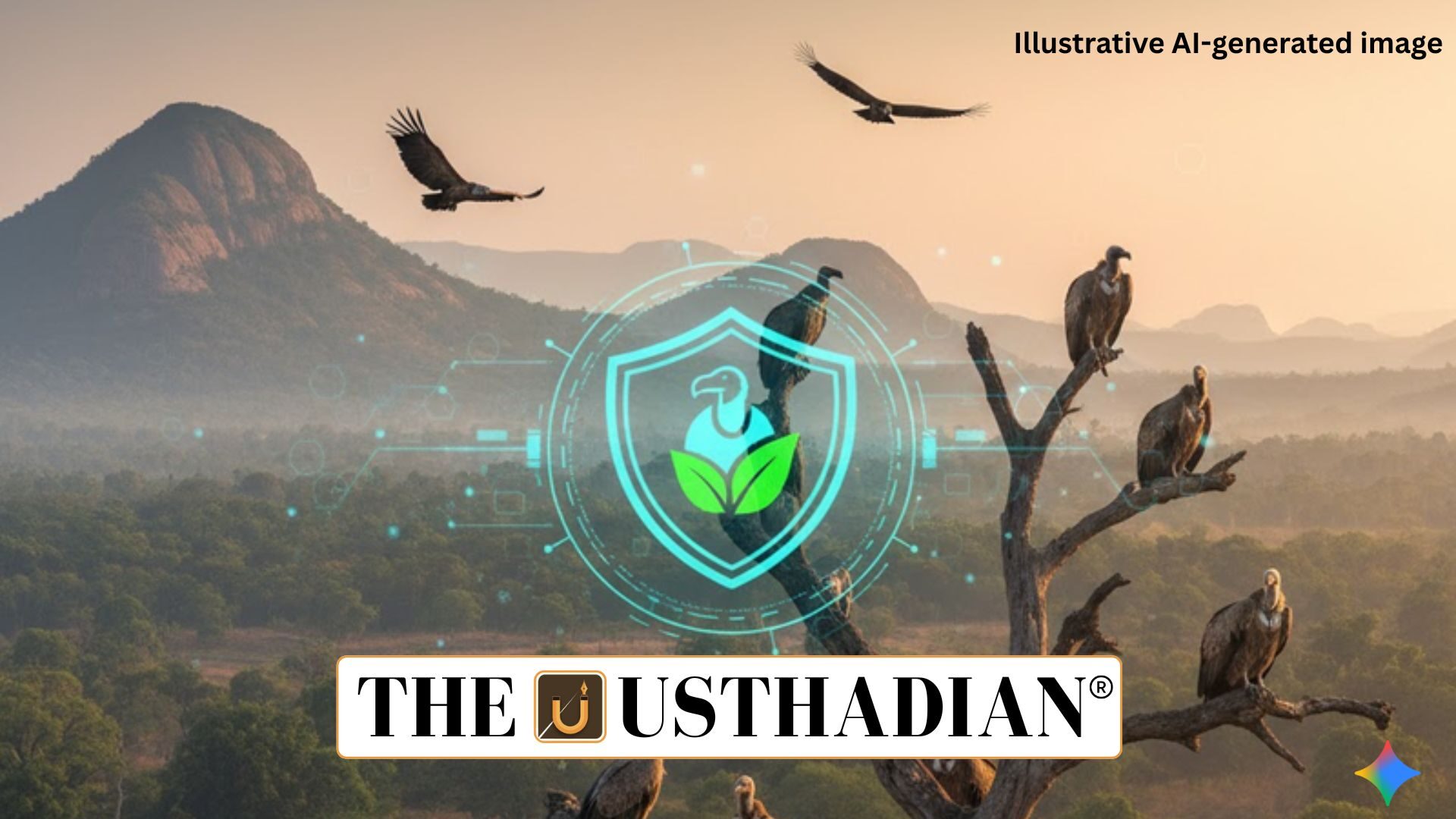
Vulture Safe Zones in Tamil Nadu: The Tamil Nadu Forest Department has formally initiated the process of creating Vulture Safe Zones (VSZs) in the state. This development was officially informed to the Madras High Court, marking a major institutional step in structured vulture conservation.
The initiative is part of the state-level conservation framework under the Vision Document for Vulture Conservation (VDVC) 2025–2030. This document provides a long-term policy roadmap for protecting endangered vulture populations in Tamil Nadu.
First VSZ Location
The first Vulture Safe Zone will be established around the Moyar River Valley. This region lies within the ecologically sensitive Nilgiris Biosphere Reserve, one of India’s most important biodiversity landscapes.
The area supports rich wildlife corridors connecting the Western and Eastern Ghats. Its forest cover, prey availability, and low human disturbance make it ideal for vulture conservation.
Static GK fact: The Nilgiris Biosphere Reserve was India’s first biosphere reserve, notified in 1986 under UNESCO’s Man and Biosphere Programme.
Administrative Structure
A field-level monitoring committee has been constituted for implementation and oversight. It has been formed by the Principal Chief Conservator of Forests-cum-Chief Wildlife Warden (PCCF-cum-CWC).
This committee will supervise field enforcement, veterinary drug regulation, awareness campaigns, and habitat safety. It ensures decentralised monitoring instead of only top-level policy control.
Core Conservation Objective
The primary goal of VSZs is to eliminate the use of banned veterinary Non-Steroidal Anti-Inflammatory Drugs (NSAIDs). Drugs like diclofenac are lethal to vultures when they consume carcasses of treated livestock.
Even trace amounts of diclofenac cause renal failure in vultures, leading to mass population decline. The VSZ model focuses on prevention rather than rescue-based conservation.
Static GK Tip: India officially banned veterinary diclofenac in 2006 due to its role in catastrophic vulture mortality.
Ecological Importance
Vultures act as natural scavengers, preventing the spread of zoonotic diseases. They dispose of animal carcasses rapidly, maintaining environmental hygiene.
Their decline leads to increased populations of feral dogs and rats, raising rabies and disease risks. Thus, vulture conservation is directly linked to public health security.
Legal and Policy Integration
The VSZ framework aligns with Wildlife Protection Act, 1972 objectives. It also supports India’s National Action Plan for Vulture Conservation 2020–2025.
Tamil Nadu’s initiative reflects a state-driven conservation governance model. This strengthens cooperative federalism in biodiversity protection.
Conservation Model
VSZs function through community participation, veterinary regulation, and habitat safety. Local livestock owners, pharmacists, and veterinarians become key stakeholders.
This creates a preventive conservation ecosystem rather than enforcement-only protection. The model shifts from species protection to landscape-level conservation planning.
Static GK fact: India has nine species of vultures, most of which are listed as endangered or critically endangered by IUCN.
Long-Term Vision
The VDVC 2025–2030 provides a structured timeline for expansion of VSZs. Multiple zones are planned across ecological corridors in the state.
This transforms conservation into a policy-driven governance mechanism. Tamil Nadu becomes one of the first states with a structured VSZ framework.
Static Usthadian Current Affairs Table
Vulture Safe Zones in Tamil Nadu:
| Topic | Detail |
| Initiative | Vulture Safe Zones in Tamil Nadu |
| Implementing authority | Tamil Nadu Forest Department |
| Legal reference | Madras High Court |
| First VSZ location | Moyar River Valley |
| Ecological zone | Nilgiris Biosphere Reserve |
| Policy framework | Vision Document for Vulture Conservation 2025–2030 |
| Monitoring authority | PCCF-cum-Chief Wildlife Warden |
| Core objective | Eliminate toxic veterinary NSAIDs |
| Key banned drug | Diclofenac |
| Conservation approach | Landscape-level preventive conservation |
| Ecological role | Natural scavenging and disease control |
| National alignment | National Action Plan for Vulture Conservation |