Unusual nesting behaviour
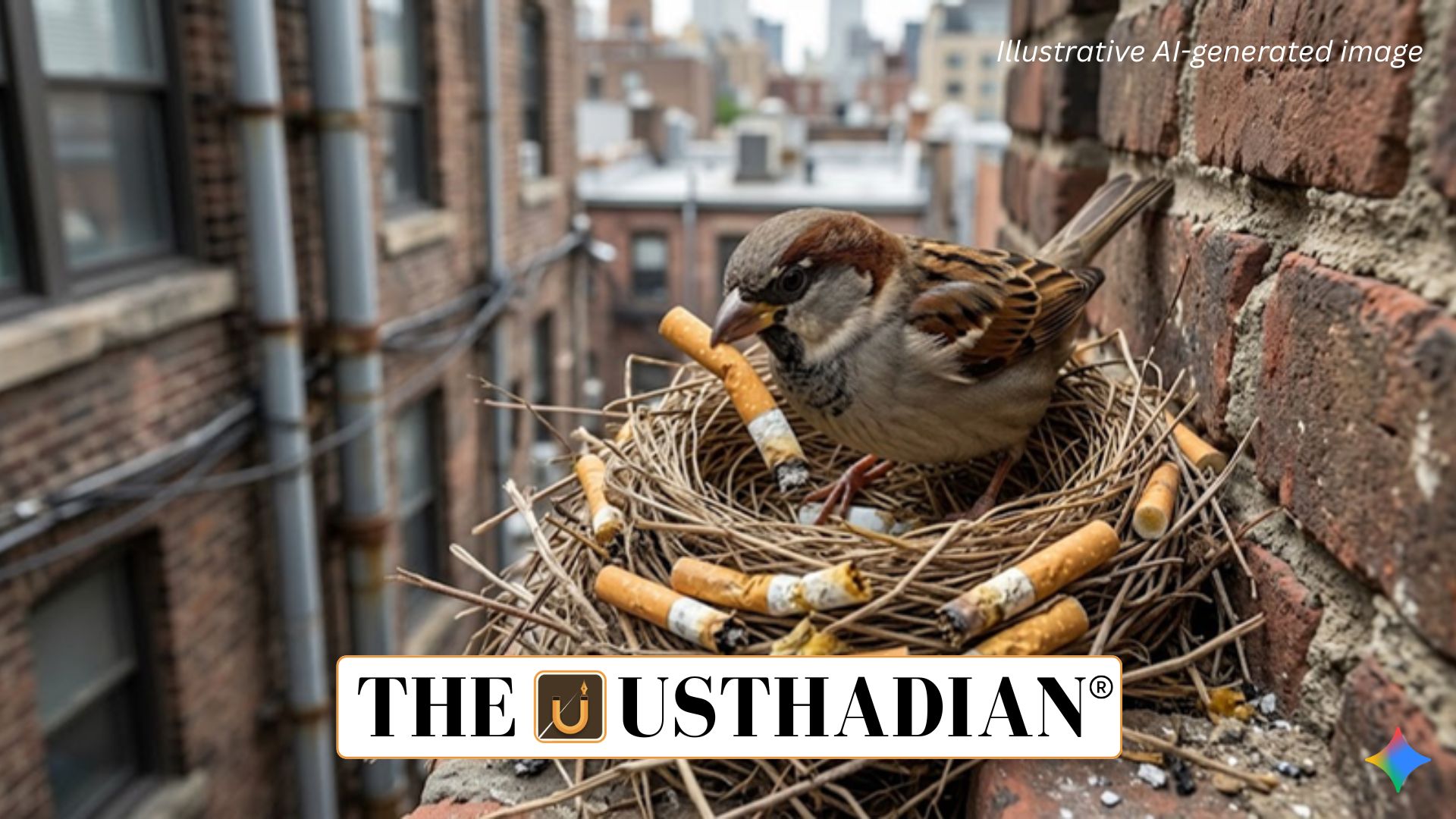
Urban Birds Use Cigarette Butts for Parasite Control: Recent studies have observed urban birds like house sparrows and finches using cigarette butts in their nests. This behaviour has been recorded in cities such as Mexico City and regions across Europe. Researchers confirm that birds deliberately collect these materials rather than using them accidentally.
The presence of cigarette filter fibres in nests suggests a purposeful survival strategy. Birds appear to integrate human waste into their nesting practices due to changing environmental conditions.
Static GK fact: House sparrows are one of the most widely distributed bird species and are commonly found near human settlements.
Scientific reasoning behind behaviour
The key factor behind this behaviour is nicotine, a chemical found in cigarette butts. Nicotine acts as a natural insecticide, originally produced by tobacco plants to protect against insects.
Research shows that nests containing cigarette fibres have significantly fewer parasitic mites. These parasites can harm chicks by feeding on their blood and weakening them. By using cigarette butts, birds effectively reduce parasite infestation.
Static GK Tip: Nicotine is an alkaloid chemical that affects the nervous system of insects, making it an effective pest deterrent.
Example of urban adaptation
This behaviour is a clear case of urban ecological adaptation, where animals adjust to human-dominated environments. Traditionally, birds used aromatic plants and natural materials to repel parasites.
However, in cities where such resources are limited, birds have adapted by using readily available human waste. This shows how species can modify behaviour quickly to survive in changing ecosystems.
Static GK fact: Urban ecology studies how organisms adapt to city environments, including pollution, noise, and limited natural resources.
Benefits and ecological significance
The use of cigarette butts provides a functional advantage by reducing parasite load. This improves the survival chances of young chicks and enhances reproductive success.
It also demonstrates how wildlife can utilize anthropogenic materials for survival. Such behaviours offer insights into evolutionary flexibility and resilience among species.
Static GK Tip: Parasitic mites are common nest parasites that can reduce bird fitness and reproductive success.
Risks and long-term concerns
Despite benefits, cigarette butts contain toxic chemicals and heavy metals. These substances may negatively affect both adult birds and their offspring.
Scientists highlight a trade-off between parasite control and toxic exposure. Ongoing research is examining the long-term health impacts of this adaptation on bird populations.
This raises broader concerns about the impact of urban pollution on wildlife behaviour and survival.
Static Usthadian Current Affairs Table
Urban Birds Use Cigarette Butts for Parasite Control:
| Topic | Detail |
| Behaviour | Birds using cigarette butts in nests |
| Key Species | House sparrows and finches |
| Chemical Factor | Nicotine acts as insecticide |
| Purpose | Reduction of parasitic mites |
| Study Locations | Mexico City and Europe |
| Adaptation Type | Urban ecological adaptation |
| Benefit | Lower parasite infestation in nests |
| Risk | Exposure to toxic chemicals and heavy metals |
| Traditional Method | Use of aromatic plants for parasite control |
| Significance | Shows wildlife adaptation to human environments |