Discovery and Location
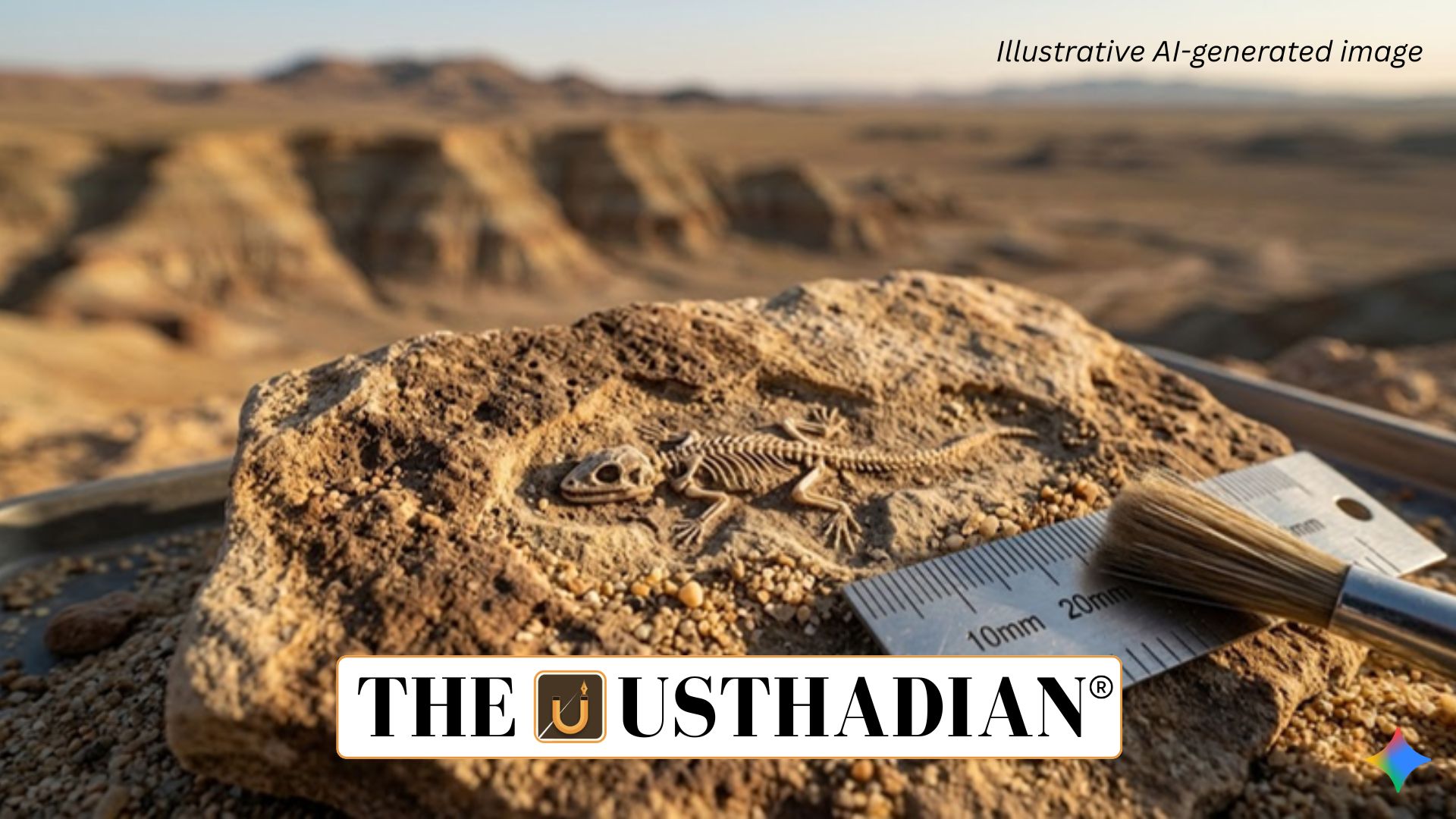
Tiny Fossil Discovery in Gobi Desert: A remarkable fossil measuring just 1 cm was discovered in the Ukhaa Tolgod region of the Gobi Desert. It is considered one of the earliest known micro-mammals from the Late Cretaceous Period (100–66 million years ago).
The discovery was made with the involvement of the American Museum of Natural History, highlighting global collaboration in palaeontological research. The fossil’s extremely small size makes it a rare scientific find.
Static GK fact: The Gobi Desert spans across Mongolia and northern China, and is one of the largest deserts in Asia.
Scientific Significance
The fossil is exceptionally well-preserved with a complete articulated skeleton, which is rare for such tiny organisms. It resembles a shrew-like insectivore, indicating early mammalian characteristics.
This specimen coexisted with dinosaurs such as Velociraptor, showing that early mammals lived alongside dominant reptilian species. It represents an advanced Mesozoic stem-mammal.
Static GK Tip: The Mesozoic Era is known as the “Age of Reptiles.”
Preservation Mechanism
Scientists attribute the preservation to protracted aridification, a process involving long-term drying of the region. Around 75–100 million years ago, climatic changes increased desert conditions in the Gobi Basin.
Frequent sandstorms buried small organisms quickly under fine sediments. This rapid burial protected delicate structures from decay, creating a natural fossil preservation system.
Static GK fact: Fossilization often requires rapid burial to prevent decomposition and scavenging.
Climate and Evolution Insights
The fossil provides clues about how early mammals adapted to harsh and dry environments. These insect-eating mammals likely evolved survival strategies for limited water availability.
It also offers evidence of ancient climate change, particularly warming and drying trends. This helps scientists understand how species responded to environmental stress over geological time.
Static GK Tip: Climate shifts during the Cretaceous Period influenced biodiversity and species evolution globally.
Modern Analysis Techniques
Due to its fragile nature, scientists are using micro-CT scanning instead of physical excavation. This technology creates a detailed 3D digital model of the fossil.
The method allows study of internal structures like teeth and inner ear without damaging the specimen. It also enables global researchers to access and analyse the fossil digitally.
Static GK fact: CT scanning (Computed Tomography) is widely used in both medicine and palaeontology for non-invasive imaging.
Static Usthadian Current Affairs Table
Tiny Fossil Discovery in Gobi Desert:
| Topic | Detail |
| Discovery Location | Ukhaa Tolgod, Gobi Desert |
| Fossil Size | 1 cm |
| Geological Period | Late Cretaceous (100–66 million years ago) |
| Type of Organism | Micro-mammal (shrew-like insectivore) |
| Preservation Process | Protracted aridification |
| Key Technique Used | Micro-CT scanning |
| Associated Dinosaur | Velociraptor |
| Scientific Importance | Insights into early mammalian evolution |
| Climate Insight | Adaptation to arid conditions |
| Collaborating Institution | American Museum of Natural History |