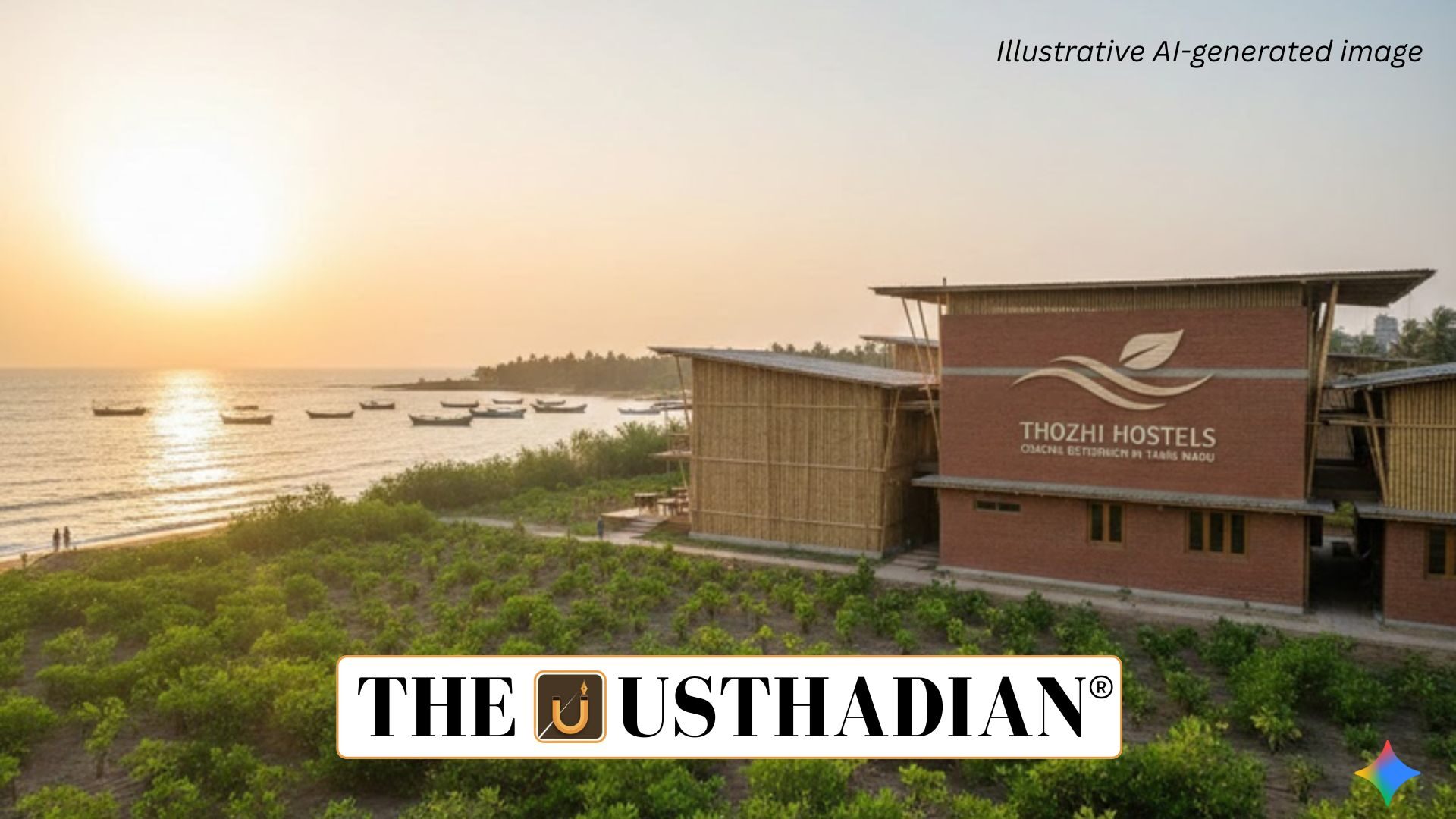
Thozhi Hostels for Working Women
Thozhi Hostels and Coastal Restoration in Tamil Nadu: The Economic Survey 2025–26 has highlighted Tamil Nadu’s Thozhi Working Women’s Hostels as a focused intervention to support women’s workforce participation. These hostels aim to provide safe, affordable, and accessible accommodation for working women across the State.
The Thozhi hostels are operated by the Tamil Nadu Working Women’s Hostels Corporation through a Public-Private Partnership (PPP) model. This model combines government oversight with private sector efficiency in construction and management.
At present, 19 Thozhi hostels are functioning across 15 districts, benefiting 1,824 working women. These hostels primarily cater to women employed in urban and semi-urban centres, including first-generation wage earners.
An additional 14 Thozhi hostels are under construction at a total cost of ₹176.93 crore. Once completed, they are expected to significantly expand accommodation capacity and reduce migration-related housing stress for women.
Static GK fact: Tamil Nadu was one of the earliest States to institutionalise working women’s hostels as a policy tool to improve female labour force participation.
Coastal Vulnerability of Tamil Nadu
Tamil Nadu has a 1,069-kilometre-long coastline spanning 14 coastal districts, making it one of India’s longest coastlines. This extensive coast is increasingly vulnerable to coastal erosion, storm surges, and sea-level rise.
Frequent cyclones in the Bay of Bengal and changing monsoon patterns have intensified risks to coastal settlements. Fishing communities and coastal livelihoods are particularly exposed to climate-induced disruptions.
The Economic Survey has flagged coastal protection as a long-term development and climate adaptation priority for the State.
Static GK Tip: India’s eastern coastline is generally more cyclone-prone than the western coast due to warmer sea surface temperatures in the Bay of Bengal.
TN-SHORE Coastal Restoration Mission
To address coastal degradation, Tamil Nadu has launched the Tamil Nadu Coastal Restoration Mission (TN-SHORE). It is a ₹1,675-crore project funded with assistance from the World Bank.
TN-SHORE focuses on improving coastal biodiversity, strengthening shoreline protection, and enhancing livelihood security for coastal communities. Nature-based solutions such as dune restoration and mangrove regeneration form a core component.
The mission also integrates scientific coastal zone management with community participation. This approach ensures long-term sustainability rather than short-term engineering solutions alone.
Static GK fact: Mangroves act as natural barriers against storm surges and can reduce wave energy by more than half during extreme weather events.
Climate Resilient Villages Initiative
The survey also noted the State’s initiative to promote Climate Resilient Villages as part of broader adaptation efforts. These villages adopt climate-smart infrastructure and livelihood practices.
Killai village in Cuddalore district has been identified as Tamil Nadu’s first Climate Resilient Village. The village serves as a pilot for integrating disaster preparedness, resilient housing, and sustainable livelihoods.
This model is expected to be replicated across other vulnerable coastal and delta regions of the State.
Static GK Tip: Community-led climate adaptation is a key pillar of India’s National Action Plan on Climate Change.
Static Usthadian Current Affairs Table
Thozhi Hostels and Coastal Restoration in Tamil Nadu:
| Topic | Detail |
| Economic Survey Highlight | Focus on Thozhi hostels and TN-SHORE mission |
| Thozhi Hostels Model | Implemented through Public-Private Partnership |
| Existing Thozhi Hostels | 19 hostels in 15 districts |
| Beneficiaries | 1,824 working women |
| New Hostels | 14 under construction costing ₹176.93 crore |
| Tamil Nadu Coastline | 1,069 km across 14 districts |
| TN-SHORE Project Cost | ₹1,675 crore |
| Funding Agency | World Bank |
| Climate Resilient Village | Killai village, Cuddalore district |