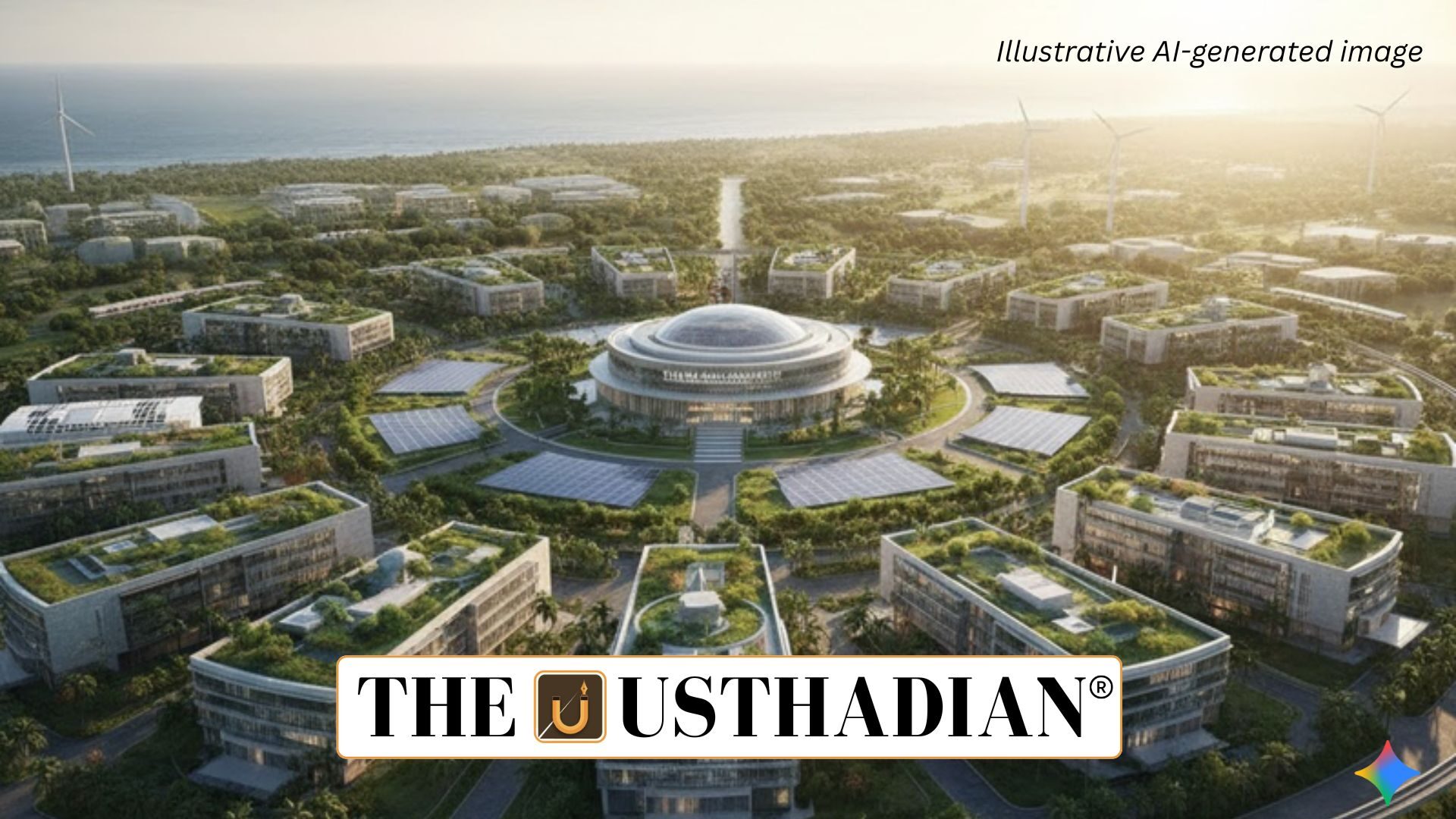
Vision Behind the Initiative
Tamil Nadu’s Knowledge City Initiative: Tamil Nadu announced the Knowledge City Initiative during the India Global Education Summit 2026 held in Chennai.
The project reflects the State’s long-term strategy to position itself as a global education and innovation hub.
It aims to integrate education, industry, and research within a single planned ecosystem.
The initiative also aligns with Tamil Nadu’s broader push for knowledge-driven economic growth.
By attracting international academic partnerships, the State seeks to enhance global competitiveness in higher education.
Location and Project Scale
The Knowledge City is planned over 872 acres in the Tiruvallur district, located near Chennai.
The site selection ensures proximity to existing industrial corridors, ports, and urban infrastructure.
This strategic location supports seamless collaboration between academia and industry.
Static GK fact: Tiruvallur district is part of the Chennai metropolitan influence zone and has strong road and rail connectivity.
Such geographic advantages make it suitable for large-scale knowledge and industrial clusters.
Integrated Academic–Industrial Ecosystem
The Knowledge City is designed as an academic–industrial ecosystem rather than a standalone education park.
It will host universities, research centres, innovation labs, and industrial facilities within the same zone.
This integration is expected to shorten the gap between research output and industrial application.
The ecosystem will focus on advanced manufacturing, clean technology, and high-end research domains.
Entrepreneurship spaces and incubation centres will support start-ups emerging from academic research.
International Education Tie-Ups
A key feature of the initiative is the emphasis on international education tie-ups.
Global universities and research institutions are expected to collaborate on curriculum design and joint research.
Such partnerships aim to raise academic standards and improve global recognition of Tamil Nadu institutions.
Static GK Tip: International academic collaborations often facilitate student exchange, dual degrees, and joint patents.
These outcomes contribute to improved rankings and research impact for host institutions.
Implementation Timeline and Phases
The project will be implemented in phases to ensure planned and sustainable development.
The first phase of the Knowledge City is expected to be ready for allocation by the end of 2026.
This phase will focus on core academic and research infrastructure.
Subsequent phases will expand industrial facilities, innovation hubs, and residential support systems.
Phased implementation allows flexibility in attracting institutions based on evolving global education trends.
Human Capital and Long-Term Impact
In the long term, the Knowledge City is expected to support over 25,000 students and researchers.
This concentration of talent is likely to strengthen Tamil Nadu’s human capital base.
It will also create employment opportunities in education, research, and technology-driven sectors.
Static GK fact: Tamil Nadu has consistently ranked high in Gross Enrolment Ratio in higher education among Indian States.
The Knowledge City builds upon this strong educational foundation to achieve global standards.
Broader Significance for Tamil Nadu
The initiative complements Tamil Nadu’s existing industrial and innovation policies.
By linking education directly with industry needs, it supports skill development aligned with future technologies.
The Knowledge City is expected to enhance the State’s role in India’s knowledge economy.
Static Usthadian Current Affairs Table
Tamil Nadu’s Knowledge City Initiative:
| Topic | Detail |
| Project Name | Knowledge City Initiative |
| Announcement Platform | India Global Education Summit 2026 |
| Location | Tiruvallur district, Tamil Nadu |
| Total Area | 872 acres |
| Core Focus Areas | Higher education, research, advanced manufacturing, clean technology |
| Ecosystem Type | Integrated academic–industrial ecosystem |
| First Phase Timeline | Allocation by end of 2026 |
| Beneficiaries | Over 25,000 students and researchers |
| Strategic Objective | Global education and innovation hub |
| Long-Term Impact | Strengthened human capital and knowledge-driven growth |