Policy Vision and Background
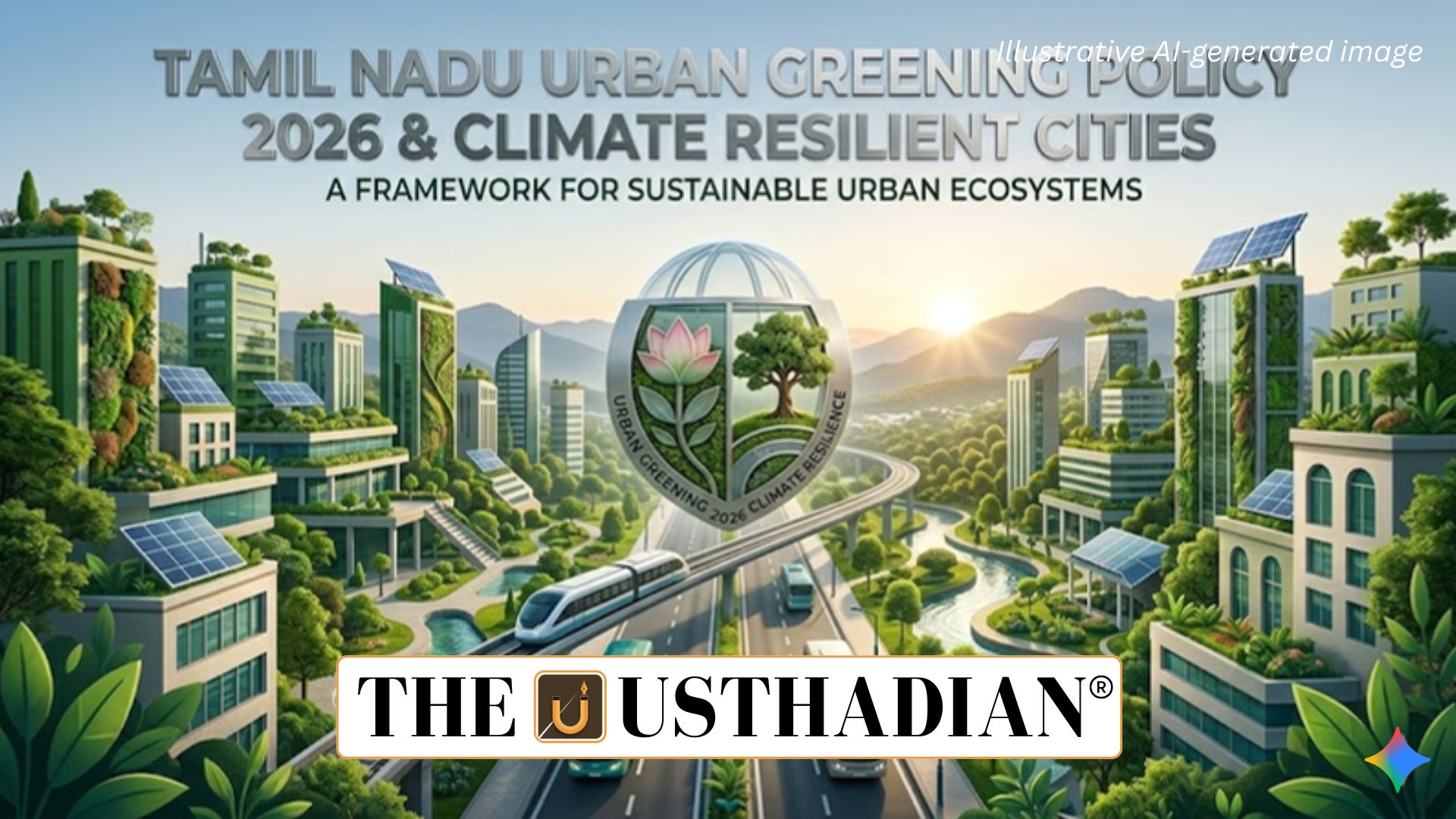
Tamil Nadu Urban Greening Policy 2026 and Climate Resilient Cities: The Tamil Nadu Government has unveiled the Tamil Nadu Urban Greening Policy 2026 under the broader framework of the Green Tamil Nadu Mission. The objective is to transform cities into climate-resilient, sustainable, and liveable urban spaces.
Rapid urbanisation has reduced tree cover and natural ecosystems in cities. This policy attempts to reverse ecological degradation by systematically integrating greenery into urban planning and governance.
Static GK fact: Tamil Nadu was formed in 1956 and its capital is Chennai, one of India’s major metropolitan cities.
Green Cover Targets for Urban Areas
A key mandate of the policy is that Urban Local Bodies (ULBs) must ensure at least 15 percent of total urban area is maintained under green cover. This includes parks, roadside plantations, urban forests, and restored wetlands.
The policy aligns with the State’s long-term environmental goal of increasing overall forest and tree cover to 33 percent. This target mirrors the national aspiration under India’s forest policy framework.
Static GK Tip: As per the National Forest Policy 1988, India aims to achieve 33% forest cover across the country.
Integration of Blue Green Infrastructure
The policy emphasises the concept of blue-green infrastructure, combining water bodies and vegetation to enhance ecological balance. Urban wetlands, lakes, stormwater drains, and tree corridors will be integrated into master plans.
Such integration helps in flood mitigation, groundwater recharge, heat reduction, and biodiversity conservation. Tamil Nadu has experienced frequent urban flooding, especially in Chennai during the 2015 and 2023 floods, highlighting the importance of ecosystem-based planning.
Role of Urban Local Bodies
The responsibility for implementation lies primarily with Urban Local Bodies, including municipal corporations, municipalities, and town panchayats. They must prepare local greening plans and monitor plantation drives.
Community participation and public-private partnerships are also encouraged. Tree census, GIS mapping, and scientific monitoring are expected to support transparency and accountability.
Static GK fact: Tamil Nadu has 38 districts and a highly urbanised population compared to many Indian states.
Climate Change and Urban Heat Reduction
Cities face rising temperatures due to the urban heat island effect. Increased tree cover can significantly reduce surface temperatures and improve air quality.
Urban forests act as carbon sinks and support biodiversity within city limits. The policy links urban greening directly with climate change adaptation and mitigation strategies.
Tamil Nadu is one of the leading states in renewable energy production. Urban sustainability complements its broader environmental leadership.
Towards Sustainable Urban Planning
The policy marks a shift from conventional infrastructure-centric growth to nature-based urban planning. By embedding ecological principles into city governance, Tamil Nadu aims to create healthier and more resilient urban environments.
The success of the policy will depend on scientific planning, consistent funding, and community ownership.
Static Usthadian Current Affairs Table
Tamil Nadu Urban Greening Policy 2026 and Climate Resilient Cities:
| Topic | Detail |
| Policy Name | Tamil Nadu Urban Greening Policy 2026 |
| Implementing Framework | Green Tamil Nadu Mission |
| Urban Green Cover Target | Minimum 15 percent in urban areas |
| State Forest Cover Goal | 33 percent forest and tree cover |
| Key Concept | Blue-green infrastructure integration |
| Implementing Authority | Urban Local Bodies |
| Environmental Focus | Climate resilience and heat mitigation |
| National Reference | National Forest Policy 1988 target |