Amendment to Strengthen Oversight
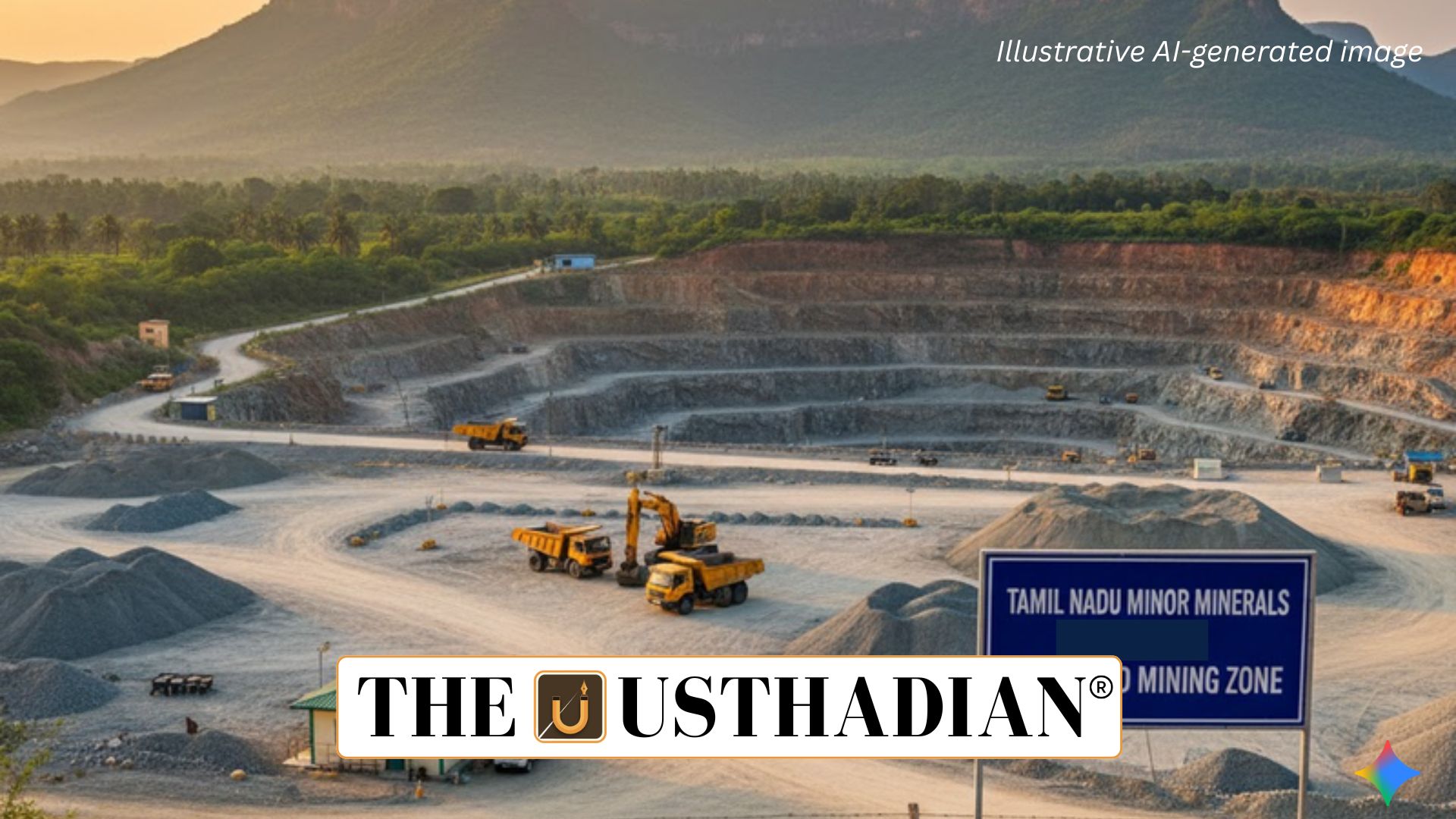
Tamil Nadu Tightens Minor Mineral Mining Regulations: The Tamil Nadu government has amended the Tamil Nadu Minor Mineral Concession Rules, 1959 to regulate mining of sand and other minor minerals from government lands and tanks. The objective is to prevent illegal extraction and ensure environmental restoration.
The amendment increases financial accountability for permission-holders. It also strengthens administrative powers at the district level to monitor and cancel permits in case of violations.
Static GK fact: The Tamil Nadu Minor Mineral Concession Rules, 1959 were framed under the Mines and Minerals (Development and Regulation) Act, 1957, a central legislation governing mineral resources in India.
Security Deposit Linked to Seigniorage Fee
Under the revised framework, applicants must pay a refundable security deposit equal to two times the seigniorage fee, along with the prescribed application fee. This measure ensures financial deterrence against over-extraction.
The seigniorage fee is a royalty payable to the government for extracting minor minerals such as sand, gravel, and clay. By linking the deposit to this fee, the state ensures that any violation directly affects the financial interest of the miner.
Static GK Tip: Minor minerals include sand, building stone, gravel, and clay, and are regulated by State Governments under Section 15 of the MMDR Act, 1957.
Enhanced Powers of District Collectors
The amendment authorizes District Collectors to cancel mining permissions if conditions are violated. They can also recover the difference in fees and impose restoration costs in case of damage.
This decentralization improves ground-level enforcement. District administrations now have clear authority to act swiftly against unauthorized extraction and environmental degradation.
The move is significant because sand mining has ecological consequences such as groundwater depletion and riverbank erosion.
Post-Permission Compliance Inspection
Authorities will conduct inspections after the expiry of permission or exhaustion of the permitted quantity. Only after verifying compliance will the security deposit be refunded.
This inspection mechanism ensures that miners restore the site as per environmental norms. If restoration is incomplete, the deposit may be adjusted against damages.
The system introduces accountability even after mining operations conclude.
Recovery Under Revenue Recovery Act
If excess mining or environmental damage costs exceed the deposited amount, recovery will be initiated under the Revenue Recovery Act, 1890. This Act empowers the government to recover dues as arrears of land revenue.
The provision ensures that financial penalties are enforceable and legally binding. It acts as a strong deterrent against illegal mining activities.
Static GK fact: The Revenue Recovery Act, 1890 is a colonial-era legislation still in force, used by governments to recover public dues through coercive measures similar to land revenue collection.
Administrative and Environmental Significance
The amendment reflects Tamil Nadu’s effort to balance resource utilization with environmental sustainability. Sand mining has been a contentious issue in many Indian states due to illegal operations and river ecosystem damage.
By tightening deposit norms, empowering collectors, and linking recovery to statutory mechanisms, the state aims to create a transparent and enforceable regulatory framework.
Static Usthadian Current Affairs Table
Tamil Nadu Tightens Minor Mineral Mining Regulations:
| Topic | Detail |
| Amendment Year | 2026 regulatory update to 1959 Rules |
| Governing Law | Mines and Minerals Development and Regulation Act 1957 |
| Key Financial Provision | Security deposit equal to two times seigniorage fee |
| Authority Empowered | District Collectors |
| Inspection Clause | Post-expiry compliance verification mandatory |
| Recovery Mechanism | Revenue Recovery Act 1890 |
| Objective | Prevent illegal mining and ensure environmental restoration |
| Regulating Authority | State Government for minor minerals |