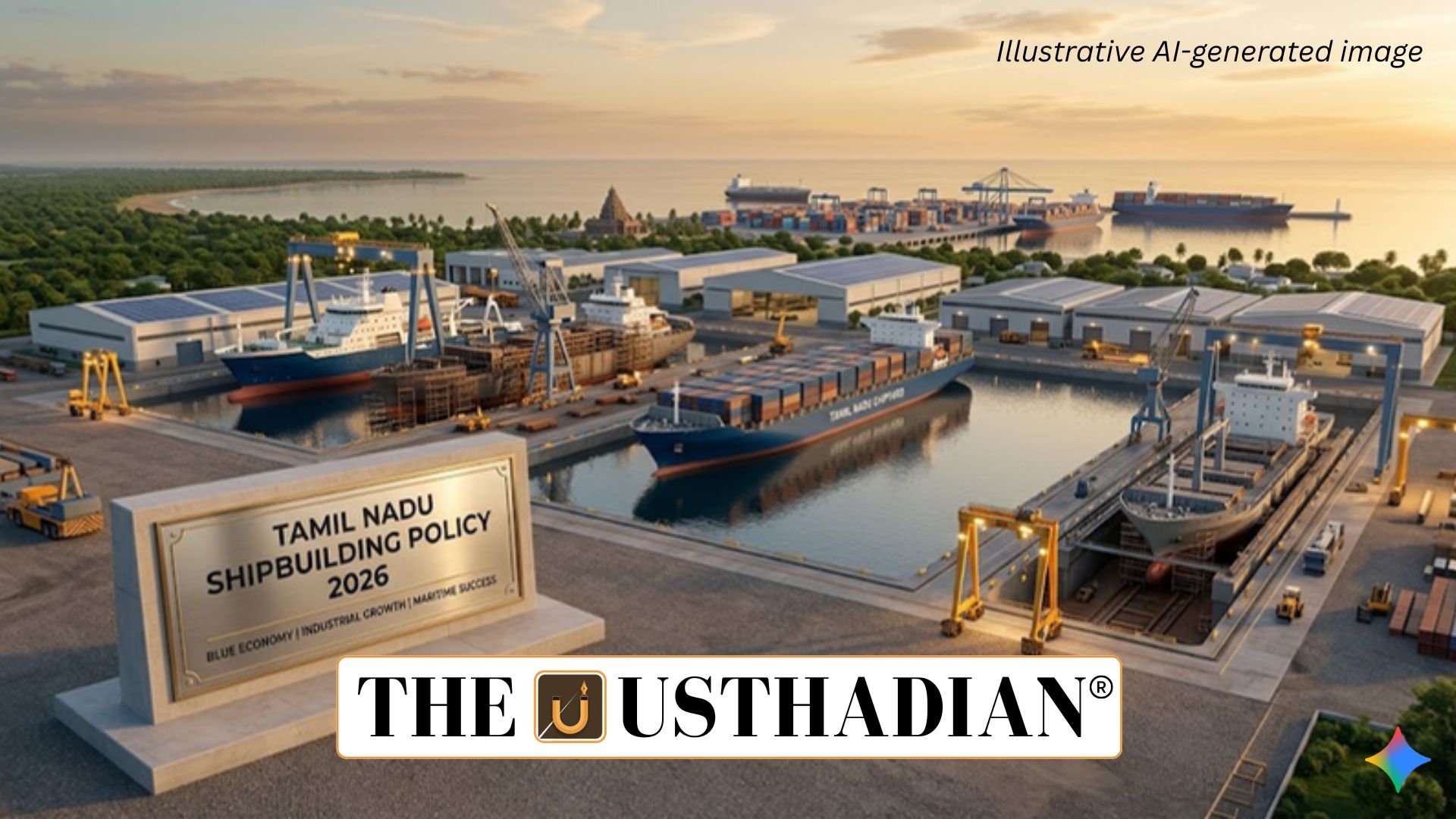
Policy announcement and vision
Tamil Nadu Shipbuilding Policy 2026: The Tamil Nadu Government, led by Chief Minister M. K. Stalin, has launched the Tamil Nadu Shipbuilding Policy 2026 to strengthen the State’s maritime economy. The policy focuses on building a strong ecosystem for shipbuilding, repair, and recycling industries.
It aims to position Tamil Nadu as a major hub for maritime manufacturing in India. The policy aligns with the broader national goal of enhancing coastal economic zones and port-led development.
Static GK fact: Tamil Nadu has a long coastline of about 1,076 km, making it one of India’s key maritime states.
Development of shipbuilding clusters
A key feature of the policy is the creation of shipbuilding clusters across strategic coastal regions. These clusters will integrate infrastructure, skilled labour, and logistics support to improve efficiency.
The cluster-based approach reduces costs and encourages collaboration between industries. It also attracts both domestic and foreign investments into the maritime sector.
Static GK Tip: Major ports in Tamil Nadu include Chennai Port, Ennore (Kamarajar) Port, and Thoothukudi Port.
Role of Special Purpose Vehicle
To implement the policy effectively, a Special Purpose Vehicle (SPV) will be established under the State Industries Promotion Corporation of Tamil Nadu (SIPCOT). This SPV will coordinate planning, financing, and execution of shipyard projects.
The SPV model ensures better governance and faster decision-making. It also facilitates public-private partnerships in infrastructure development.
Static GK fact: SIPCOT is a state-owned organization responsible for promoting industrial growth in Tamil Nadu.
Incentives for green initiatives
The policy strongly emphasizes sustainable shipbuilding practices. Shipyards investing at least ₹100 crore in green initiatives will receive a 50% subsidy, subject to a maximum of ₹50 crore or 2% of project cost.
This incentive encourages the adoption of eco-friendly technologies such as waste management systems and energy-efficient processes. It aligns with global maritime standards for environmental protection.
Static GK Tip: India is a signatory to the International Maritime Organization (IMO) regulations on environmental safety.
Economic and strategic impact
The policy is expected to generate employment and boost exports from the maritime sector. It will also strengthen India’s position in global shipbuilding and repair markets.
By promoting ship recycling, the policy supports circular economy practices. This contributes to resource efficiency and reduces environmental impact.
Static GK fact: India is one of the leading countries in ship recycling, with Alang in Gujarat being the world’s largest ship-breaking yard.
Static Usthadian Current Affairs Table
Tamil Nadu Shipbuilding Policy 2026:
| Topic | Detail |
| Policy Name | Tamil Nadu Shipbuilding Policy 2026 |
| Announced By | M. K. Stalin |
| Objective | Develop shipbuilding, repair, and recycling ecosystem |
| Key Strategy | Creation of shipbuilding clusters |
| Implementing Body | SPV under SIPCOT |
| Green Incentive | 50% subsidy up to ₹50 crore |
| Investment Condition | Minimum ₹100 crore in green initiatives |
| Economic Impact | Employment generation and export growth |
| Environmental Focus | Promotion of sustainable shipbuilding practices |