Vision and policy foundation
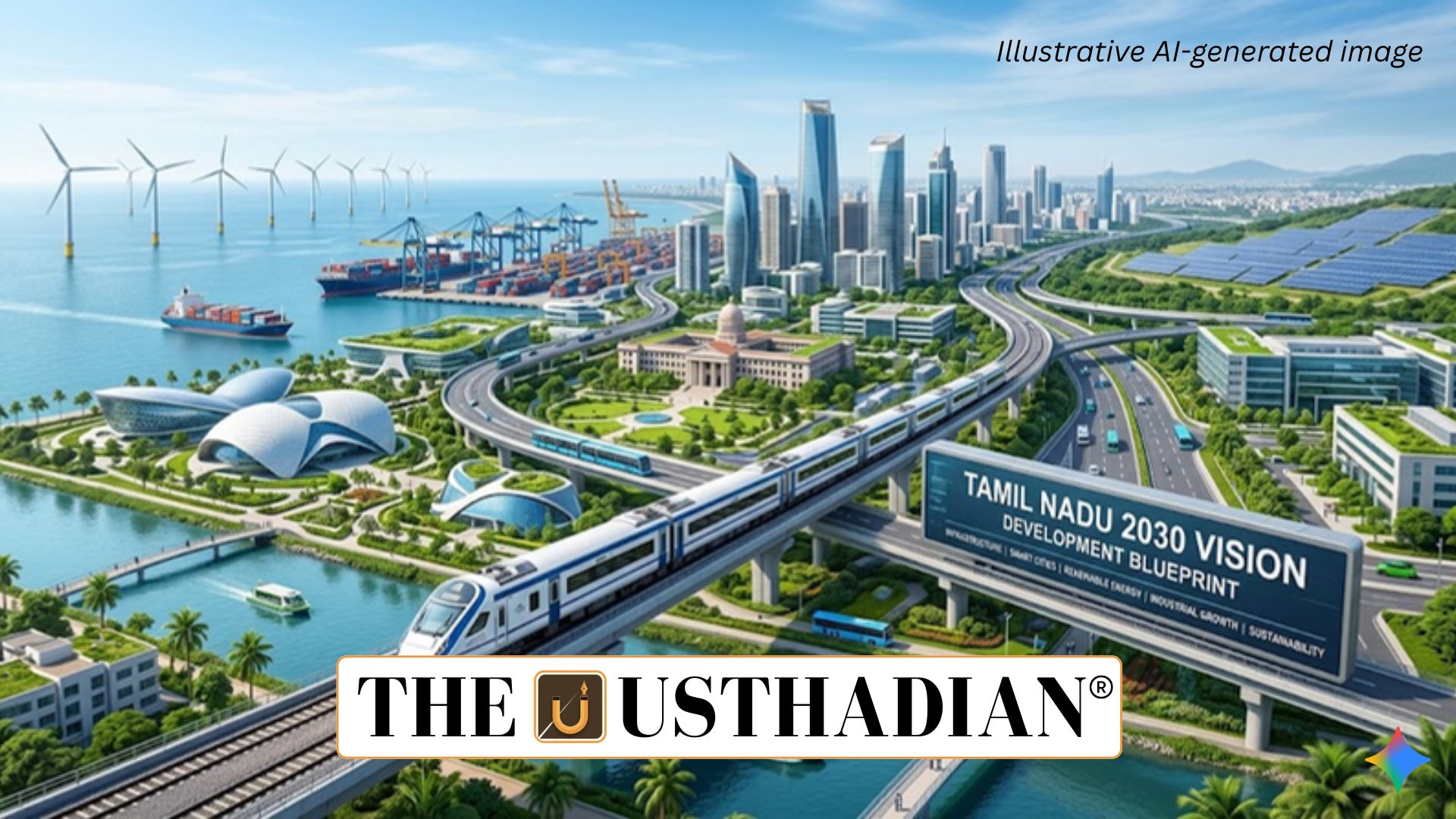
Tamil Nadu 2030 Vision Development Blueprint: The Tamil Nadu 2030 blueprint was unveiled by Chief Minister M.K. Stalin in Chennai as a long-term development roadmap. It is based on feedback from 1.81 crore families collected through the Unga Kanava Sollunga household survey.
This participatory approach ensures that governance aligns with people’s aspirations. The plan adopts a sector-wise strategy covering rural development, health, education, and industry.
Static GK fact: Tamil Nadu has 38 districts and Chennai serves as its capital city.
Rural transformation initiatives
A key highlight is the Uttamar Gandhi Model Villages Project, inspired by Dr. A. P. J. Abdul Kalam. It aims to transform villages into economic growth centres with urban-level infrastructure.
Initially, 10 village panchayats will receive facilities like improved roads, sanitation, and digital access. The goal is to reduce rural-urban disparity and promote inclusive development.
Static GK Tip: Panchayati Raj system in India was constitutionally recognized by the 73rd Amendment Act, 1992.
Housing and social welfare
Under the Kalaignar Kanavu Illam Scheme, the state plans to construct 5 lakh rural houses and 2 lakh urban houses. This initiative targets improved housing security for economically weaker sections.
Additionally, land ownership will be strengthened by providing house pattas to landless Adi Dravidar and tribal families in phases.
Static GK fact: Adi Dravidar refers to historically marginalized communities classified under Scheduled Castes.
Health sector reforms
The blueprint ensures medical insurance for all citizens. Special health camps will focus on early detection of cancer, diabetes, and hypertension.
The state also targets achieving the top rank in reducing Maternal Mortality Rate (MMR) and Infant Mortality Rate (IMR). Mental health counselling centres will be established in every district.
Static GK Tip: MMR is measured as maternal deaths per 1 lakh live births.
Agricultural growth strategy
Tamil Nadu aims to expand the net sown area to 50 lakh hectares. Soil health cards will be distributed to 43 lakh farmers to improve productivity.
The plan promotes natural farming (17,000 hectares) and organic farming (1 lakh hectares). Micro-irrigation will cover 21 lakh hectares, enhancing water efficiency.
Rainwater harvesting structures in the Western Ghats and Eastern Ghats will boost water conservation. Food production is targeted to reach 125 lakh metric tonnes.
Static GK fact: The Western Ghats is a UNESCO World Heritage Site known for biodiversity.
Education and skill development
The state aims for zero school dropouts and 100% smart classrooms in all government and aided schools. Under Library 5.0, more than 300 libraries will be established.
Naan Mudhalvan 2.0 will provide advanced skill training to enhance global employability. The Gross Enrolment Ratio (GER) in higher education is targeted at 90%.
Institutions will include research labs, Centres of Excellence, and AI labs. A flexible curriculum will offer academic credits for sportspersons.
Static GK Tip: GER represents total enrolment in higher education as a percentage of the eligible population.
Industrial and economic targets
Tamil Nadu plans to attract ₹18 lakh crore investment and create 50 lakh jobs. Exports are expected to reach $120 billion.
Under the Make in Tamil Nadu initiative, industrial parks will be developed in every district. Urban planning includes pedestrian-friendly roads, 20% green spaces, and wastewater recycling systems.
These measures aim to position Tamil Nadu as a leading economic powerhouse in India.
Static GK fact: Tamil Nadu is one of India’s top states in automobile and textile industries.
Static Usthadian Current Affairs Table
Tamil Nadu 2030 Vision Development Blueprint:
| Topic | Detail |
| Blueprint Name | Tamil Nadu 2030 |
| Announced By | Chief Minister M.K. Stalin |
| Survey Base | 1.81 crore families |
| Housing Scheme | Kalaignar Kanavu Illam Scheme |
| Rural Initiative | Uttamar Gandhi Model Villages |
| Agriculture Target | 50 lakh hectares net sown area |
| Education Goal | 100% smart classrooms, GER 90% |
| Health Focus | Universal insurance, MMR & IMR reduction |
| Investment Target | ₹18 lakh crore |
| Employment Goal | 50 lakh jobs |