Release of the Fourth Volume
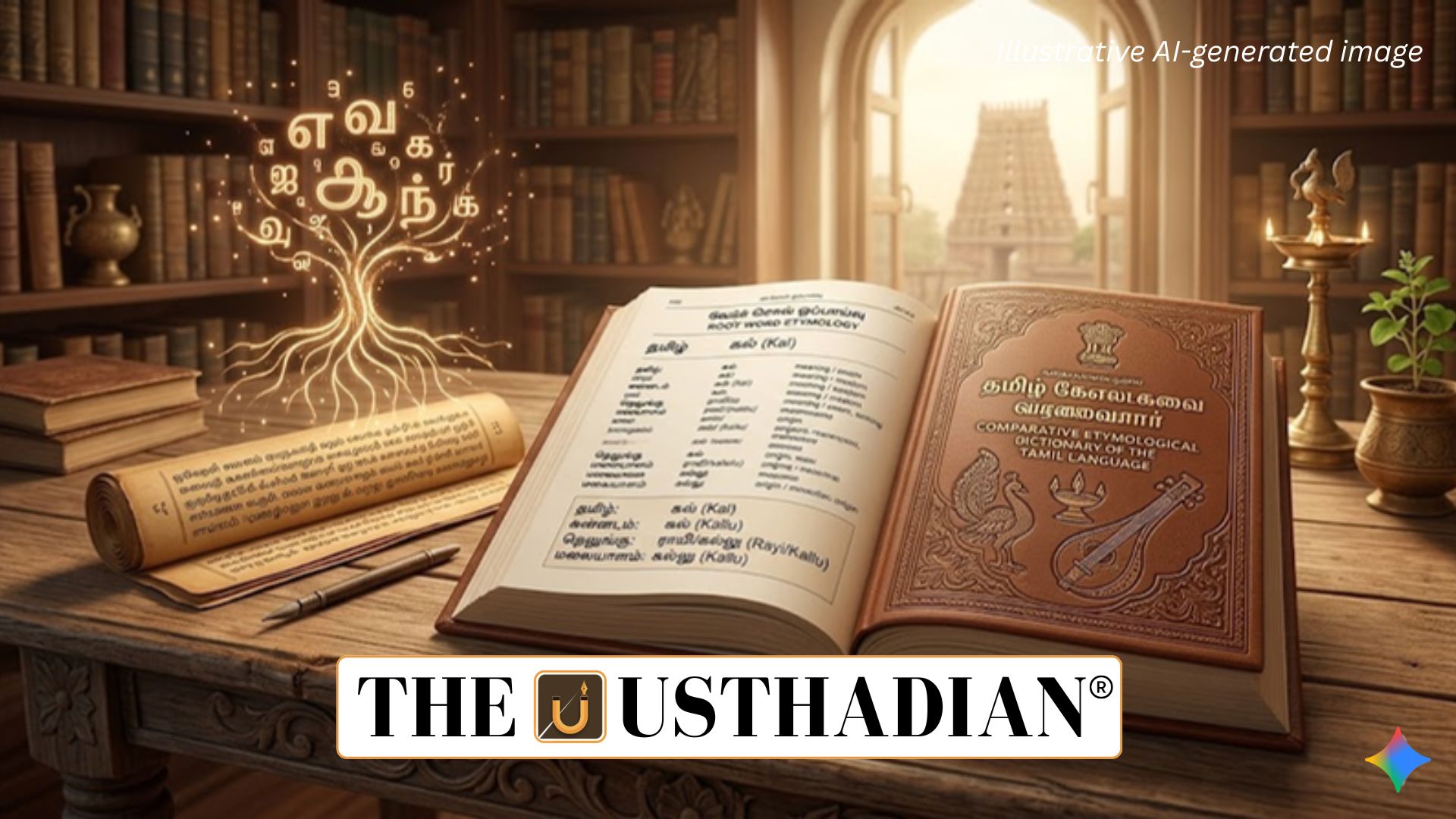
Tamil Linguistic Heritage Expands with Comparative Etymological Dictionary: The Tamil Nadu Deputy Chief Minister recently released the fourth volume of the Comparative Etymological Dictionary of Tamil and Indo-European Languages in Chennai. The work is part of an important linguistic research effort aimed at tracing the historical connections between Tamil and various Indo-European languages.
This dictionary attempts to show how certain root words in Tamil may have influenced or corresponded with vocabulary found in both Western and Eastern Indo-European language families. The project is considered a significant contribution to comparative linguistic studies and historical language research.
Linguistic Connections Across Civilisations
The fourth volume of the dictionary examines the historical development of words in several Western Indo-European languages, including Latin, Greek, German, French, and English. It also studies links with Eastern languages such as Sanskrit, Pali, and Sinhala.
Researchers traced the evolution of words originating from 19 Tamil root words and examined their phonetic and semantic transformations across different languages. This comparative approach highlights possible linguistic relationships between Dravidian and Indo-European language traditions.
Such studies help scholars understand the migration of words, cultural interactions, and linguistic exchanges that may have taken place across regions over centuries.
Static GK fact: Tamil is one of the longest continuously used classical languages in the world, with inscriptions dating back to at least the 3rd century BCE.
Importance of Etymological Research
An etymological dictionary studies the origin and historical development of words. It traces how words evolve in pronunciation, spelling, and meaning over time.
The newly released volume provides comparative linguistic evidence linking Tamil vocabulary with multiple global languages. This research supports broader academic discussions regarding the antiquity and influence of Dravidian languages.
Such works also help linguists identify shared phonetic patterns, common roots, and structural similarities among language families.
Static GK Tip: The Indo-European language family is one of the largest language groups in the world, including languages spoken across Europe, South Asia, and parts of Western Asia.
Significance for Tamil Studies
The publication of this volume strengthens efforts to promote Tamil linguistic scholarship and highlights the language’s historical depth and global relevance. It also reflects Tamil Nadu’s continued commitment to supporting research related to classical Tamil heritage.
Scholars believe that comparative studies between Dravidian languages and Indo-European languages may open new perspectives on ancient cultural exchanges, trade routes, and intellectual interactions.
This dictionary will serve as an important academic resource for linguists, historians, philologists, and students of comparative language studies.
Static Usthadian Current Affairs Table
Tamil Linguistic Heritage Expands with Comparative Etymological Dictionary:
| Topic | Detail |
| Event | Release of the fourth volume of the comparative etymological dictionary |
| Released by | Tamil Nadu Deputy Chief Minister |
| Location | Chennai |
| Focus of study | Linguistic comparison between Tamil and Indo-European languages |
| Languages examined | Latin, Greek, German, French, English, Sanskrit, Pali, Sinhala |
| Key research basis | Historical evolution from 19 Tamil root words |
| Field of study | Comparative linguistics and etymology |
| Importance | Highlights historical links between Dravidian and Indo-European languages |