Case background
Supreme Court Stand on Mangrove Protection in India: The Supreme Court of India recently refused to interfere with an order of the Bombay High Court regarding the protection of mangrove trees. The decision came in March 2026, highlighting judicial support for environmental safeguards.
The Chief Justice of India (CJI) emphasized that while environmental norms must be strictly enforced, there must also be a balance between development and conservation. This reflects the principle of sustainable development.
Static GK fact: The Supreme Court of India was established in 1950 under Article 124 of the Constitution.
Understanding mangroves
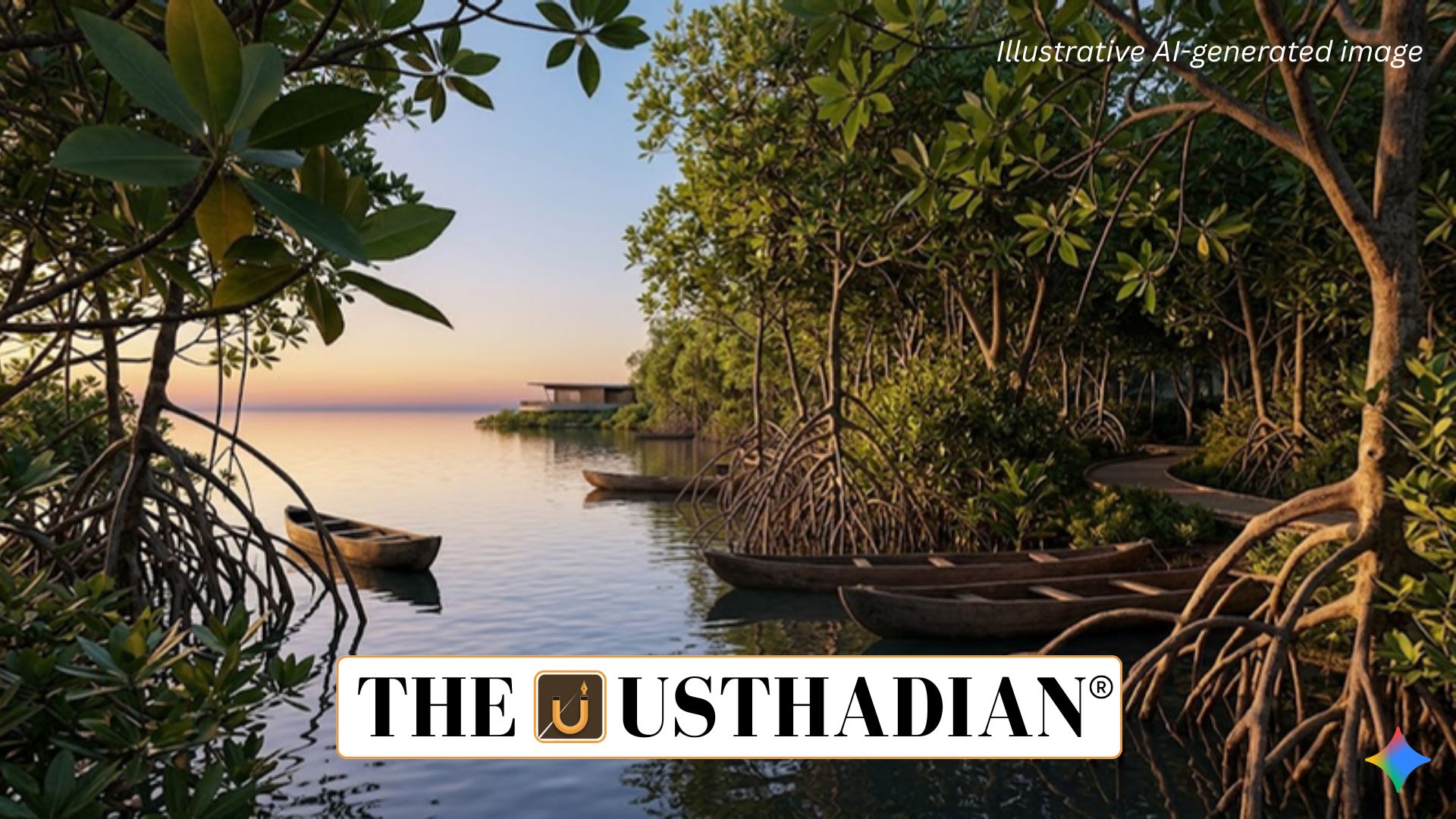
Mangroves are salt-tolerant vegetation found in tropical and subtropical coastal regions. They grow in intertidal zones, where land and sea interact regularly.
There are four main types: Red, Black, White, and Buttonwood mangroves. These ecosystems act as natural buffers against coastal erosion and cyclones.
Static GK Tip: The Sundarbans mangrove forest is the largest in the world, located in West Bengal and Bangladesh.
Distribution in India
India has approximately 4,991.68 sq. km of mangrove cover. West Bengal holds the largest share at 42.45%, mainly due to the Sundarbans delta.
Other significant regions include Gujarat and the Andaman and Nicobar Islands. Mangroves are spread across nine states and four Union Territories.
Static GK fact: The Andaman and Nicobar Islands are known for their rich biodiversity and are located in the Bay of Bengal.
Ecological importance
Mangroves serve as nurseries for fish and marine species. They also act as carbon sinks, helping mitigate climate change.
However, rising CO₂ levels are causing hypercapnic hypoxia, reducing oxygen in water. This threatens aquatic life dependent on mangrove ecosystems.
Mangroves also protect coastlines from tsunamis and storm surges, making them vital for disaster risk reduction.
Static GK Tip: The 2004 Indian Ocean tsunami highlighted the protective role of coastal vegetation like mangroves.
Threats and challenges
Major threats include deforestation for infrastructure, urban expansion, and industrial projects. Weak enforcement of environmental laws further worsens the situation.
Climate change impacts such as sea-level rise and temperature increase also affect mangrove survival. Loss of mangroves directly impacts coastal communities and biodiversity.
Way forward
Ensuring protection requires strict implementation of Coastal Regulation Zone (CRZ) norms. Authorities must promote compensatory afforestation and habitat restoration.
Initiatives like the Mangrove Initiative for Shoreline Habitats & Tangible Incomes (MISHTI) aim to expand mangrove cover and support local livelihoods.
Community participation and awareness are crucial for long-term conservation. A balanced approach between economic growth and ecological preservation remains essential.
Static GK fact: The MISHTI scheme was announced in the Union Budget 2023–24 to restore mangrove ecosystems.
Static Usthadian Current Affairs Table
Supreme Court Stand on Mangrove Protection in India:
| Topic | Detail |
| Case | SC refused to interfere with Bombay HC order |
| Date | March 2026 |
| Key Issue | Protection of mangrove trees |
| Judicial View | Balance between development and environment |
| Mangrove Coverage | 4,991.68 sq. km in India |
| Largest Share | West Bengal (42.45%) |
| Major Threats | Urbanization, climate change |
| Key Law | Coastal Regulation Zone (CRZ) norms |
| Government Initiative | MISHTI scheme |
| Ecological Role | Carbon sink, coastal protection |