Understanding Stagflation
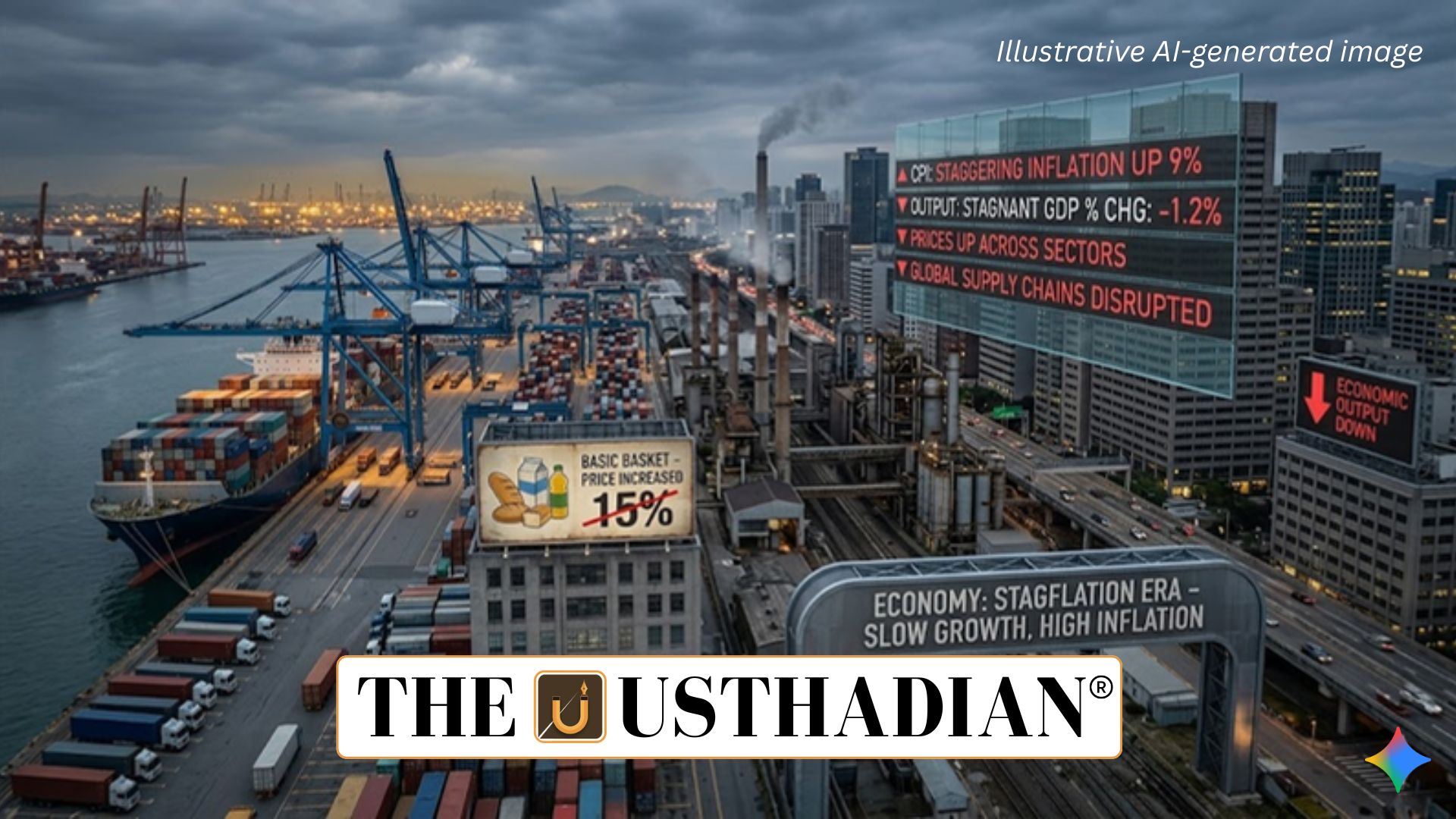
Stagflation and Its Economic Impact: Stagflation is a rare economic condition where slow economic growth, high unemployment, and rising prices occur simultaneously. It creates a complex situation where the economy stagnates while the cost of living increases.
This phenomenon contradicts the traditional economic theory of the Phillips Curve, which suggests an inverse relationship between inflation and unemployment.
Static GK fact: The term Stagflation became widely known during the 1970s oil crisis, when global economies faced similar conditions.
Causes of Stagflation
A major cause of stagflation is a supply shock, especially in essential sectors like energy. The ongoing Iran-related geopolitical tensions can disrupt oil supply and increase fuel prices globally.
Higher fuel prices increase production and transportation costs. This leads to cost-push inflation, while economic activity slows down due to rising expenses.
Governments may also contribute through poor fiscal or monetary policies. Excessive money supply combined with supply constraints worsens the situation.
Policy Challenges
Stagflation is difficult to manage because policy tools often have conflicting outcomes. If central banks raise interest rates to control inflation, it may reduce investment and increase unemployment.
On the other hand, lowering interest rates to boost growth can worsen inflation. This creates a policy dilemma for economic authorities.
Static GK Tip: The Reserve Bank of India (RBI) uses tools like repo rate and reverse repo rate to control inflation and liquidity.
Types of Inflation
Different forms of inflation help in understanding economic trends more clearly.
Skewflation refers to uneven price rise across sectors, where some goods become significantly more expensive than others.
Hyperinflation is an extreme situation where inflation exceeds 50% per month, often seen in unstable economies.
Creeping Inflation occurs when prices rise gradually over time, usually considered manageable.
Galloping Inflation is rapid inflation where prices increase 20% or more annually, creating economic instability.
Global and National Implications
Stagflation reduces purchasing power and increases economic uncertainty. It affects both consumers and businesses, leading to reduced investments and job losses.
For countries like India, rising global oil prices directly impact import bills and fiscal stability. This can widen the current account deficit.
Static GK fact: India imports nearly 85% of its crude oil requirements, making it highly vulnerable to global price shocks.
Way Forward
To tackle stagflation, governments must focus on improving supply chains and reducing dependency on imports. Diversifying energy sources and investing in renewable energy can help stabilize prices.
Balanced monetary and fiscal policies are essential to control inflation without harming growth. Structural reforms can also improve long-term economic resilience.
Static Usthadian Current Affairs Table
Stagflation and Its Economic Impact:
| Topic | Detail |
| Concept | Stagflation |
| Key Features | High inflation, unemployment, slow growth |
| Major Cause | Supply shock (energy crisis) |
| Historical Reference | 1970s oil crisis |
| Policy Challenge | Conflict between inflation control and growth |
| Related Institution | Reserve Bank of India |
| Types of Inflation | Skewflation, Hyperinflation, Creeping, Galloping |
| India Concern | High crude oil import dependence |
| Economic Impact | Reduced purchasing power and investment |
| Solution Focus | Policy balance and supply-side reforms |