Rise of Indigenous Drone Warfare
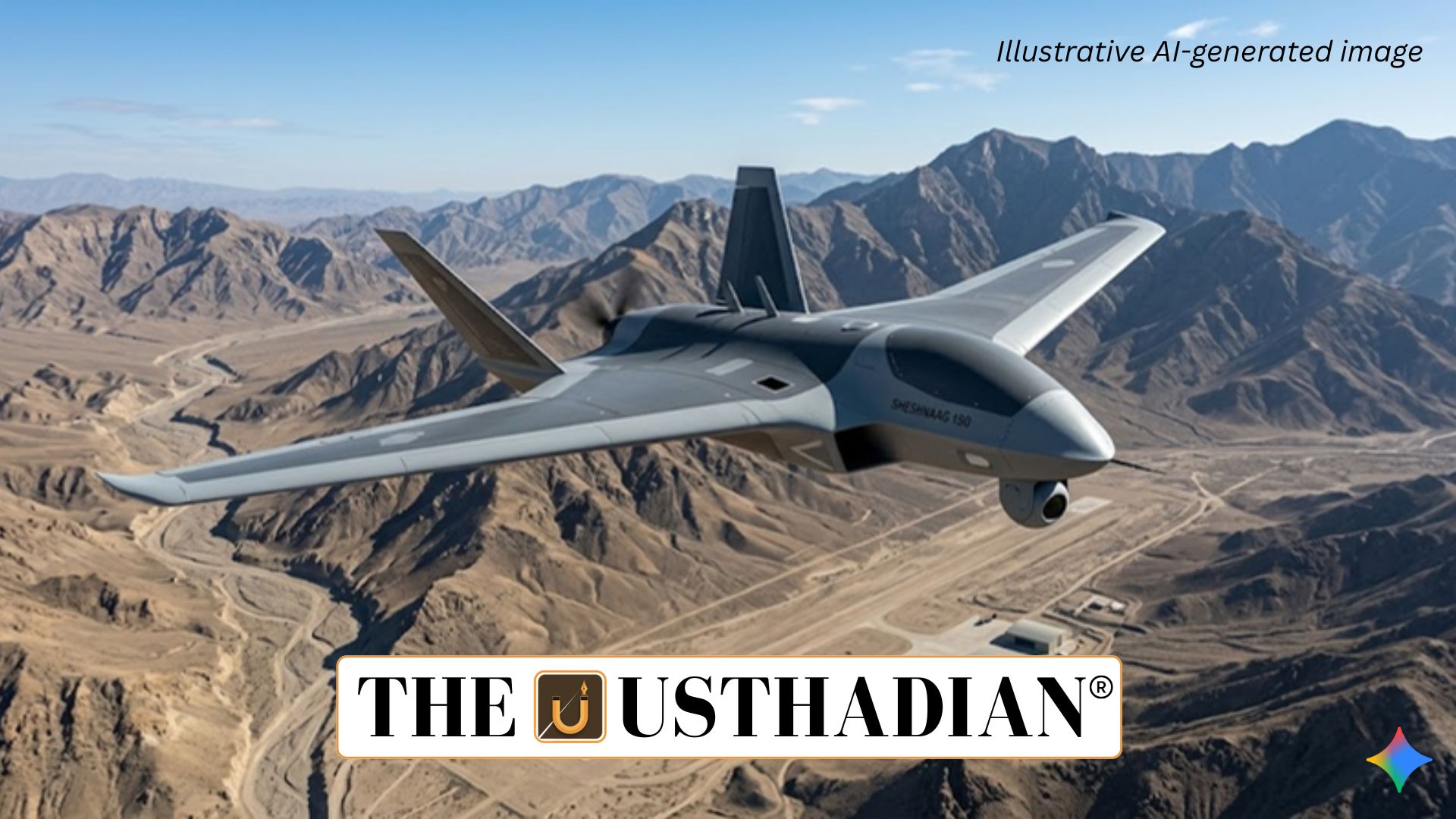
Sheshnaag 150 Drone Strengthens India’s Autonomous Warfare Systems: India is strengthening its unmanned combat capabilities with the development of the Sheshnaag-150 swarm drone system. The long-range drone is being developed by Newspace Research Technologies, a defence startup based in Bengaluru. It represents India’s push toward indigenous defence technologies under the Atmanirbhar Bharat initiative.
The system recently completed its maiden flight testing phase and is currently undergoing further operational evaluation. Its development reflects the increasing importance of autonomous and cost-effective aerial warfare platforms in modern conflicts.
Static GK fact: India’s primary defence research organisation is the Defence Research and Development Organisation (DRDO), established in 1958, which coordinates many indigenous military technology projects.
Growing Role of Low Cost Combat Drones
Recent global conflicts have demonstrated how low-cost unmanned systems can create major battlefield impacts. Drones such as Iran’s Shahed-136 and the United States’ LUCAS UAV have been used to strike infrastructure, supply lines, and military equipment.
These platforms provide a cost-efficient alternative to fighter aircraft or cruise missiles. They allow armed forces to conduct precision attacks with reduced operational risk while maintaining strategic flexibility.
The Sheshnaag-150 follows this global trend by focusing on affordable mass-deployment drone technology capable of coordinated strikes.
Static GK Tip: Unmanned Aerial Vehicles (UAVs) are classified into categories such as mini UAVs, tactical UAVs, and strategic UAVs, depending on range and payload capacity.
Strategic Push After Operation Sindoor
The development of the Sheshnaag system gained momentum after Operation Sindoor, when the Indian military emphasized the urgent need for indigenous swarm drone capabilities. Military planners highlighted the importance of rapid deployment unmanned systems for modern battlefield environments.
Following this requirement, developers accelerated efforts to refine the drone’s range, endurance, and coordination features. The goal is to integrate the system into India’s future network-centric warfare strategy.
The programme also supports India’s broader objective of reducing dependence on imported defence platforms while strengthening domestic innovation in military technology.
Capabilities of the Sheshnaag 150 System
The Sheshnaag-150 is designed as a long-range swarm attack drone capable of operating with multiple units simultaneously. When deployed in groups, the drones can overwhelm enemy air defence systems through coordinated attacks.
The drone has an operational range exceeding 1,000 kilometres and an endurance of more than five hours. This allows it to conduct extended missions including surveillance, target tracking, and precision strike operations.
Each drone can carry warheads weighing between 25 kg and 40 kg, enabling it to strike military infrastructure, logistics hubs, and strategic assets.
Advanced Navigation and Control Systems
A defining feature of the Sheshnaag system is its proprietary swarm coordination software. The system operates using a central control architecture known as the “mother code”, which manages communication between multiple drones.
Through advanced algorithms, drones within the swarm can share information, coordinate flight paths, and adapt to battlefield conditions. This allows the system to function effectively even in complex combat environments.
Future versions are expected to incorporate visual navigation technology, enabling drones to operate without relying solely on satellite navigation systems such as GPS. This capability is crucial because satellite signals can be jammed during electronic warfare operations.
Static GK fact: Electronic warfare involves disrupting enemy communications and navigation systems using technologies such as signal jamming and cyber interference.
Static Usthadian Current Affairs Table
Sheshnaag 150 Drone Strengthens India’s Autonomous Warfare Systems:
| Topic | Detail |
| Drone System | Sheshnaag-150 swarm attack drone |
| Developer | Newspace Research Technologies, Bengaluru |
| Operational Range | More than 1,000 kilometres |
| Endurance | Over five hours of flight time |
| Payload Capacity | 25 kg to 40 kg warheads |
| Key Technology | Swarm coordination algorithms |
| Navigation Feature | Potential visual navigation system |
| Strategic Initiative | Atmanirbhar Bharat defence manufacturing |
| Key Military Concept | Swarm drone warfare |
| Operational Objective | Overwhelm enemy air defences through coordinated drone attacks |