Concept and Structure
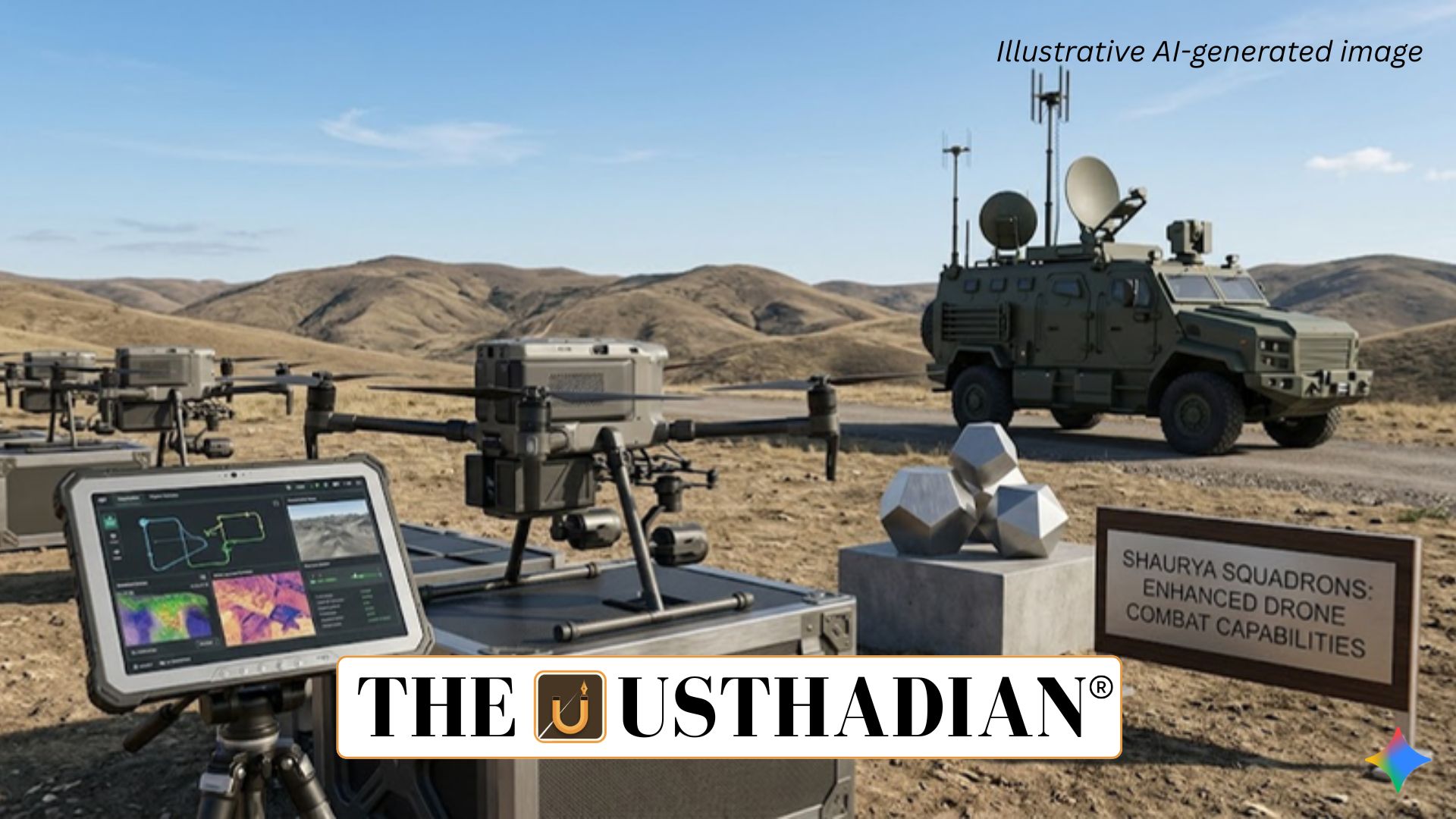
Shaurya Squadrons Strengthen Indian Army Drone Combat: The Indian Army has introduced Shaurya Squadrons as specialised drone units within armoured regiments. These squadrons enhance battlefield capabilities by integrating advanced drone systems at the unit level. Each squadron consists of 20–30 trained personnel skilled in drone and counter-drone operations.
These units operate alongside tank formations, providing real-time intelligence and precision strike capabilities. Their integration ensures faster decision-making and improved coordination during combat situations.
Static GK fact: The Indian Army was established in 1895 and is one of the world’s largest standing armies.
Operational Capabilities
Shaurya Squadrons deploy a variety of unmanned systems, including surveillance drones, swarm drones, FPV drones, and loitering munitions. Among these, First-Person View (FPV) drones are highly effective in targeting enemy tanks and supply chains.
The use of loitering munitions allows drones to hover over a target area before striking with precision. This combination of technologies enhances both reconnaissance and offensive operations without heavy reliance on higher command approvals.
Static GK Tip: FPV drones provide operators with a live video feed, enabling accurate targeting in real time.
Sensor to Shooter Advantage
A major objective of these squadrons is reducing the sensor-to-shooter cycle, which is the time taken between identifying and neutralising a target. Traditionally, this process involved multiple command layers, causing delays.
With drones integrated directly into units, this cycle is reduced from minutes to seconds. This improvement significantly boosts battlefield responsiveness and increases operational efficiency in high-intensity conflicts.
Strategic Expansion
Currently, five Army commands have inducted Shaurya Squadrons, with plans to expand across all 67 armoured regiments. This indicates a large-scale transformation in India’s combat strategy.
The initiative builds upon the earlier deployment of Ashni Platoons in infantry units. These earlier units demonstrated the effectiveness of drone-based warfare, paving the way for wider adoption.
Static GK fact: India has seven Army commands, including Northern, Western, and Eastern Commands.
Importance in Modern Warfare
The introduction of Shaurya Squadrons reflects a shift towards technology-driven warfare. Modern conflicts increasingly rely on unmanned systems, artificial intelligence, and rapid decision-making.
By decentralising drone capabilities, the Indian Army is improving tactical flexibility and reducing dependence on centralised command structures. This aligns with global military trends where speed, precision, and information dominance are critical.
Static Usthadian Current Affairs Table
Shaurya Squadrons Strengthen Indian Army Drone Combat:
| Topic | Detail |
| Initiative Name | Shaurya Squadrons |
| Implementing Force | Indian Army |
| Unit Size | 20–30 personnel |
| Deployment Level | Armoured regiments |
| Key Technologies | FPV drones, swarm drones, loitering munitions |
| Key Objective | Reduce sensor-to-shooter cycle |
| Current Coverage | Five Army commands |
| Planned Expansion | 67 armoured regiments |
| Previous Model | Ashni Platoons |
| Strategic Focus | Technology-driven warfare |