India’s advancement in ocean observation
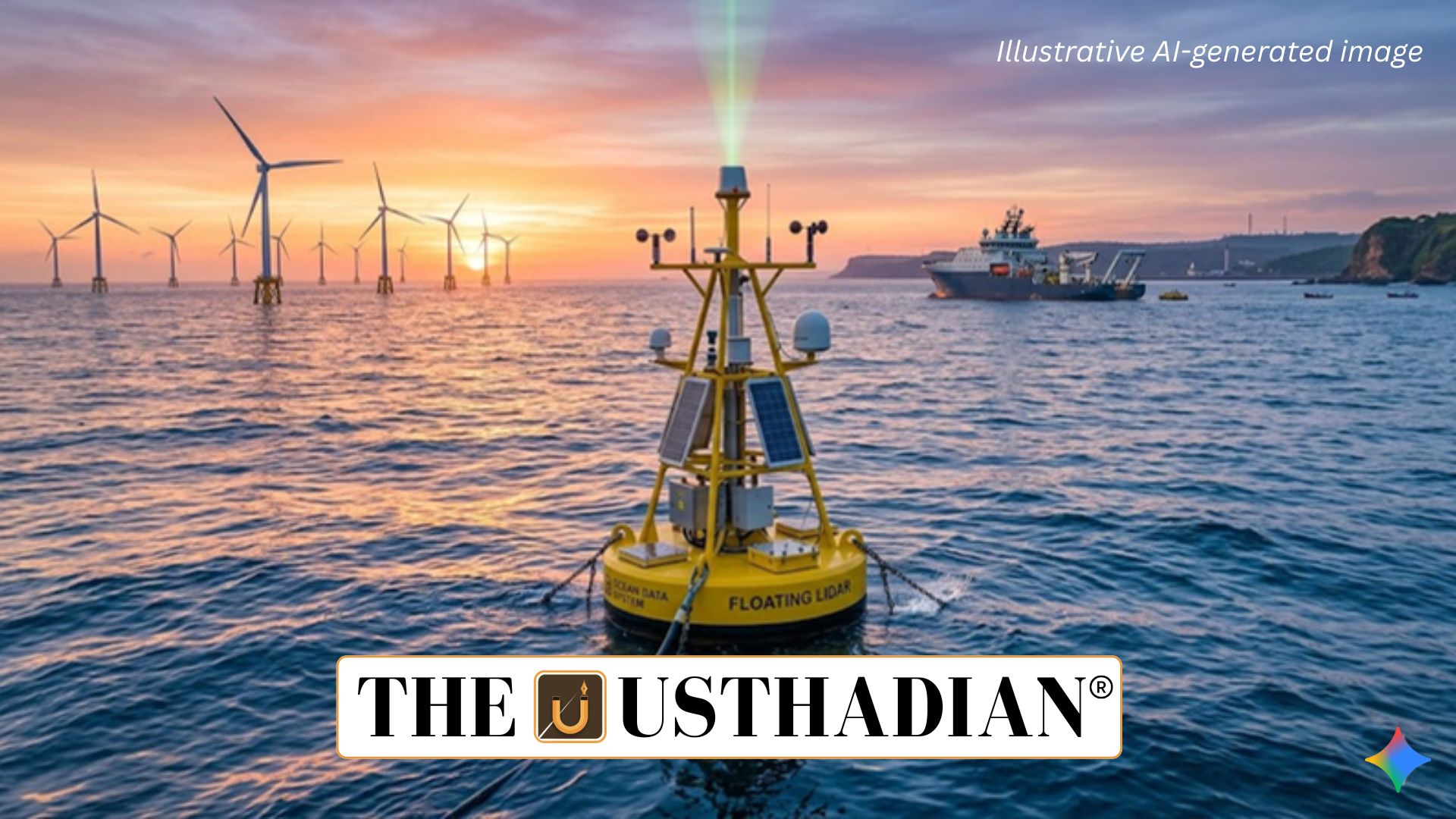
Floating LiDAR Buoy System and India’s Ocean Technology Leap: India has marked a significant milestone with the successful testing of the Floating LiDAR Buoy System. Developed by the National Institute of Ocean Technology (NIOT), Chennai, the system was tested near the Muttom coast in Tamil Nadu.
This innovation reflects India’s growing strength in marine technology and supports the vision of Atmanirbhar Bharat. It is expected to enhance data-driven decision-making in weather and energy sectors.
Static GK fact: NIOT operates under the Ministry of Earth Sciences and focuses on ocean-based research.
What is Floating LiDAR Buoy System
The Floating LiDAR Buoy System is an ocean-based device designed to measure wind speed and direction with high precision. It uses LiDAR (Light Detection and Ranging), a laser-based remote sensing technology.
Unlike traditional wind towers, the buoy operates efficiently in deep-sea environments. It can collect wind data at multiple heights above sea level, making it highly versatile.
Static GK Tip: LiDAR technology is also used in autonomous vehicles and topographic mapping.
Working mechanism of the system
The system functions using advanced laser pulse technology. The buoy remains stable on the ocean surface while continuously collecting atmospheric data.
Laser pulses are emitted into the air and interact with tiny particles. The reflected signals return to the system, enabling calculation of wind speed and direction.
This method ensures real-time, accurate, and continuous data collection even in remote ocean regions.
Key features and advantages
The buoy can measure wind up to 300 metres above sea level, which is higher than most traditional systems. It provides real-time data, making it useful for dynamic weather monitoring.
It is more cost-effective and flexible compared to fixed wind towers. Its ability to operate in remote locations makes it ideal for long-term ocean studies.
Static GK fact: Offshore wind potential in India is highest along the Gujarat and Tamil Nadu coasts.
Importance for India
The system plays a crucial role in improving weather forecasting accuracy, especially over oceans where data is scarce. It also strengthens cyclone prediction systems, reducing disaster risks.
It supports the development of offshore wind energy, helping identify suitable locations for wind farms. This contributes to India’s renewable energy targets.
Additionally, it aids in climate research by providing continuous data on ocean wind patterns.
Challenges and future scope
Despite its advantages, challenges include maintenance in harsh ocean conditions and ensuring long-term durability. High initial deployment costs may also be a concern.
However, with continued research and policy support, India can scale this technology for wider applications. It strengthens India’s position in global ocean science and clean energy initiatives.
Static GK Tip: India aims to achieve 500 GW of non-fossil fuel energy capacity by 2030.
Static Usthadian Current Affairs Table
Floating LiDAR Buoy System and India’s Ocean Technology Leap:
| Topic | Detail |
| System Name | Floating LiDAR Buoy System |
| Developed By | National Institute of Ocean Technology Chennai |
| Technology Used | Light Detection and Ranging |
| Test Location | Muttom coast Tamil Nadu |
| Measurement Range | Wind up to 300 metres above sea level |
| Key Application | Weather forecasting and offshore wind energy |
| Strategic Importance | Supports renewable energy and disaster management |
| Policy Link | Promotes Atmanirbhar Bharat and clean energy goals |