New Wildlife Record in Himachal Pradesh
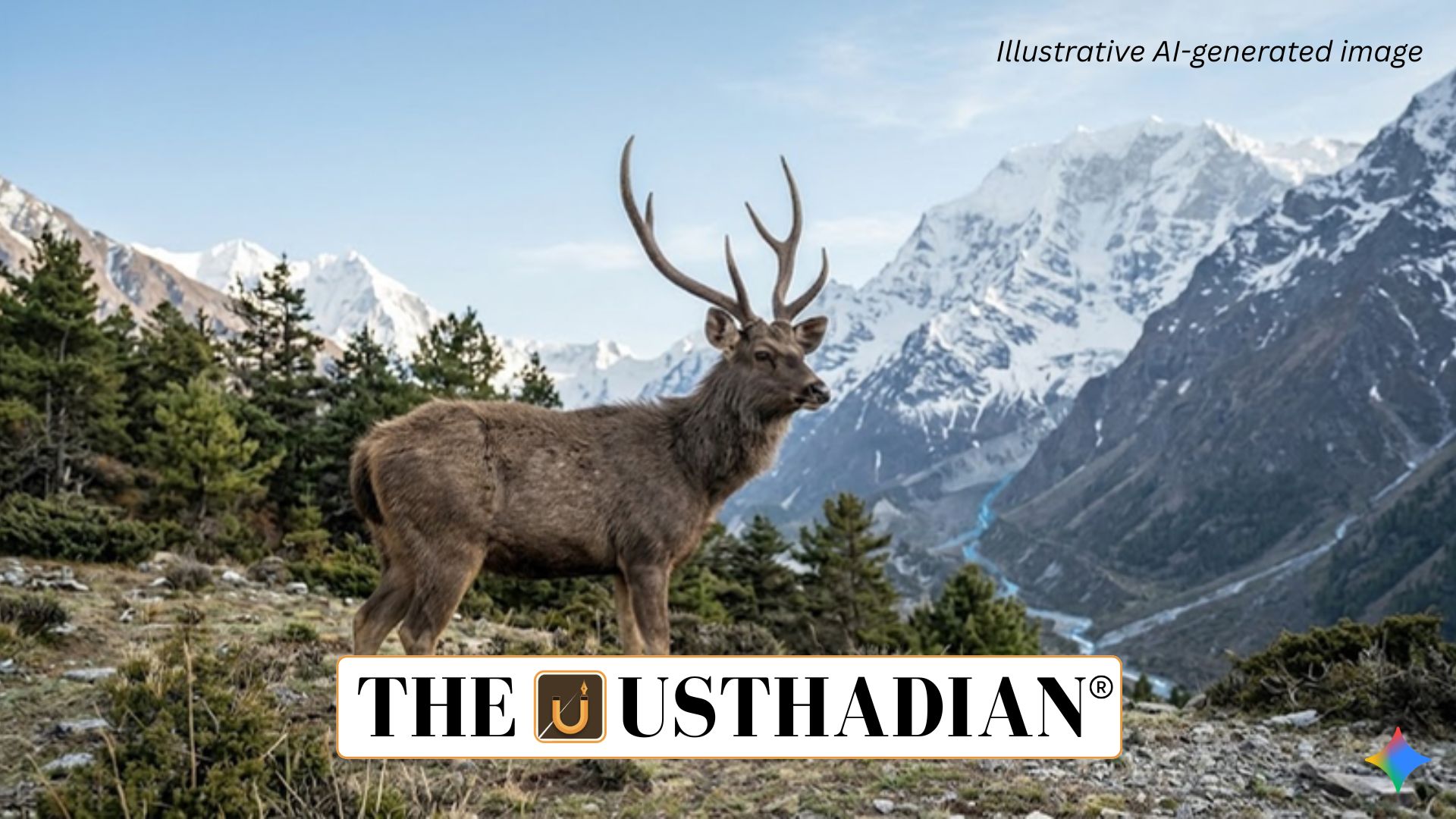
Sambar Deer Spotted in High Himalayan Sanctuaries: The Wildlife Wing of the Himachal Pradesh Forest Department recently documented the presence of the Sambar Deer (Rusa unicolor) in high-altitude protected areas of Chamba district. This is the first recorded observation of the species in such elevated Himalayan landscapes.
The discovery was confirmed through camera trap monitoring, a scientific method widely used for wildlife population assessment. The findings were published in the February issue of the Records of the Zoological Survey of India, highlighting their importance for ecological research.
Discovery Through Camera Trap Monitoring
Forest officials installed motion-sensitive camera traps in remote forest zones to monitor wildlife movement. The cameras captured adult and sub-adult male sambar deer visiting a waterhole inside the protected forests.
Most sightings occurred during evening and night hours, which aligns with the species’ crepuscular and nocturnal behaviour. These images indicate that the species might be gradually expanding its habitat range into higher Himalayan ecosystems.
Static GK fact: The Zoological Survey of India (ZSI) was established in 1916 and operates under the Ministry of Environment, Forest and Climate Change, focusing on research and documentation of India’s faunal diversity.
High-Altitude Habitat Conditions
The Kalatop-Khajjiar Wildlife Sanctuary lies at an elevation of over 2,500 metres above sea level, while the Gamgul Wildlife Sanctuary extends beyond 3,000 metres. Such elevations are typically dominated by coniferous forests, including deodar, fir and spruce trees.
These forest ecosystems provide perennial water sources, dense vegetation cover and relatively undisturbed habitats. These ecological features support large herbivores, enabling species like sambar deer to survive even in colder mountain conditions.
Static GK Tip: The Western Himalayas are recognised as a global biodiversity hotspot, supporting numerous endemic and threatened species.
Coexistence of Multiple Deer Species
The discovery has also revealed a rare coexistence of three deer species within the same forest landscape of Kalatop-Khajjiar Wildlife Sanctuary. Along with the sambar deer, researchers have recorded the presence of musk deer and barking deer in the region.
These species normally prefer different ecological niches. Their presence within a single protected area indicates rich habitat diversity and healthy ecosystem conditions, making the sanctuary a valuable site for wildlife research.
Conservation Status and Legal Protection
The Sambar Deer is the largest deer species in South Asia and plays an important ecological role as a large herbivore in forest ecosystems. The species is currently classified as Vulnerable on the IUCN Red List due to threats such as habitat loss and poaching.
In India, it is protected under Schedule III of the Wildlife (Protection) Act, 1972, which provides legal safeguards against hunting and illegal trade.
Static GK fact: The Wildlife Protection Act, 1972 forms the legal backbone of wildlife conservation in India and created the system of national parks, wildlife sanctuaries and protected species schedules.
Importance for Himalayan Conservation
Experts believe that the sightings could indicate either a previously undetected resident population or gradual habitat expansion from nearby forest landscapes. The Dalhousie Forest Division may act as an ecological corridor enabling such wildlife movement.
The Chamba district alone contains nearly 985 square kilometres of protected forest area, including sanctuaries such as Kalatop-Khajjiar, Gamgul, Kugti, Tundah and Sechu Tuan Nala.
The observation emphasises the importance of long-term wildlife monitoring, habitat protection and ecosystem connectivity in the fragile Western Himalayan region.
Static Usthadian Current Affairs Table
Sambar Deer Spotted in High Himalayan Sanctuaries:
| Topic | Detail |
| Species observed | Sambar Deer (Rusa unicolor) |
| Location | Kalatop-Khajjiar Wildlife Sanctuary and Gamgul Wildlife Sanctuary |
| District | Chamba district, Himachal Pradesh |
| Discovery method | Camera trap monitoring |
| Elevation range | Above 2,500 metres to over 3,000 metres |
| Other deer species present | Musk deer and barking deer |
| IUCN status | Vulnerable |
| Legal protection in India | Schedule III of the Wildlife Protection Act, 1972 |
| Research publication | Records of the Zoological Survey of India |
| Conservation significance | Indicates possible range expansion and highlights biodiversity of Western Himalayas |