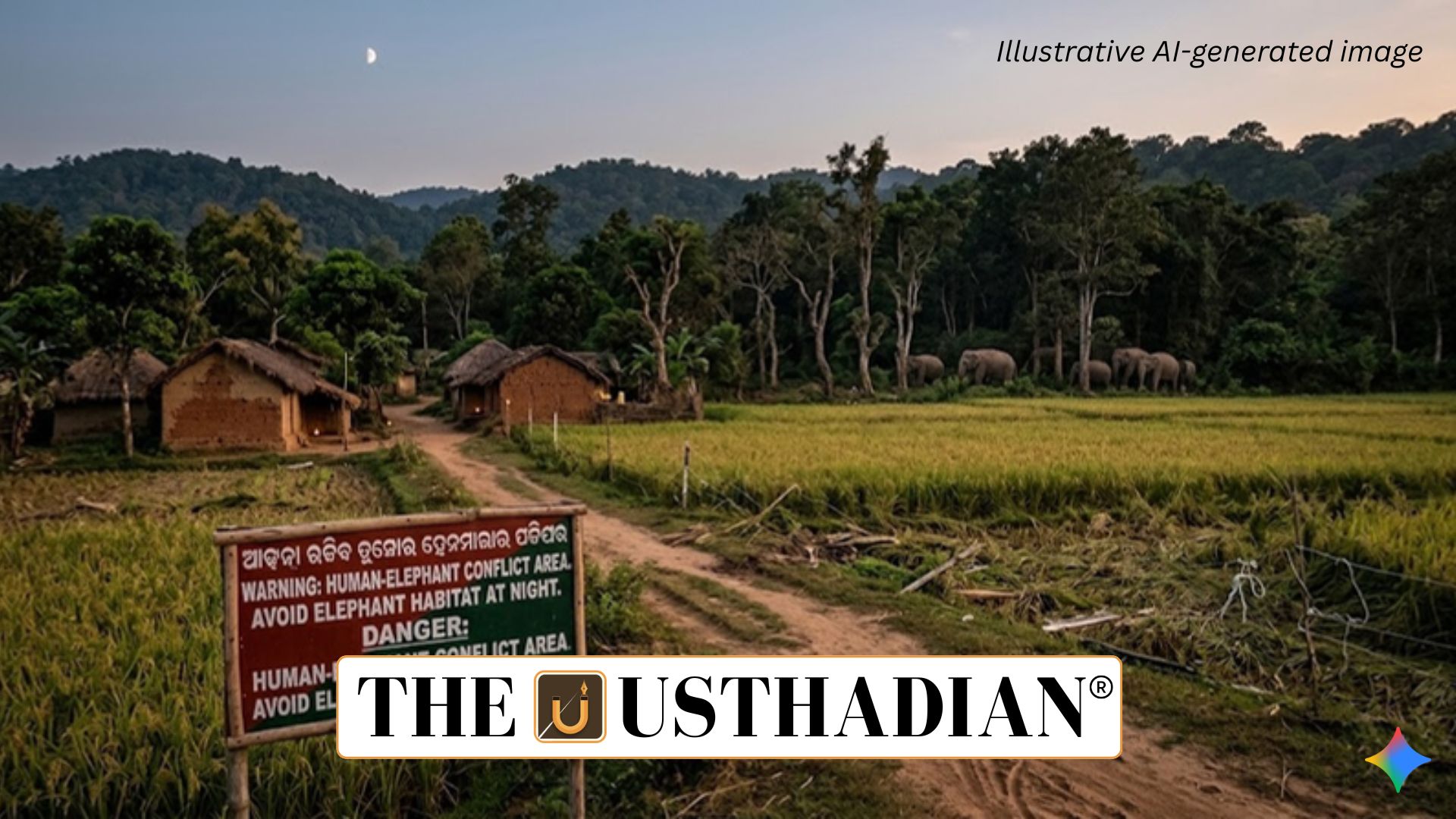
Human Elephant Conflict in India
Rising Human Elephant Conflict in Eastern India: India is home to nearly 60% of the world’s Asian elephant population, making it a crucial country for elephant conservation. However, Human–Elephant Conflict (HEC) has become a serious challenge in several states including Jharkhand and West Bengal.
The conflict occurs when elephants enter human settlements, farms, or villages in search of food and water. According to government estimates, around 500 people lose their lives every year in elephant-related incidents across India.
Static GK fact: The Asian elephant (Elephas maximus) is listed as Endangered by the International Union for Conservation of Nature (IUCN).
Rising Conflict in Jharkhand and West Bengal
Eastern India has witnessed increasing incidents of elephant movement into agricultural lands. Forest areas in Jharkhand such as Singhbhum, Gumla, and Latehar frequently experience crop raids and property damage caused by elephant herds.
Similarly, West Bengal districts like Alipurduar, Jalpaiguri, and Bankura report repeated human–elephant encounters. These areas lie close to forest corridors connecting Odisha, Jharkhand, and northern West Bengal forests, which elephants traditionally use for migration.
Elephants moving across railway tracks and highways in these states have also led to accidents, resulting in both human and elephant casualties.
Static GK Tip: India currently hosts over 30 recognized elephant corridors that connect fragmented habitats across states.
Major Triggers Behind Human Elephant Conflict
Habitat Loss and Fragmentation
One of the primary causes of HEC is deforestation and land-use change. Expansion of agriculture, mining, and urban settlements has broken large forest areas into smaller patches.
As a result, elephants lose access to their natural habitats and are forced to enter nearby villages and farms.
Infrastructure Development
The construction of railway tracks, highways, and power lines often cuts through traditional elephant migratory routes. This blocks their movement and leads to unexpected encounters with humans.
Climate Variability
Changing climate patterns also influence elephant movement. Droughts, rising temperatures, and water scarcity reduce food availability inside forests, forcing elephants to search for resources in cultivated lands.
Seasonal Migration Behaviour
Elephants naturally migrate across landscapes in search of forage and water. When their traditional feeding areas degrade due to wildfires, invasive plant species, or ecological imbalance, they shift toward crop fields.
Solutions to Reduce Human Elephant Conflict
Several conservation strategies are being implemented to address HEC.
Landscape-level habitat connectivity aims to reconnect fragmented forests through protected elephant corridors. International initiatives such as Room to Roam by the International Fund for Animal Welfare (IFAW) promote habitat restoration and connectivity.
Technology is also playing an important role. SMS alerts, GPS collars, LED warning systems, and sensor-based monitoring help authorities warn local communities when elephants approach villages.
Physical deterrents such as solar-powered fences, trenches, bee-hive barriers, chilli-based deterrents, and bio-fencing are being used to keep elephants away from farmland.
Another effective measure is promoting alternative cropping patterns. Farmers are encouraged to grow chilli, citrus, ginger, and onion, which elephants generally avoid.
Static GK fact: Elephants are considered keystone species, meaning their presence maintains ecological balance by dispersing seeds and shaping forest ecosystems.
Government Initiatives to Manage the Conflict
The Government of India launched Project Elephant in 1992 to conserve elephants, protect their habitats, and reduce conflict with humans. The programme focuses on habitat restoration, corridor protection, and community awareness.
The Wildlife Institute of India is conducting behavioural studies using radio collaring of elephants to track their movement in conflict-prone regions.
Additionally, the Ministry of Environment, Forest and Climate Change (MoEFCC) is developing a Regional Action Plan (RAP). This plan adopts a multi-state landscape approach to manage elephant populations across state boundaries.
Static Usthadian Current Affairs Table
Rising Human Elephant Conflict in Eastern India:
| Topic | Detail |
| Human–Elephant Conflict | Increasing incidents in Jharkhand and West Bengal due to habitat fragmentation and agricultural expansion |
| Asian Elephant Status | Listed as Endangered by IUCN |
| Global Population Share | India holds about 60% of the world’s Asian elephants |
| Annual Human Deaths | Around 500 deaths annually due to elephant-related incidents |
| Major Causes | Habitat loss, infrastructure development, climate variability, seasonal migration |
| Key Government Scheme | Project Elephant launched in 1992 |
| Scientific Monitoring | Radio collaring and behavioural studies by Wildlife Institute of India |
| Policy Initiative | Regional Action Plan developed by MoEFCC for multi-state conflict management |
| Conservation Strategy | Protection of elephant corridors and landscape connectivity |
| Agricultural Adaptation | Promotion of elephant-resistant crops such as chilli and citrus |