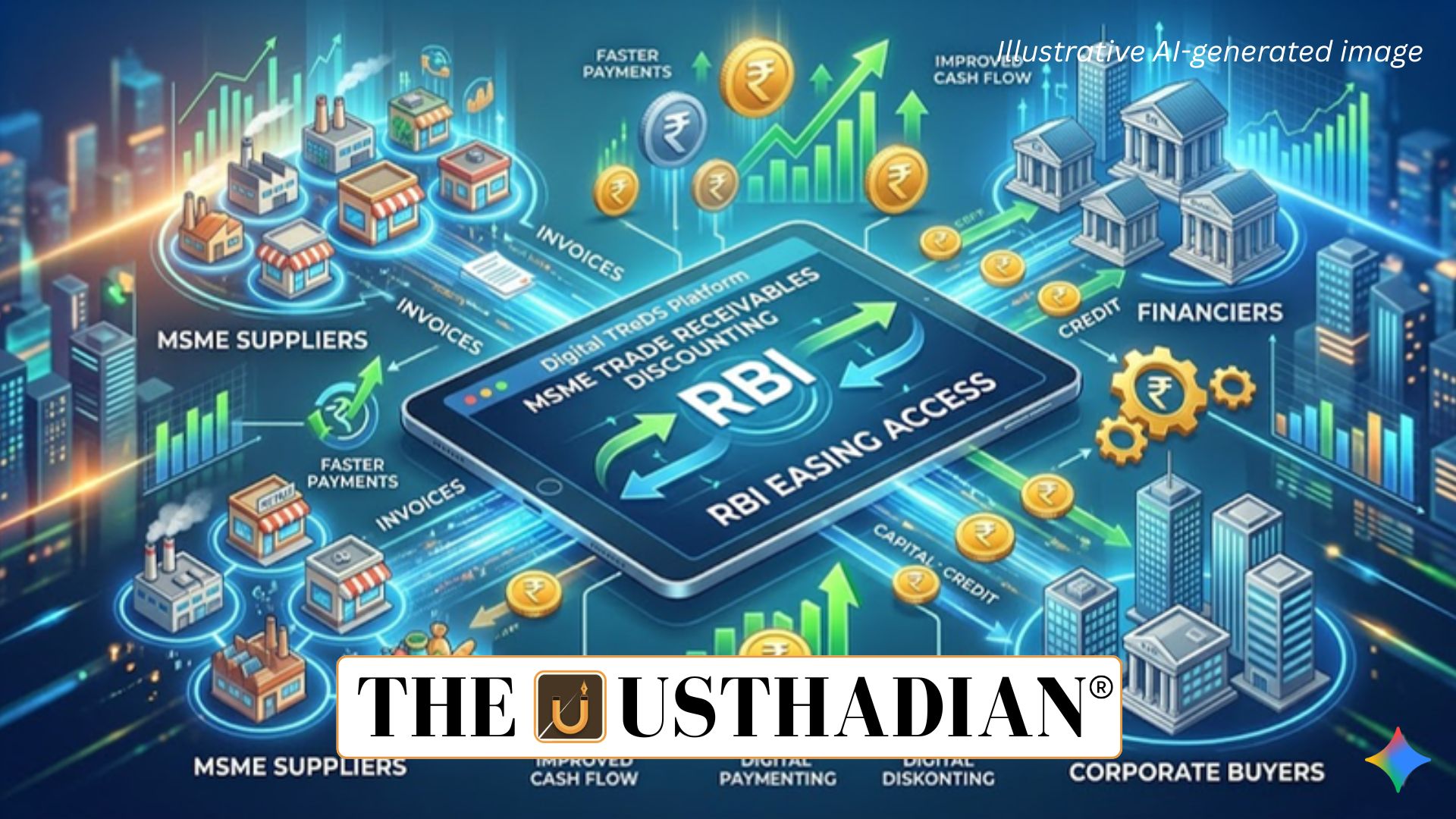
RBI reform initiative
RBI Eases TReDS Access for MSMEs: The Reserve Bank of India (RBI) has proposed simplifying the onboarding process for MSMEs on the Trade Receivable Discounting System (TReDS). The key reform involves removing certain due diligence requirements, which earlier delayed participation.
This move is aimed at improving ease of doing business and ensuring faster access to working capital. Draft guidelines have been released, with public feedback invited until May 1, 2026.
Static GK fact: RBI is India’s central bank, established in 1935 under the RBI Act, 1934.
Understanding TReDS
TReDS is an online platform that enables MSMEs to convert their trade receivables into immediate cash. It addresses the issue of delayed payments from large buyers.
Through invoice discounting, MSMEs can receive early payments from banks and NBFCs, improving liquidity. This reduces dependence on traditional loans and enhances financial stability.
Static GK Tip: Invoice discounting is a short-term borrowing method where businesses sell unpaid invoices at a discount.
How the platform works
TReDS operates through three key participants: MSME sellers, corporate buyers, and financiers. The process is entirely digital and transparent.
MSMEs upload invoices on the platform, which are then verified and approved by buyers. Financiers bid to provide early payment, deducting a small discount. The settlement is completed digitally within a fixed timeframe.
This mechanism ensures faster cash flow and reduces payment uncertainties.
Impact of the new proposal
By removing stringent verification norms, the onboarding process becomes quicker and less complex. This is expected to increase participation from smaller enterprises.
Higher MSME participation will lead to improved cash flow management and reduced working capital stress. It also strengthens the overall financial ecosystem supporting small businesses.
Static GK fact: MSMEs contribute nearly 30% to India’s GDP and employ over 110 million people.
Ensuring transparency and safety
Despite easing entry barriers, the RBI has emphasized maintaining transaction security. Platforms must ensure that invoices are genuine and free from duplication.
Robust digital verification systems will prevent fraud and ensure trust among stakeholders. This balance between ease and security is critical for long-term success.
Evolution of TReDS
The TReDS system was introduced in 2014 to address payment delays faced by MSMEs. It underwent improvements in 2018 to enhance operational efficiency.
In 2023, insurance companies were allowed to participate, expanding the pool of financiers. These reforms reflect a gradual strengthening of the platform.
Static Usthadian Current Affairs Table
RBI Eases TReDS Access for MSMEs:
| Topic | Detail |
| Regulator | Reserve Bank of India |
| Platform | Trade Receivable Discounting System |
| Key Reform | Removal of due diligence for MSMEs |
| Objective | Faster access to working capital |
| Participants | MSMEs, buyers, financiers |
| Launch Year | 2014 |
| Major Update | Inclusion of insurance companies in 2023 |
| Key Benefit | Improved cash flow for MSMEs |
| Risk Control | Invoice verification and fraud prevention |
| Policy Goal | Ease of doing business |