Announcement in Mann Ki Baat
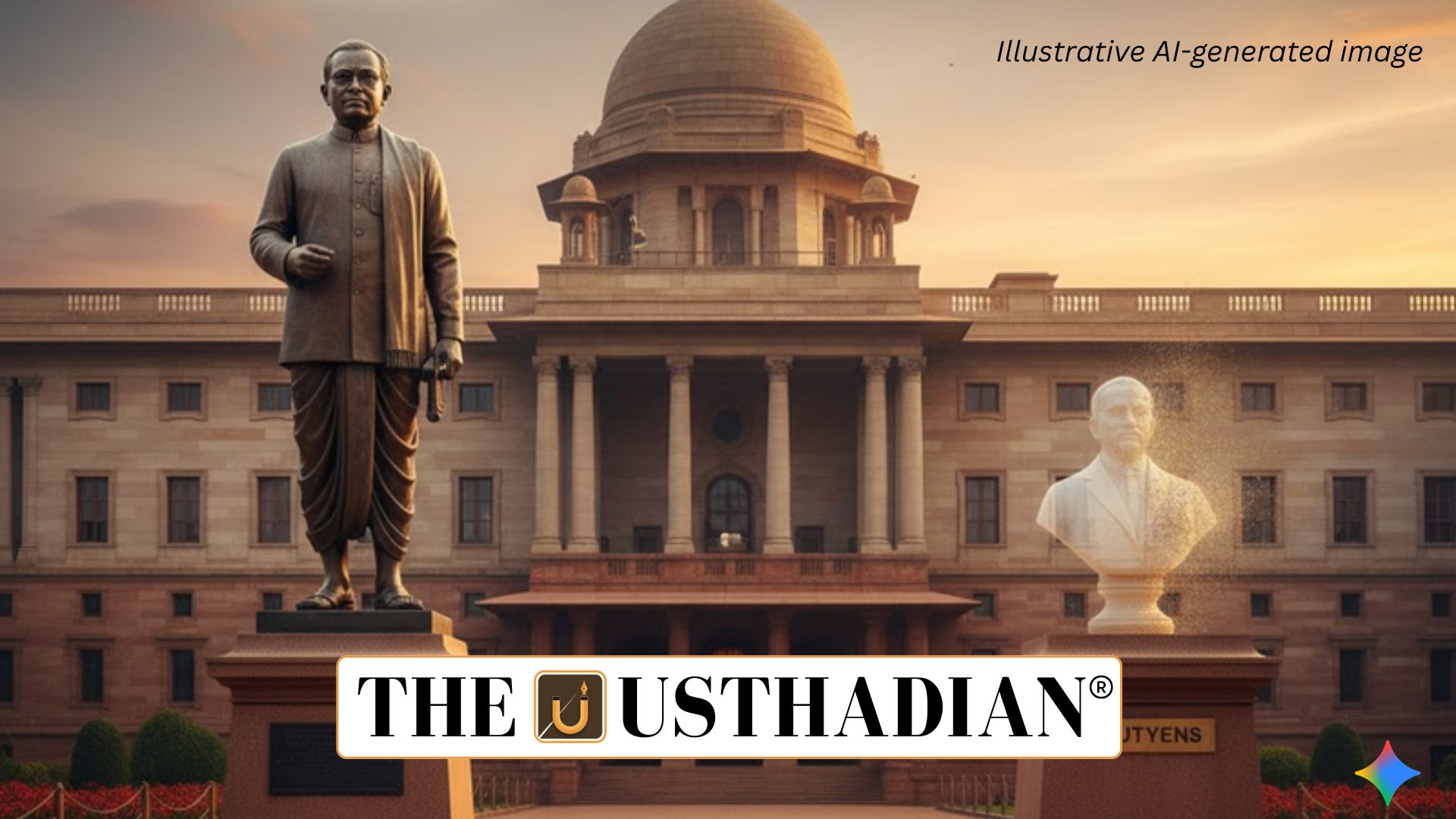
Rajaji Statue to Replace Lutyens at Rashtrapati Bhavan: Prime Minister Narendra Modi announced that the statue of Edwin Lutyens at Rashtrapati Bhavan will be replaced with a statue of C. Rajagopalachari. The announcement was made during the Mann Ki Baat address on February 23, 2026.
The decision has been presented as part of a broader effort to remove colonial-era symbols from prominent national spaces. The new statue will be unveiled during Rajaji Utsav in the central courtyard of the Presidential residence.
Static GK fact: Rashtrapati Bhavan was originally known as the Viceroy’s House and became the official residence of the President of India after 1950.
Why the Lutyens Statue Is Being Replaced
The government stated that even decades after Independence, statues of British administrators remained at India’s highest constitutional residence. At the same time, several Indian leaders were not commemorated in similar spaces.
The move aligns with the vision of overcoming the “slavery mentality” under the Panch-Pran framework announced during Azadi Ka Amrit Mahotsav. It reflects a symbolic shift toward celebrating Indian statesmen in national institutions.
Legacy of Edwin Lutyens
Edwin Lutyens was a British architect selected in 1912 to design the new capital of British India in Delhi. He played a central role in shaping the architectural layout of New Delhi.
Major landmarks associated with him include Rashtrapati Bhavan, North Block, South Block, India Gate, Hyderabad House, and Connaught Place. The central administrative zone of Delhi is often referred to as “Lutyens’ Delhi.”
Static GK Tip: India Gate was originally built as a war memorial in 1931 to honour soldiers of the British Indian Army who died in World War I.
Who Was C Rajagopalachari
- Rajagopalachari, popularly known as Rajaji, was a freedom fighter, lawyer, writer and statesman. He was India’s only and last Governor-General, serving from 1948 to 1950, after Lord Mountbatten.
Rajaji was a close associate of Mahatma Gandhi and edited the journal Young India during Gandhi’s imprisonment. He later served as Home Minister in the cabinet of Jawaharlal Nehru.
In 1957, he founded the Swatantra Party, advocating free-market principles and opposing excessive state control. He was also awarded the Bharat Ratna in 1954, one of the earliest recipients.
Static GK fact: The office of Governor-General ceased to exist after India became a Republic on January 26, 1950.
Rajaji Utsav and Exhibition
The unveiling ceremony of Rajaji’s statue will take place on February 23 under Rajaji Utsav. An exhibition highlighting his contributions to Indian democracy will be organised from February 24 to March 1 at Rashtrapati Bhavan.
The event is positioned as a tribute to Rajaji’s intellectual leadership and constitutional role during the early years of independent India.
Symbolic Shift in National Narrative
The replacement of the Lutyens statue represents a broader cultural transformation. It signals a transition from colonial remembrance to recognition of Indian leadership within key public institutions.
The initiative aims to reclaim historical spaces and strengthen national identity through symbolic representation. It reflects India’s continuing effort to reinterpret its institutional legacy in the post-colonial era.
Static Usthadian Current Affairs Table
Rajaji Statue to Replace Lutyens at Rashtrapati Bhavan:
| Topic | Detail |
| Announcement Date | February 23, 2026 |
| Statue Replaced | Edwin Lutyens |
| New Statue | C. Rajagopalachari |
| Venue | Rashtrapati Bhavan Central Courtyard |
| Rajaji Position | Last Governor-General of India (1948–1950) |
| Party Founded by Rajaji | Swatantra Party (1957) |
| Bharat Ratna | Awarded to Rajaji in 1954 |
| Original Name of Rashtrapati Bhavan | Viceroy’s House |