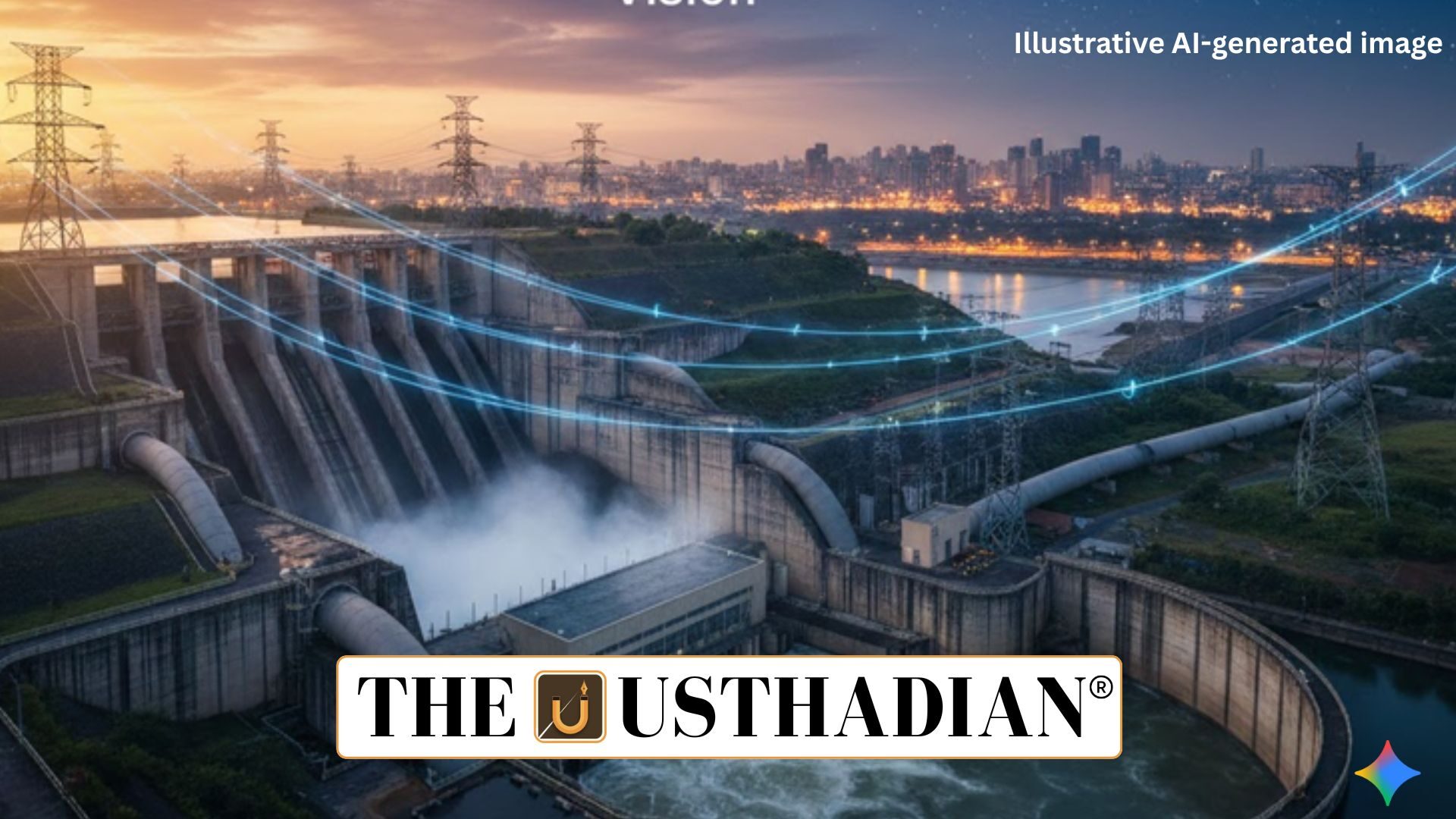
India’s long-term energy storage vision
Pumped Hydro Storage and India’s Energy Stability Vision: India has set an ambitious goal to develop 100 GW of Pumped Hydro Storage (PHS) capacity by 2047. This target aligns with the country’s long-term strategy to stabilize large-scale renewable energy integration.
The rapid expansion of solar and wind power has created variability in electricity supply. PHS is being positioned as a backbone solution for balancing this intermittency.
Pumped Hydro Storage is now treated as critical infrastructure in India’s energy transition roadmap. It supports both decarbonisation and power system reliability.
What pumped hydro storage is
Pumped Hydro Storage is a large-scale electricity storage technology. It stores energy in the form of gravitational potential energy of water using two reservoirs at different elevations.
Electricity is not stored chemically or in batteries. Instead, it is stored physically through water movement between reservoirs.
Static GK fact: The concept of pumped storage dates back to the early 20th century and is one of the oldest grid-scale energy storage technologies in the world.
How the system works
During periods of excess electricity generation, water is pumped from a lower reservoir to an upper reservoir. This usually happens during low-demand periods or when renewable generation is high.
When electricity demand rises, the stored water is released downward. It flows through turbines, generating electricity like a conventional hydropower plant.
The same infrastructure works in two modes: storage mode (pumping) and generation mode (discharge). This dual-function mechanism makes PHS both a storage system and a power generation system.
Role in grid stability
PHS plays a central role in grid stabilisation. It helps manage sudden fluctuations in renewable power supply.
It supports frequency regulation, voltage control, and load balancing. This prevents grid collapse during demand spikes or supply drops. PHS also enables peak-load management. Electricity stored during low-demand periods is supplied during peak hours.
Static GK Tip: Peak-load plants operate only during high-demand hours and are essential for grid reliability in modern power systems.
Importance for renewable energy integration
India’s renewable energy capacity is expanding rapidly. However, solar and wind are intermittent by nature. PHS converts surplus renewable electricity into dispatchable power. This transforms unstable energy into reliable supply.
It reduces dependence on fossil-fuel-based peaking plants. This directly supports India’s low-carbon energy transition.
Infrastructure and geographical advantage
India’s topography provides strong natural conditions for PHS development. Hilly terrain, river basins, and existing dams support reservoir-based storage projects.
Existing hydroelectric projects can also be retrofitted into pumped storage systems. This reduces land acquisition and construction costs.
Static GK fact: India already operates pumped storage projects such as Kadana (Gujarat) and Nagarjuna Sagar (Telangana-Andhra region).
Strategic significance by 2047
The 100 GW target by 2047 is not only an energy goal. It is a national grid resilience strategy. It strengthens energy security. It stabilises renewable power integration. It supports industrial growth and urban power demand.
PHS is emerging as the foundation of India’s future electricity architecture.
Static Usthadian Current Affairs Table
Pumped Hydro Storage and India’s Energy Stability Vision:
| Topic | Detail |
| Storage principle | Gravitational potential energy of water |
| System structure | Two reservoirs at different elevations |
| Energy flow | Pumping during surplus, generation during demand |
| Grid function | Frequency control and peak-load management |
| Renewable support | Solar and wind integration |
| National target | 100 GW pumped hydro storage by 2047 |
| Infrastructure model | Reservoir-based hydropower systems |
| Strategic role | Grid stability and energy security |
| Environmental role | Reduces fossil fuel dependency |
| Long-term impact | Backbone of renewable energy transition |