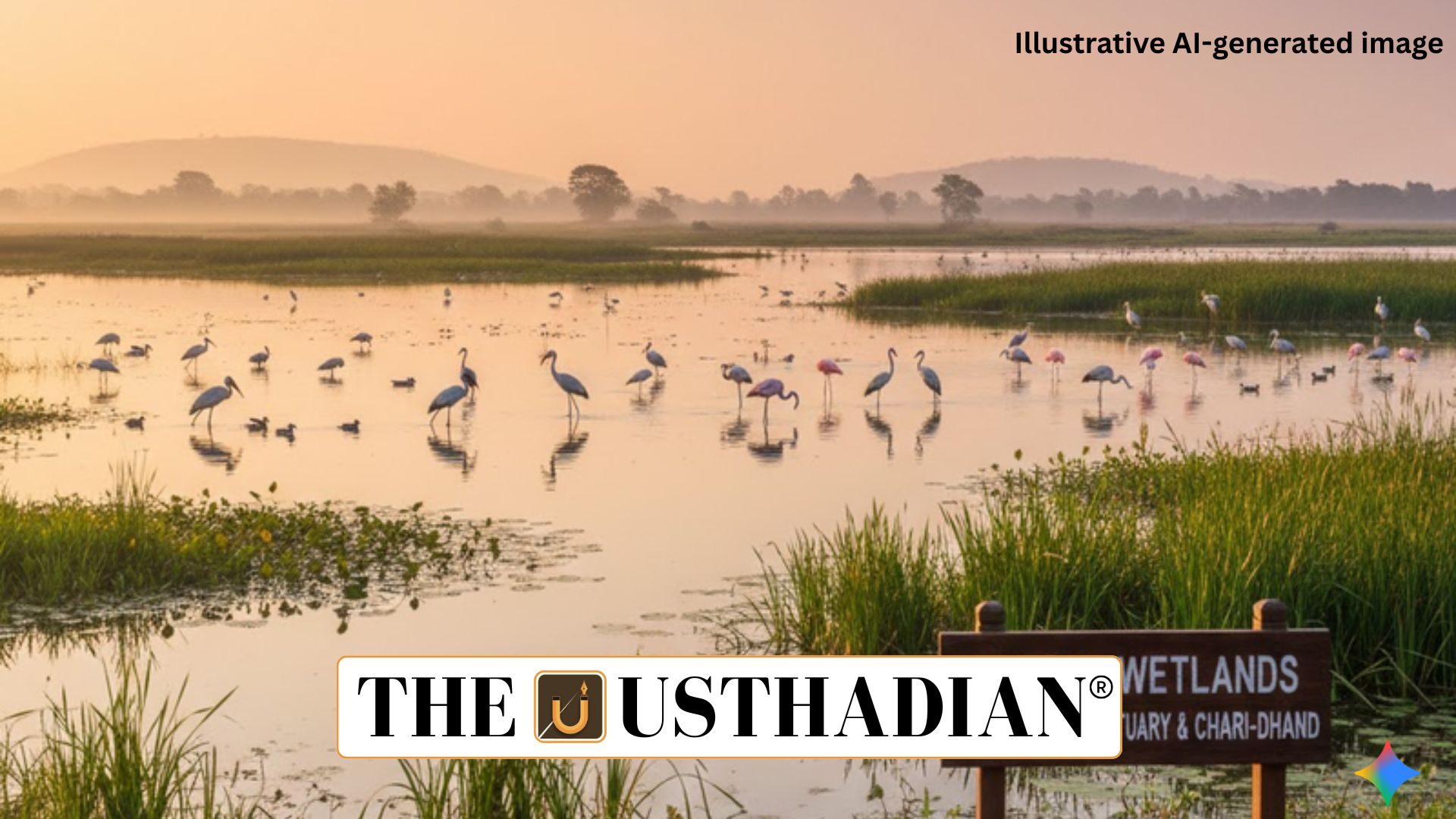
India Adds Two More Ramsar Wetlands
Patna Bird Sanctuary and Chhari-Dhand Gained Ramsar Status: India has strengthened its global environmental credentials by adding two ecologically significant wetlands to the Ramsar list. Patna Bird Sanctuary in Uttar Pradesh and Chhari-Dhand in Gujarat have received international recognition for their ecological value. With this inclusion, India’s total Ramsar sites have risen to 98, reflecting sustained efforts in wetland conservation.
This development highlights India’s focus on protecting fragile ecosystems that support biodiversity and migratory species. The recognition also aligns India with global frameworks for sustainable wetland management.
Understanding the Ramsar Convention
The Ramsar Convention is an international treaty aimed at the conservation and wise use of wetlands. It was adopted in 1971 at Ramsar in Iran and provides a global platform for safeguarding wetlands of international importance.
India became a signatory to the convention in 1982, committing to protect wetlands that support ecological balance. Ramsar sites are selected based on criteria such as biodiversity richness and support to water-dependent species.
Static GK fact: The Ramsar Convention is the only global environmental treaty focused exclusively on wetlands.
Ecological Importance of Patna Bird Sanctuary
Patna Bird Sanctuary, located in Etah district of Uttar Pradesh, is a freshwater wetland ecosystem. It plays a crucial role in supporting a large number of resident and migratory bird species.
During winter months, birds migrate from Central Asia and Siberia, using the sanctuary as a feeding and resting ground. This makes the wetland vital for maintaining avian diversity in the Gangetic plains.
The Ramsar tag acknowledges its importance in sustaining bird populations and preserving freshwater wetland ecology.
Chhari-Dhand and Its Desert Wetland Character
Chhari-Dhand lies in the Kutch region of Gujarat, an area known for arid climatic conditions. Unlike typical wetlands, it is a seasonal saline wetland, making it ecologically distinctive.
Despite its desert surroundings, Chhari-Dhand supports migratory birds and diverse desert wildlife. Species such as chinkara, Indian wolf, caracal, desert fox, and desert cat inhabit this region.
Static GK Tip: Desert wetlands like Chhari-Dhand are critical for biodiversity because they provide rare water sources in arid landscapes.
Significance of India’s Expanding Ramsar Network
India’s Ramsar sites have increased from 26 in 2014 to 98 in 2026, marking a growth of over 276 percent. This expansion reflects a strategic policy focus on biodiversity conservation and ecosystem services.
Wetlands play key roles in flood control, groundwater recharge, climate regulation, and carbon storage. Protecting them helps address both ecological and climate challenges.
The addition of Patna Bird Sanctuary and Chhari-Dhand underscores India’s commitment to balancing development with environmental sustainability.
Static Usthadian Current Affairs Table
Patna Bird Sanctuary and Chhari-Dhand Gained Ramsar Status:
| Topic | Detail |
| Why in News | Two new wetlands added to Ramsar list |
| Newly Added Sites | Patna Bird Sanctuary, Chhari-Dhand |
| States | Uttar Pradesh and Gujarat |
| Total Ramsar Sites in India | 98 |
| Ramsar Convention Year | 1971 |
| India as Ramsar Signatory | 1982 |
| Wetland Types | Freshwater and seasonal saline |
| Key Ecological Role | Habitat for migratory and native species |