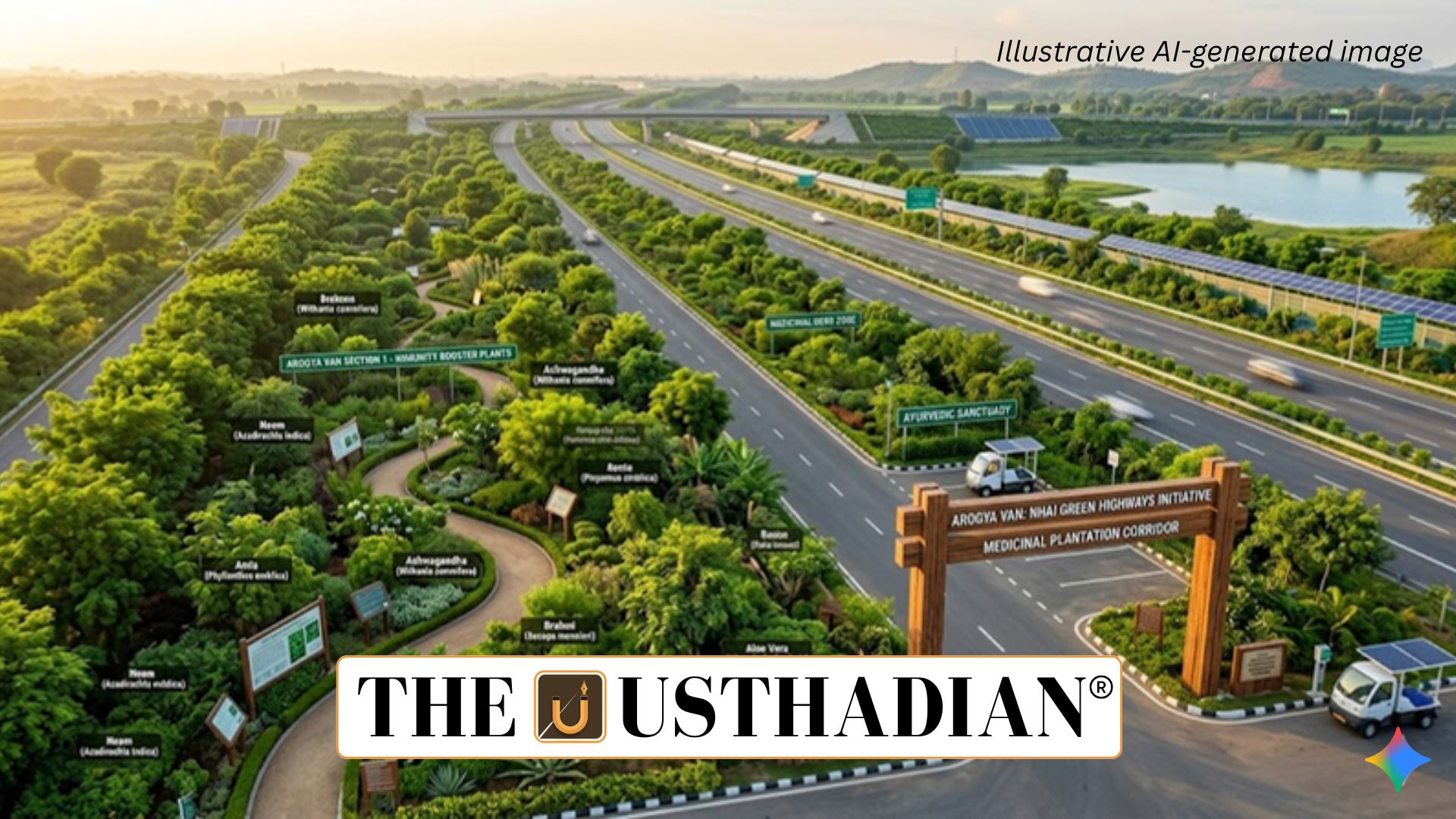
Concept behind Arogya Van
NHAI Arogya Van Initiative for Green Highways: The National Highways Authority of India (NHAI) has launched the Arogya Van initiative to promote medicinal plantations along highways. The aim is to transform roads into green ecological corridors while spreading awareness about traditional Indian medicine systems like Ayurveda.
This initiative moves beyond aesthetic plantation and focuses on functional biodiversity. It integrates environmental sustainability with public awareness.
Static GK fact: NHAI functions under the Ministry of Road Transport and Highways, established in 1988.
Key features of the initiative
In its first phase, plantations are planned across 17 land parcels covering 62.8 hectares. Around 67,000+ medicinal trees will be planted across states like Madhya Pradesh, Gujarat, Tamil Nadu, and Maharashtra.
A total of 36 medicinal plant species have been selected based on ecological suitability and benefits. These include Neem, Amla, Jamun, Tamarind, Gular, and Maulsari, known for their medicinal and nutritional properties.
Static GK Tip: Neem is widely used in Ayurveda for its antibacterial and antifungal properties.
Strategic plantation areas
The plantations are being developed in high-visibility zones such as toll plazas, interchanges, cloverleaf junctions, and wayside amenities. These locations ensure maximum interaction between travelers and green spaces.
Such placement helps in educating the public indirectly about medicinal plants. It also improves the aesthetic and ecological value of highways.
Additionally, about 188 hectares of land has been earmarked for future plantation drives, especially during the monsoon season to ensure higher survival rates.
Ecological and biodiversity impact
The initiative significantly contributes to biodiversity conservation. Medicinal trees help in supporting pollinators like bees and butterflies, which are crucial for ecosystems.
They also provide shelter to birds and small animals, creating micro-habitats along highways. This strengthens ecosystem resilience and balances environmental degradation caused by infrastructure development.
Static GK fact: Pollinators contribute to nearly 75% of global food crop production, highlighting their ecological importance.
Promoting sustainable development
The Arogya Van initiative aligns with India’s goals of sustainable development and climate action. It enhances carbon sequestration, improves air quality, and promotes green infrastructure.
By linking traditional knowledge with modern infrastructure, the initiative represents a holistic development model. It also supports India’s commitment to global frameworks like the Paris Climate Agreement.
Static Usthadian Current Affairs Table
NHAI Arogya Van Initiative for Green Highways:
| Topic | Detail |
| Initiative | Arogya Van |
| Launched by | National Highways Authority of India |
| Objective | Promote medicinal plantations and biodiversity |
| Plantation Area | 62.8 hectares in first phase |
| Number of Trees | Around 67,000 medicinal plants |
| Key States | MP, Gujarat, Tamil Nadu, Maharashtra |
| Species Included | Neem, Amla, Jamun, Tamarind |
| Strategic Locations | Toll plazas, interchanges |
| Ecological Benefit | Supports pollinators and biodiversity |
| Future Expansion | 188 hectares planned for plantation |