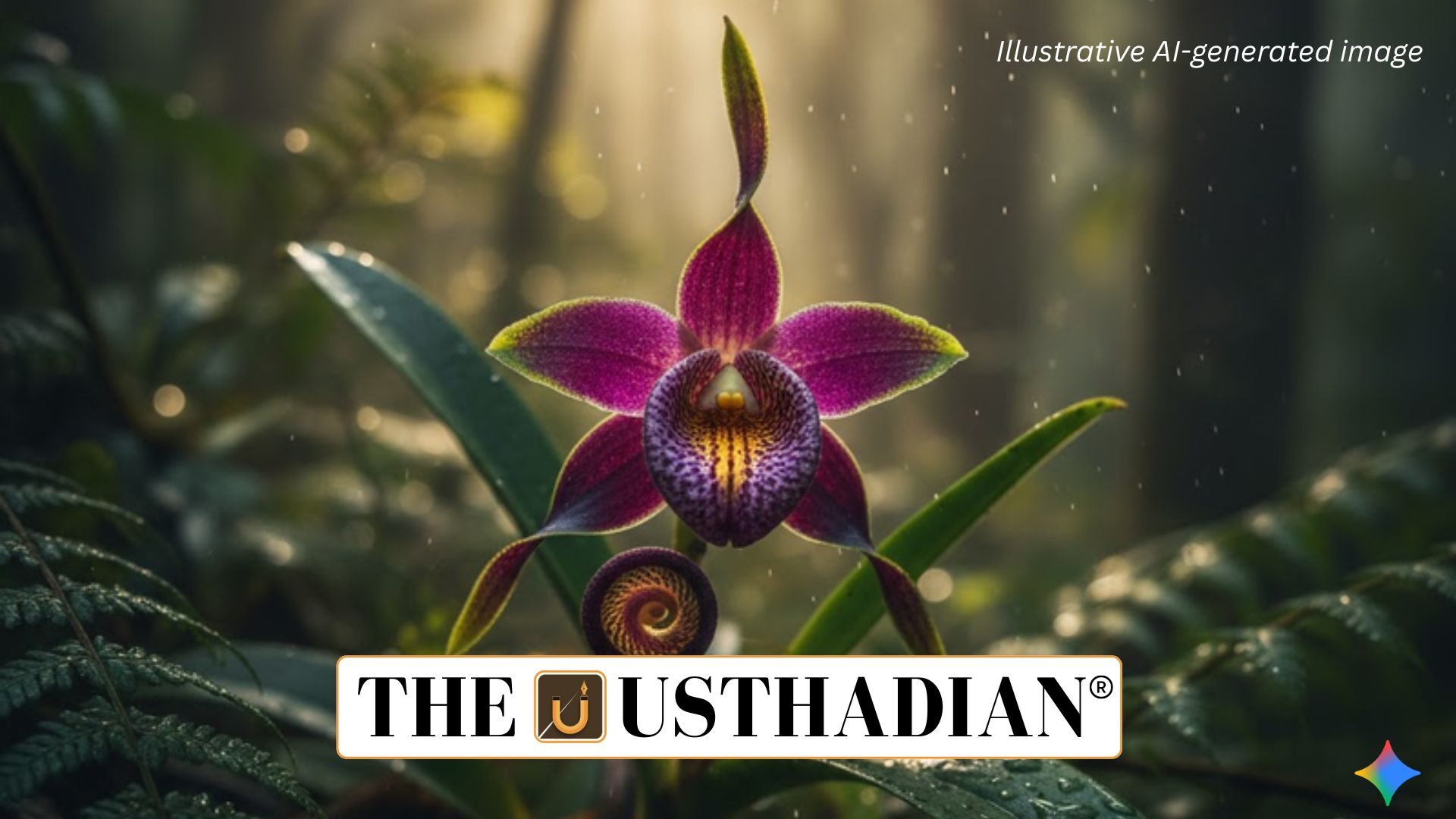
Discovery of a new orchid species
New Orchid Discovery in Kanthalloor Region: A new orchid species was identified in January 2026 from the Kanthalloor region of Kerala, drawing attention to India’s unexplored plant diversity. The discovery was made through detailed field surveys and taxonomic examination by researchers. It reinforces the fact that Indian ecosystems continue to yield new species even in the present century.
Orchids belong to one of the largest flowering plant families and are known for their high ecological sensitivity. The identification of a previously unknown species indicates the presence of intact microhabitats. Such findings are valuable for understanding regional biodiversity patterns.
Location and ecological setting
Kanthalloor is a high-altitude region in Idukki district, located close to the Western Ghats mountain system. The area experiences a unique climatic mix of cool temperatures, high rainfall, and fertile soils. These conditions support diverse forest patches interspersed with agricultural land.
The discovery highlights that biodiversity is not confined only to protected forests. Human-influenced landscapes, when ecologically balanced, can still sustain rare and specialised plant species.
Static GK fact: Idukki district is known for its montane ecosystems and lies within one of India’s highest rainfall zones.
Ecological importance of orchids
Orchids are considered bio-indicators of ecosystem health due to their dependence on specific pollinators and soil fungi. Even minor environmental disturbances can affect their survival. Their presence usually reflects a stable and undisturbed ecological system.
The new orchid species suggests that Kanthalloor retains a delicate ecological balance. Orchids also play a role in maintaining genetic diversity and offer insights into plant evolution.
Static GK Tip: Orchidaceae is one of the largest plant families, with over 25,000 species globally.
Western Ghats as a biodiversity hotspot
The Western Ghats are globally recognised for exceptional species richness and endemism. They are classified among the world’s eight major biodiversity hotspots. A significant proportion of India’s endemic plants and animals are found in this region.
Nearly 30% of India’s plant species are recorded from the Western Ghats. Continuous discoveries underline both the richness and fragility of these ecosystems. Climate change, deforestation, and land-use changes remain major threats.
Static GK fact: The Western Ghats were inscribed as a UNESCO World Heritage Site for their ecological significance.
Scientific and conservation relevance
The discovery of a new species is a critical scientific milestone. It allows researchers to assess conservation status and potential threats at an early stage. Species identification is the first step toward legal and ecological protection.
Such findings strengthen arguments for conserving lesser-known habitats, not just wildlife sanctuaries. They also highlight the importance of taxonomy, long-term field research, and biodiversity documentation in India.
Static GK Tip: Conservation assessments often follow criteria laid down by the IUCN Red List framework.
Implications for biodiversity conservation
This orchid discovery reinforces India’s position as a global plant diversity hotspot. It demonstrates that continued exploration is essential for informed conservation planning. Protecting fragile ecosystems like Kanthalloor supports both ecological stability and scientific knowledge.
Sustained research efforts are vital to balance development needs with environmental protection. The discovery serves as a reminder that biodiversity conservation begins with knowing what exists.
Static Usthadian Current Affairs Table
New Orchid Discovery in Kanthalloor Region:
| Topic | Detail |
| Location of discovery | Kanthalloor region, Idukki district, Kerala |
| Type of discovery | New orchid species |
| Year of announcement | 2026 |
| Ecological indicator | Orchids reflect ecosystem health |
| Biodiversity region | Western Ghats |
| Global status of Western Ghats | Recognised biodiversity hotspot |
| Conservation relevance | Highlights need to protect lesser-known habitats |
| Scientific importance | Supports taxonomy and biodiversity assessment |
| Threats involved | Habitat loss, climate change, land-use pressure |