Commemoration and national relevance
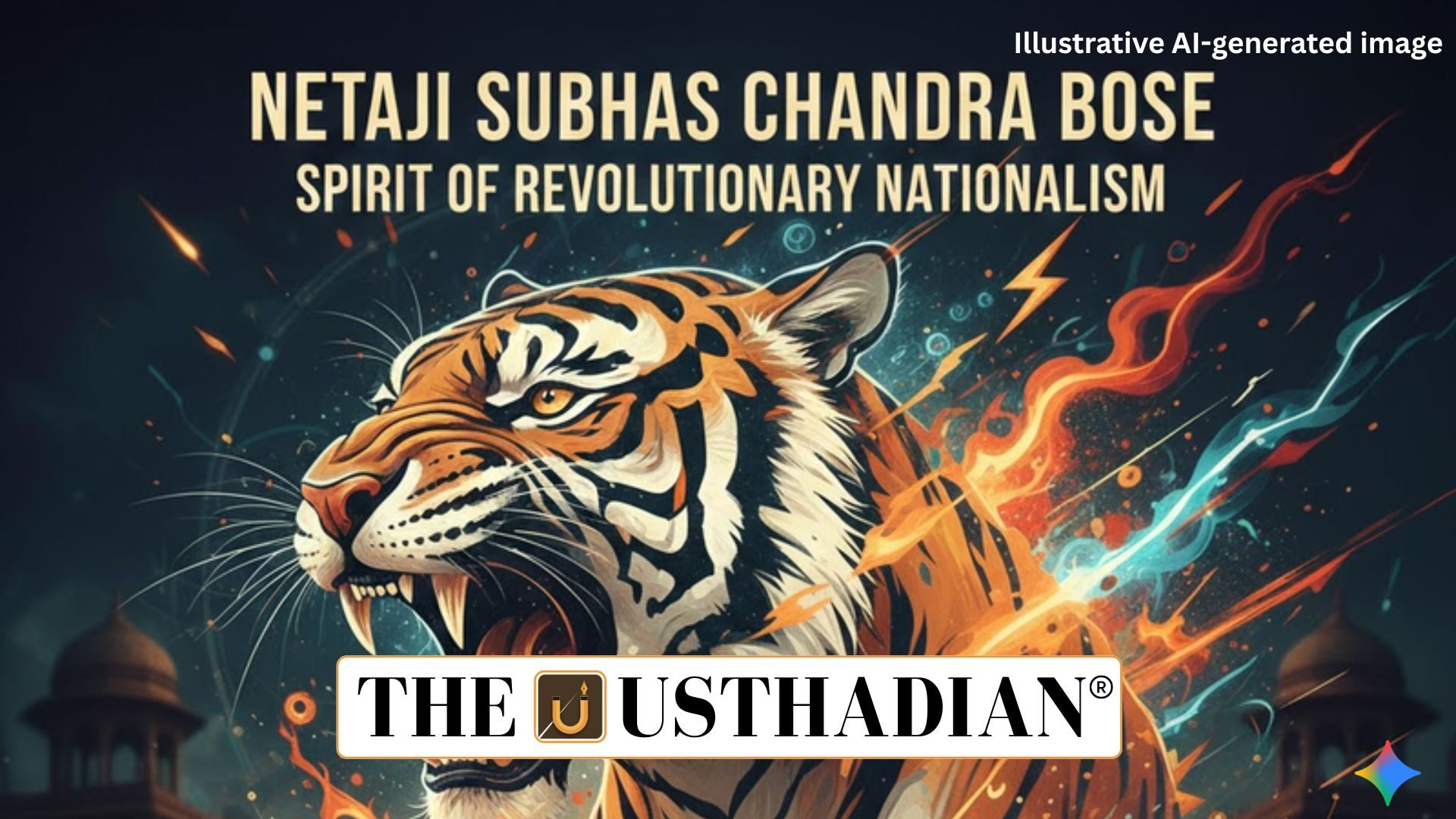
Netaji Subhas Chandra Bose and the Spirit of Revolutionary Nationalism: The Government of India observes Parakram Diwas on 23 January to commemorate the birth anniversary of Netaji Subhas Chandra Bose (1897–1945). The day symbolises national courage, resistance, and revolutionary patriotism. It reflects India’s recognition of leaders who pursued freedom through alternative political and military paths.
Netaji’s legacy represents a militant nationalist ideology distinct from constitutional and non-violent approaches. His methods expanded the freedom struggle into a global geopolitical dimension during World War II.
Static GK fact: 23 January is officially declared Parakram Diwas by the Government of India to honour Netaji’s contribution to the freedom movement.
Early political journey
Netaji emerged as a strong nationalist leader within the Indian National Congress. He was elected as Congress President in 1938 and 1939, reflecting mass support for his radical vision. However, ideological differences with the Congress leadership led to his resignation.
He believed that complete independence could not be achieved through gradual reforms alone. His political ideology focused on direct confrontation with colonial power.
Static GK Tip: The Congress Presidentship of Subhas Chandra Bose is historically significant because it exposed ideological divisions within the nationalist movement.
Role in nationalist journalism
Netaji actively used media as a tool for political mobilisation. He wrote for Chittaranjan Das’s newspaper Forward, spreading nationalist ideas among the masses. Later, he started a newspaper titled Swaraj, dedicated to promoting political awakening and resistance.
These publications strengthened political consciousness and helped mobilise youth participation in the freedom struggle. Print media became an ideological weapon for anti-colonial resistance.
Escape and international strategy
In 1941, Netaji escaped British house arrest, marking a turning point in his revolutionary strategy. He travelled across borders to seek international support for India’s independence.
During World War II, he established diplomatic and military connections with Germany and Japan. His aim was to internationalise India’s freedom struggle and weaken British colonial dominance.
This global strategy transformed the Indian independence movement into an international political cause.
Leadership of the Indian National Army
From 1943, Netaji led the Indian National Army (INA), also known as the Azad Hind Fauj. The INA was formed to fight British colonial rule through armed resistance.
Under his leadership, the INA fought alongside Japanese forces in Northeast India and Burma. This marked the first organised Indian military campaign against British forces.
Static GK fact: The slogan “Give me blood, and I will give you freedom” is historically associated with Netaji’s mobilisation of nationalist sentiment.
Azad Hind Government and Imphal
Netaji established the Provisional Government of Free India (Azad Hind Government) in Imphal, Manipur. This government symbolised sovereign Indian authority in liberated territories.
It aimed to mobilise Indians for a mass anti-British revolt and create an alternative nationalist governance structure. Imphal became a symbolic centre of revolutionary resistance.
Static GK Tip: Imphal is one of the earliest Indian regions where a symbolic parallel Indian government was proclaimed during the freedom struggle.
Core values and ideological legacy
Netaji’s life embodied patriotism, courage, leadership, sacrifice, and determination. His ideology promoted discipline, unity, nationalism, and national honour.
He redefined freedom as both political independence and national self-respect. His leadership created a legacy of assertive nationalism in Indian political thought.
Static Usthadian Current Affairs Table
Netaji Subhas Chandra Bose and the Spirit of Revolutionary Nationalism:
| Topic | Detail |
| Personality in News | Netaji Subhas Chandra Bose |
| Observance Day | Parakram Diwas – 23 January |
| Birth Year | 1897 |
| Political Role | Congress President (1938, 1939) |
| Journalism | Forward newspaper, Swaraj publication |
| Escape Year | 1941 |
| Military Leadership | Indian National Army (INA) |
| Allied Support | Germany and Japan during WWII |
| Provisional Government | Azad Hind Government |
| Symbolic Location | Imphal, Manipur |
| Core Values | Patriotism, courage, sacrifice, leadership |
| Historical Legacy | Revolutionary nationalism in freedom movement |