Background of the Reform
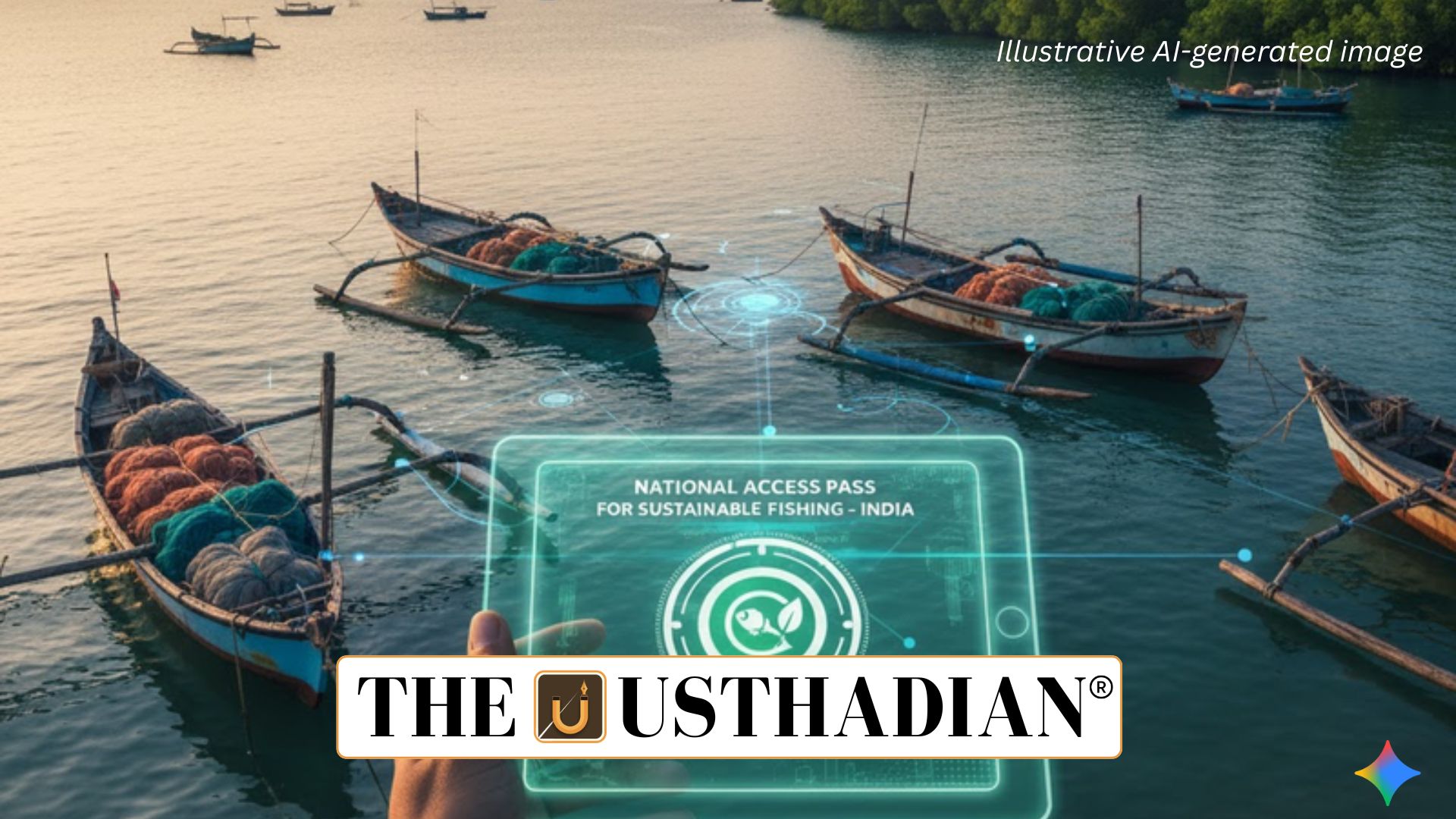
National Access Pass for Sustainable Fishing in India: The Union Government has introduced a National Access Pass System to regulate fishing activities within India’s Exclusive Economic Zone (EEZ). The reform aims to promote responsible marine resource utilization and strengthen monitoring mechanisms.
India’s EEZ extends up to 200 nautical miles from the baseline of the territorial sea. Within this zone, India holds sovereign rights for exploring, exploiting, conserving, and managing natural resources.
Static GK fact: India has a coastline of approximately 7,516 km, including the mainland and island territories such as Andaman and Nicobar Islands and Lakshadweep.
What is the Exclusive Economic Zone
The Exclusive Economic Zone (EEZ) is defined under the United Nations Convention on the Law of the Sea (UNCLOS). It does not exceed 200 nautical miles from the baseline used to measure the territorial sea.
While foreign ships may navigate through this zone, the coastal state has exclusive rights over fisheries, seabed minerals, and other marine resources. India’s EEZ area is about 2.37 million square kilometres, making it one of the largest in the Indian Ocean region.
Static GK Tip: Territorial Sea extends up to 12 nautical miles, while the Contiguous Zone extends up to 24 nautical miles from the baseline.
Access Pass under EEZ Rules
The Access Pass is mandatory for approximately 64,000 mechanised vessels and large motorised vessels exceeding 24 metres in length. It ensures systematic regulation of fishing efforts in deep-sea areas.
Traditional non-motorised and artisanal fishers are exempt from this requirement. This exemption safeguards the livelihood of small-scale coastal communities.
The reform supports the transition toward deep-sea fishing, reducing pressure on near-shore marine ecosystems.
Objectives of the System
The system encourages the formation of Fisheries Cooperatives and Fishermen Fish Producer Organisations (FFPOs). Collective organisation enhances bargaining power and ensures better compliance with marine regulations.
It also promotes sustainable harvesting and reduces illegal, unreported, and unregulated fishing practices. Structured licensing strengthens data-driven fisheries management.
ReALCRaft Digital Platform
The Access Pass is issued free of cost through the fully online ReALCRaft Platform. It has been developed by the National Informatics Centre (NIC) in collaboration with the Department of Fisheries.
The platform integrates with the Marine Products Export Development Authority (MPEDA) for catch certification and with the Export Inspection Council (EIC) for health certification. This ensures traceability and compliance with global export standards.
Digital integration improves transparency, simplifies documentation, and enhances export competitiveness.
Significance for India
India is the second-largest fish producer in the world, and fisheries contribute significantly to rural employment and export earnings. Regulation within the EEZ is crucial to prevent overfishing and resource depletion.
The Access Pass system aligns with India’s Blue Economy strategy, focusing on sustainable ocean resource management. It strengthens marine governance while supporting fisher welfare.
Static Usthadian Current Affairs Table
National Access Pass for Sustainable Fishing in India:
| Topic | Detail |
| EEZ Limit | Up to 200 nautical miles from baseline |
| India’s EEZ Area | Approx. 2.37 million sq km |
| Mandatory Coverage | ~64,000 mechanised and >24m motorised vessels |
| Exempt Category | Traditional non-motorised/artisanal fishers |
| Digital Platform | ReALCRaft developed by NIC and Department of Fisheries |
| Export Linkage | Integrated with MPEDA and EIC |
| Objective | Promote deep-sea fishing and sustainable practices |
| Legal Basis | UNCLOS provisions on EEZ |